Scrimping schools try cyber trips, other tricks
Saving fuel and electricity takes creativity. A few are looking at 4-day weeks. One is after "rogue coffeepots."
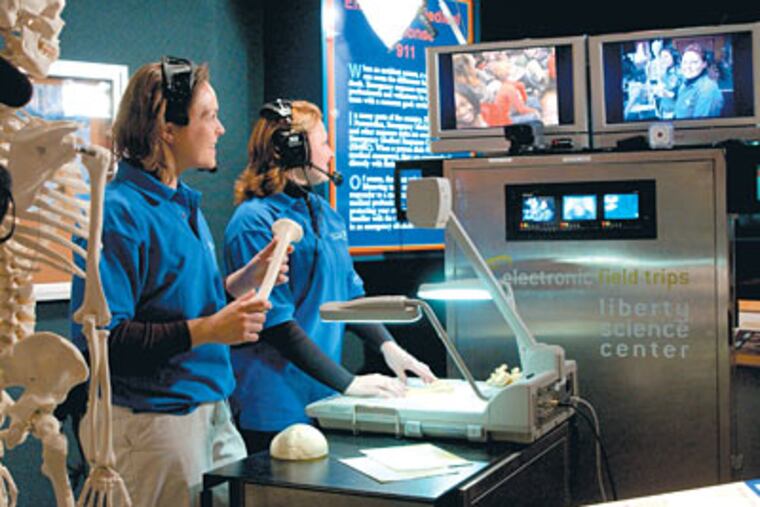
Students in Paulsboro will take more gas-saving cyber trips. Teachers in Malvern's Great Valley School District won't plug in their personal coffee makers. And all over the region, youngsters may walk a little farther to the school-bus stop.
Like those in the rest of the country, school districts here are looking for ways to lessen the sting of high fuel and energy costs.
In a survey released last week by the American Association of School Administrators, nearly all 546 superintendents who took part said rising fuel costs were having an impact on their districts.
More than three-quarters said they were getting no extra aid from their states, including New Jersey and Pennsylvania.
To make do, the superintendents said, they are taking such steps as conserving more energy, cutting school trips, combining bus routes, buying fewer supplies, and even reducing staff.
Fifteen percent said they were considering what the MACCRAY School District in Minnesota plans to do this fall: Go to a four-day week to come up with additional money to fuel buses.
Of the 167 districts in the Philadelphia region, none of the 31 that responded to queries from The Inquirer reported similar plans, but some have gone to a four-day summer week to save on energy and help cut commuting costs. Others say they are considering it for next summer.
The Philadelphia School District, which runs 500 buses to transport about 36,000 public, private and charter students during the school year, spent $2.5 million on fuel in 2007-08, up from $1.9 million the year before, spokesman Vincent Thompson said.
Because rising fuel costs are budget busters, many districts are rejiggering bus routes, looking at reducing stops and how long buses may idle. In New Jersey, it was already limited to three minutes when not in traffic.
In Washington Township, where drivers are told to turn off the engines when buses are stopped, four retiring drivers will not be replaced, and their routes will be consolidated, district spokeswoman Jan Giel said.
In a lot of places, students are likely to have to walk a bit farther to their bus stop.
"We're looking at consolidating some stops because every time the bus stops and starts, you use fuel," said Charles Linderman, business-affairs director for the Great Valley School District.
Even though the district buys diesel with Chester County, he said, Great Valley is paying $4.28 a gallon, compared with $2.10 a year ago. Heating fuel costs $4.21 a gallon, up from $1.98.
To cut costs, Linderman said, the district will increase its compliance with an energy-management policy it adopted last year. That will include clamping down on "rogue coffeepots and microwaves" that staff may have for personal use, he said.
Philadelphia will stick to its no-idling policy and continue to try to make energy efficiency improvements, but Thompson said there were no plans to cut back on bus service.
"If you are eligible for a yellow school bus, you're going to get the service," he said.
Thompson said he did not know when the School Reform Commission might consider a proposal to cut the number of TransPasses provided to students who take public transportation to school. Parents and others voiced loud objections at hearings.
Other districts are using various approaches to whittle down bills.
North Penn High School outside Lansdale will pilot a program that turns off every other hallway light.
By September, Delran High School will have master control panels and motion sensors to turn out lights in the hallways when empty.
Delran district spokeswoman Lee-Anne Oros said the high-school foyer and an elementary-school gym would get sensors that reduce lighting on sunny days and increase lighting on cloudy days.
Oxygen sensors being installed in the high school's bathrooms will turn lights on when the facilities are in use and off when they are not, Oros said.
The Pemberton Township School District is taking something of an entrepreneurial approach: It plans to increase the number of students in neighboring districts it transports for a fee, business administrator Pat Austin said.
"It's win-win," she said. "We can do it cheaper than some of the contractors out there." And, she noted, the district expects to take in about $200,000 from transporting the other students.
More often, though, districts are looking to limit bus use. Many are considering fewer school trips this year.
Paulsboro Superintendent Frank Scambia said budget woes had gotten the district to explore "cyber trips" - a virtual visit to an institution, such as a museum, that usually includes a class or program put on by someone at the institution.
The students have enjoyed them, Scambia said, and he expects the district will do even more of them this year
The Liberty Science Center in Jersey City, N.J., has been one of Paulsboro's cyber outings.
"It's very popular," center spokeswoman Dina Schipper said. The museum has offered the video visits for about 10 years, she said, with participants from as far away as Britain.
Given the cost of fuel, they may become more popular still.