Daniel Rubin: Philadelphia iPod killing reignites woman's outrage over her own son's murder
When Beau Zabel was killed for his iPod, Kathleen O'Hara waited a few weeks before sending her book to the aspiring teacher's mother back in Minnesota.
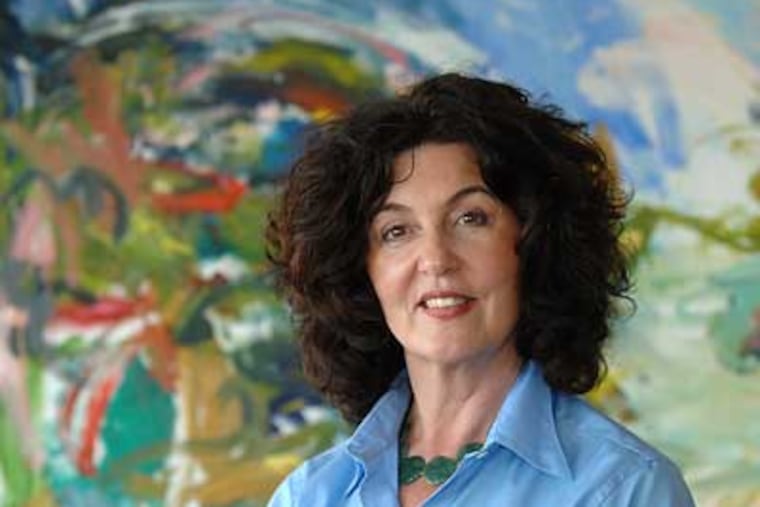
When Beau Zabel was killed for his iPod, Kathleen O'Hara waited a few weeks before sending her book to the aspiring teacher's mother back in Minnesota.
"I know you're probably not ready," O'Hara remembers writing inside the cover. "But when you are . . ."
The book, A Grief Like No Other, explores the steps one takes in working through a loved one's violent death.
"There was something about that murder that outraged me completely," O'Hara says of the June shooting, which killed the 23-year-old Zabel in South Philadelphia as he walked home from his Starbucks job. "It brought back the senselessness."
O'Hara has unwelcome expertise in senselessness. As a Center City therapist, she specializes in treating victims of horrific crimes. As a mother, she has experienced the worst.
On Memorial Day 1999, a detective called from Steubenville, Ohio, asking if she knew where her son was. He and his college roommate had been robbed, beaten, kidnapped, and, it turned out, murdered on a wooded hillside.
It took about five years before she could write the book. Two young men had been convicted of murder, one sentenced to death. The anger, the guilt, the anxiety had receded.
"I couldn't believe that I actually felt better - not fantastic, but better," she says. "And I wanted to know why, and I wanted to help others."
Now she could use some help herself.
During one of the appeals, the Ohio Supreme Court decided that because the killings occurred across the Pennsylvania line, the murder convictions and death sentence could not stand.
Next month, a man named Terrell Yarbrough is scheduled to be tried again for capital murder, this time in Washington County, Pa., and the nightmare again will feel real for Kathleen O'Hara.
She meets me in the hallway of the Philadelphian, and she is warm and bright, making eye contact. She is at home telling her story - this is part of her healing, gaining mastery over the facts, control of the horrific narrative.
She sat through the trials of both defendants because, she says, the last thing she wanted was to be surprised.
"Someone said to me, 'Why are you sitting through all this testimony?' And I said, 'I don't want to be surprised by anything.' . . . In traumatic grief, that's when your stomach does a flip, when you get an intense headache, and when you want to go to bed for three days."
Friends have asked her whether she has to go through this again. "Well, there is no law that says I have to, but that's my son Aaron. Who's going to stand for him?"
Aaron Land was 20, a rising junior at Franciscan University, a small Roman Catholic school where he studied business. He had grown up in Denver, and moved his senior year of high school to Philadelphia, his mom's hometown.
Yarbrough was 18, flying high on crack, and, at the time of the murders, wanted on allegations he shot a man in the back.
One of O'Hara's surprises was reading a cover article in the New York Times magazine in 2003, one that featured a large photograph of Yarbrough under the headline "The Executioner's I.Q. Test."
Yarbrough's IQ has been tested between 59 and the low 70s. Scores of 70 and below are considered benchmarks for mental retardation. One of his lawyers said Yarbrough didn't even understand death row meant a waiting room for state execution.
O'Hara has no sympathy for the man. He is smart enough to know right from wrong, she says. Still, she's torn over whether Yarbrough should be executed.
"I've gone back and forth in my mind on the death penalty," she says. "If I were the state, could I give a lethal injection?
"Probably not. If I had the chance to stop what happened - any mother would rip the face off that person. But can I do it after the fact? I'm not sure.
"But I can tell you this: If the state is not going to use the death penalty in a case like this, please do everybody a favor and take it off the books, because going through all these appeals is too painful."