In a tough city school, a wellspring of leadership
The air is muggy inside the auditorium of Daniel Boone disciplinary school, as a line of students, boys from grades 9 to 12, file in past a giant fan for an assembly titled Building the Leaders of Tomorrow.
The air is muggy inside the auditorium of Daniel Boone disciplinary school, as a line of students, boys from grades 9 to 12, file in past a giant fan for an assembly titled Building the Leaders of Tomorrow.
Generally, students are transferred to this North Philadelphia school for violating level-two offenses in the district's code of student conduct, including stealing, damaging school property, selling drugs, or bringing a gun to school.
Today, change is the overarching theme.
"The greatest thing in our lives happened," Eric Ward, a speaker with the Keepin' It Real Tour, tells the students about Barack Obama's victory last week.
"Everybody told him he couldn't do it, that no black man could win. But this man continued and didn't give up, and now we have the first black president."
Repeat after me, Ward continues.
Yes, I can.
I am somebody
I am successful.
I'm a proud young man.
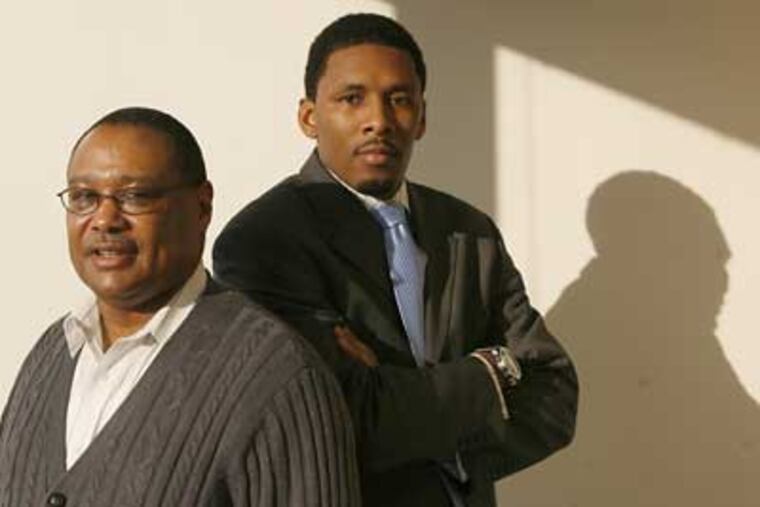
For two years, the Keepin' It Real Tour - founded by Ward, a former admissions director at Lincoln University, and his son Shareef - has journeyed into the city's public schools. The mission is to inspire what Ward calls "under-motivated" youth and to build a bond with students that could change their lives.
Boone is the second stop on this year's 60-school tour.
"When we leave, we try to leave a permanent program behind," Ward said, namely a mentoring program.
The audience at Boone is about 60 boys, mostly African American, who are divided almost equally between white shirts and black shirts. Students in black shirts have earned the status as "leaders" - students who come to school on time, complete their assignments, don't talk back to their teachers, and encourage their white-shirt peers to earn black shirts.
All of the students are attentive and responsive.
"I don't care if you've been in trouble, in jail, on drugs," Ward continues.
Ward, 55, grew up in "the mean streets of North Philly," he often says, "to parents who didn't have nothing." After graduating from college and becoming an entrepreneur, he says his mantra is "Your past is no excuse."
"Today, you are going to change your lives. There's help for you."
Ward calls up two students, both in black shirts, and asks them what they want to be. Luron Bailey, 17, isn't sure, but he's applied to Lincoln University, Ward's alma mater.
"Have they given you any money?" Ward asks.
Bailey shakes his head no. Ward promises to help him secure financial aid, even if it means donating $1,000 of his own money toward Bailey's first semester.
The other student wants to be a lawyer. Ward, nicknamed E-Money, gives them each $20.
The tour is funded by both Ward and area businesses.
Ward then calls up another group of students and gives them an assignment, a one-page book report on a prominent African American of their choosing: Dr. Ben Carver; Magic Johnson; Ephren Taylor, who became rich as a teenager designing his own Web site; Tyler Perry ("This man was homeless 10 years ago," Ward exclaimed); or Earl Graves, founder of Black Enterprise magazine.
The students have a month to finish, and the promise of $100 for each completed report. Ward gives them $20 for added motivation.
The assembly continues with words of self-determination, mixed with a level of common sense. Philadelphia Common Pleas Court Judge John Milton Younge tells the boys how in his 13 years on the bench, he's seen three common themes in criminal defendants: no education, no skills, and an addiction to alcohol or drugs.
"What does that tell you?" Younge asks. If you want to stay out of jail, he continues, you must do three things: "expect to succeed, develop good habits, and always make good decisions."
Shareef Ward, 27, marvels at how the boys had already tucked in their shirts and pulled up their pants. "Y'all heard of stop-and-frisk?" he asks. When it comes to dress, he says, "perception is key."
"Who knows how to tie a tie?" he asks.
A few hesitant hands float in midair.
Ward, who designs and sells his own ties by appointment, picks six students for a tie-tying contest. The prize: a suit, shirt, tie, and pair of shoes.
The tie-tying produces a tie: Two boys win; both will be outfitted.
Next, Philadelphia poet and author Will Little tells how he went from shy kid to convicted murderer to entrepreneur.
"Going to jail is corny, a waste of time," Little cautioned. "Hustlin'? It's nothing, nowhere."
Little then reads a poem about seeing his old self in the eyes of a young boy.
The one-hour program ends in promises. In an effort to keep in touch with the students, Ward and his son will return next month, and they hope to see more black shirts. There are the book reports. Ward plans to have breakfast with the black shirts at Center City's Pyramid Club sometime soon. Every student here will get a free tie. And Ward vows to find a mentor for each student who wants one.
"How many of you have mentors?" he asks.
Three hands shoot up.
"It's nothing to be ashamed of to need someone," Ward says. "We all need people in our life, and we got to talk. Don't be out here struggling with stuff you can't handle."
As the students file out, a few come over to Ward with questions about the book report. Many more come up to shake his hand and say thank you. And about 20 students sign up for a mentor.
"I think it was something we need to hear," says one student, as he adds his name to the list.