Reinventing as a means of getting by
One Pittsburgh family found a way to bounce back from bad times.
CORAOPOLIS, Pa. - In a year, Don McCoy has gone from being a top executive in a high-tech startup to Mr. Mom. Now he cares for his two children while his wife tries to make her fledgling business meet some of the financial demands of his long-term unemployment.
Like millions of Americans hit hard by the recession, the McCoys are struggling with the unexpected joblessness of the family's main breadwinner. McCoy had been earning more than $100,000 a year.
Over the last year, he has dipped into his retirement savings twice, canceled his family's health insurance coverage, cut his daughter's dance classes, and reluctantly come to terms with the idea that he will not retire by 60 and with the possibility of relocating outside the Pittsburgh area that has been his home since birth.
"It really, really hurts deep inside to have to take my retirement savings away," McCoy, 42, said. "It's been an emotional experience and a spiritual growing experience."
The struggles began in January 2008 when McCoy's employer, the Pittsburgh-based high-speed data storage company Panasas, restructured its executive branch, eliminating his position just as the economy began slowing down.
Eighteen years of experience in Pittsburgh's high-tech arena made McCoy confident he would be working within months. He filed for unemployment and began networking.
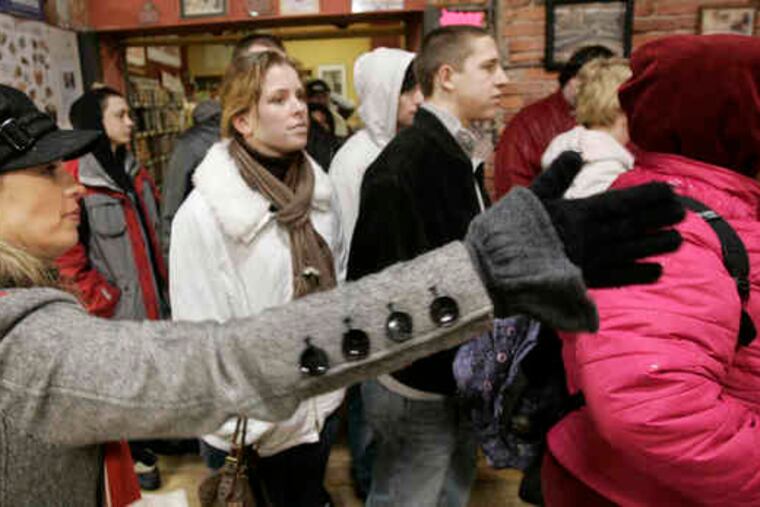
Meanwhile, his wife, Sylvia, 36, who had left her marketing job to be a stay-at-home mother to 4-year-old Isabelle and 3-year-old Marcus, decided in June to venture back into the business world. She launched 'Burgh Bits and Bites, a culinary tour through Pittsburgh's Strip District, a food lover's paradise.
Still out of work, McCoy built a Web site for Sylvia's new company and cared for the children. With unemployment bringing in only about 20 percent of McCoy's salary, any extra money would help.
McCoy dipped into his retirement savings to pay for business cards and bags, while Sylvia spread the word through neighborhood associations and business groups. Today, the business generates an average profit of $1,000 a month.
"We were very, very blessed that it grew as fast as it did," she said.
After McCoy's 26 weeks of unemployment ended, an emergency act passed by Congress gave them an additional 11 weeks. But other sacrifices had to be made, and Isabelle was taken out of dance classes.
The family stopped discretionary spending: restaurants, vacations, weekend getaways and clothes shopping were discarded. Sylvia learned to comparison shop, buying groceries in several different stores to get the best deals. Hair appointments stretched out for months.
A rainy-day fund and retirement savings helped make the mortgage payments and the insurance and property taxes, a $2,400-a-month expense.
After Congress' emergency act expired, the McCoys found themselves with no unemployment compensation, so their cost-cutting took on a new urgency. At the end of September, they canceled their $850-a-month health coverage. McCoy has applied to get into a state-subsidized program.
"It's been just over three months now without health insurance, and fortunately the family has been healthy and we haven't had any difficulties," McCoy said. "It's very tough, especially with children."
A third emergency act passed by Congress granted the McCoys seven more weeks of unemployment compensation - but that too is about to expire. This means the McCoys' next step might be to relocate out of state, a move that pains them almost as much as cutting costs.
The McCoys volunteer at different charity events, trying to stay positive and remember there are always those worse off.
"Some days are easier, some days are harder," Sylvia said. "I mean, there's some days where at night when you wake up and you have a wave of anxiety and you think, how long can we do this? And again, you just rely on your faith. That's kind of what brings us through."