Fires spur Coatesville clergy to unite
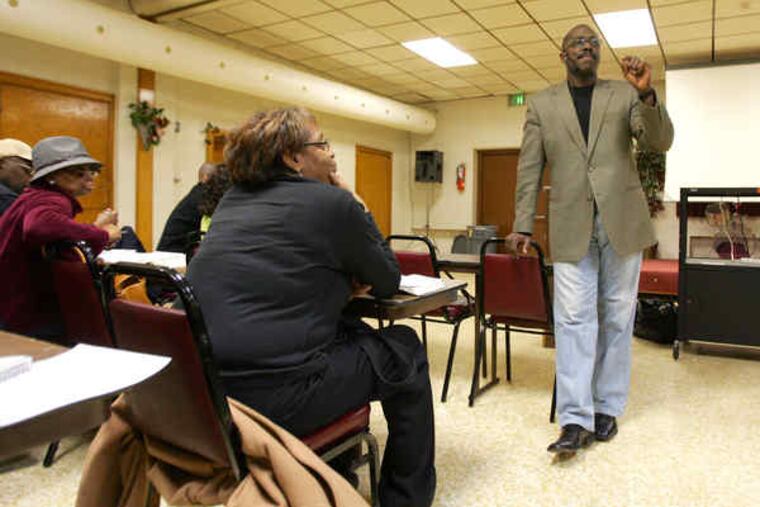
Hours after a fire in Coatesville destroyed 15 houses and displaced dozens of residents late last month, there was a meeting of local clergy that longtime residents say was unprecedented.
Hours after a fire in Coatesville destroyed 15 houses and displaced dozens of residents late last month, there was a meeting of local clergy that longtime residents say was unprecedented.
Tabernacle Baptist Church was packed with clergy and other representatives of congregations and faith-based nonprofits - neighbors in a small town but often strangers when it comes to working together.
One pastor was assigned to oversee clothing donations; another would take care of furniture; a third would blog about relief efforts. Rarely, clergy say, has there been such unanimity of purpose in a city where it is not unusual to find five religious organizations within two blocks.
"The fire has been a turning point," said the Rev. H. Joe Tyson, senior pastor of Olivet United Methodist Church.
There are at least 70 churches and faith-based organizations in Coatesville and the surrounding area, according to a survey of the city's Web site, the Minister's Alliance of Coatesville and Vicinity, and local clergy.
That number is usually high for a city of 11,000 residents in 1.9 square miles, said Ram Cnaan, an associate dean and director of the Program for Religion and Social Policy Research at the University of Pennsylvania. It is a reflection of a diverse population that settled in the region to work at the former Lukens Steel plant.
But sheer numbers, proximity, and the fact that two members of the clergy serve on City Council have not led to close relationships or facilitated joint efforts among religious organizations.
Coatesville has struggled with the social problems that faith groups would typically help address. But their efforts have remained largely fragmented, local clergy say. The fires have forced them to look inward.
"There are a lot of divisions in our community that are just now being flushed out," said Pastor Kevin Hunt of Trinity United Bible Church in Coatesville. They are tensions familiar to religious organizations.
About 12 years ago, many local clergy belonged to the white association of ministers or the black one. They have since merged.
Some pastors don't approve of women leading churches, so they decline to attend clergy meetings when female pastors are present.
New churches have grown out of disagreements within one or because people felt called to a ministry of their own. Some have flocked to Coatesville to swell the ranks of faith groups because they believe the groups meet an unfilled need, said the Rev. Dan Wagner, president of the alliance and pastor of Towerville Christian Church.
But the ability of religious groups to tackle community problems might be hampered because there are so many of them, Cnaan said.
Larger and richer congregations are typically more involved in social services because they have the resources and manpower, Cnaan said. The ability to help resolve community issues drops when people and resources are spread over so many congregations. They must then spend much of their time worrying about bread-and-butter issues, such as serving members, maintaining buildings, and staying afloat, Cnaan said.
The religious community in Coatesville has long been a large one, with many congregations representing many traditions. Lukens, once the linchpin of the city's economy, drew overseas immigrants and African Americans from the South. Cultural differences bred diversity and growth among congregations, including several ethnic Catholic parishes. Within the last several years, that diversity has expanded to include a 50-member mosque, Masjid Ar-Rahman, and at least three Latino churches, including Encuentro Latino.
Some congregations left as the steel industry decline eroded the city's economy. Others talked about leaving but stayed. Before the Rev. Sherry Crompton arrived nearly seven years ago, the Episcopal Church of the Trinity had considered leaving, but it decided to stay and uphold its commitment to urban ministry, Crompton said.
Some congregations have blossomed. New Life in Christ Fellowship, with a membership of 400, has grown to become one of the city's largest churches.
Cooperation among the scores of religious groups has entailed mostly prayer events and visiting one another during Lent and Holy Week activities, said Pastor Alinda Eggleston of Set Free by the Word Ministries. But the fires could change things and pull members out of the insularity of their buildings and onto the streets.
"I heard [White House Chief of Staff] Rahm Emanuel say a crisis is a terrible thing to waste," said the Rev. Dan K. Williams, senior pastor of New Life, which has rehabilitated its vacant parsonage to house a homeless family displaced by fire.
Over the last week, the clergy alliance intensified plans for a series of monthly outdoor community events that might begin in April, when congregants would block off a street for music and prayer, walk neighborhoods to meet residents, and hand out religious pamphlets.
"It's an opportunity the Lord has put in front of us," executive director Bill Shaw of Life Transforming Ministries said of the response to the fires, "but what will we do with it?"