Corzine eyes change on property-tax write-off
Gov. Corzine is reconsidering plans to suspend New Jersey's property-tax deduction, saying he might let residents who earn less than $150,000 keep the write-off.
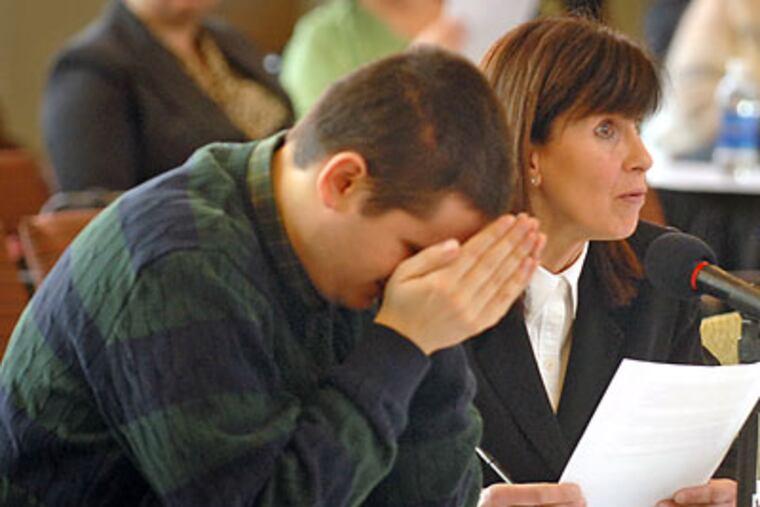
Gov. Corzine is reconsidering plans to suspend New Jersey's property-tax deduction, saying he might let residents who earn less than $150,000 keep the write-off.
The change would scale back one of the most controversial tax increases in his budget proposal and remove a target Republicans have hit over and over since the plan was unveiled.
"I have heard enough angst about the deduction that I think it's worth a reevaluation. We haven't concluded anything yet," Corzine said.
The governor, who spoke in Eatontown as a Senate committee held its first budget hearing in Camden, said any change would have to come with other alterations to offset the costs.
Corzine had been sharply criticized for the combination of proposals that would suspend the deduction and eliminate property-tax rebates for people earning between $75,000 and $150,000. People in that group, which Republicans have described as middle class in a high-cost state such as New Jersey, would bear the steepest combined costs of the two proposals.
People younger than 65 who made more than $150,000 did not receive rebates last year, and those earning less than $75,000 would keep all or most of their rebates, making the financial impact on them less severe.
The plan to suspend the deduction, which lets filers write off on their income-tax forms up to $10,000 in property taxes paid, was supposed to cost taxpayers - and raise for the state - about $400 million.
But it had fallen flat with lawmakers. Early yesterday, two influential Democrats said they hoped to eliminate or scale back the proposal.
Senate Majority Leader Stephen Sweeney (D., Gloucester) and Sen. Barbara Buono (D., Middlesex), chair of the Senate Budget Committee, spoke out against the tax plan in Camden.
"The thing that concerns me most is the property-tax deduction, and I'm not alone in that," Sweeney said.
He said he hoped to restore the deduction in full.
Buono also said she was concerned about shelving the deduction for a year.
"There has to be a change," she said.
Senior citizens would not be affected by the rebate reductions or deduction suspension.
According to the administration, the deduction saves filers younger than 65 an average of $219. That figure includes renters, whose savings generally would be far smaller than those of homeowners, who pay the nation's highest average property taxes. Administration officials say the deduction is regressive, meaning it saves more for people with larger incomes.
The exact costs would depend on each person's filing status, income, and tax rate. For a typical married couple earning $67,000, New Jersey's median household income in 2007, and paying the state's average $7,045 property-tax bill, losing the deduction would cost about $170 in added income taxes in 2010.
Buono and Sweeney said the tax-deduction change had drawn the most criticism from constituents of any of the governor's budget plans.
They spoke to reporters at a hearing at Rutgers Law School's Camden campus, where organizations big and small used the first public meeting on the budget to give glimpses of the plan's real-life impacts.
The groups, ranging from the horse-racing and business lobbies to literacy tutors and charter schools, focused on issues faced by agencies that depend on state aid to patch their budgets together.
Peggy Englebert, executive director of the Arc of Camden County, which helps people with developmental disabilities, said funding for the group's job-training program faced a $120,000 cut under the new plan. The recession, she said, also has taken a toll. A charity golf tournament that raised $50,000 last year brought in only $25,000 this time around.
"When you've been hanging on with your fingertips to the ledge, when they stomp on your fingertips, you let go," Englebert said.
She said the group was looking at paring bus routes, meaning clients either would have to take long rides to get to their training programs or be left out entirely. And after years of "cutting and pasting" to provide services to 200 people with funding for only 120, Englebert had to lay off two staffers.
Similarly, Brian Klocke, executive director of Kennedy Health Care Center, a nursing home in Washington Township, Gloucester County, said his facility was facing a second consecutive year of underfunding because of the state's rules on how it pays facilities with lower numbers of Medicaid patients. The rules cost the nursing home $120,000 under the current budget and would have a similar impact under the next plan, Klocke said.
"In the past I have come before you and told you things that could happen," he said. "Today I'm telling you things that have happened in our facility."
A federation of five medical centers that treat people with cleft palates came to ask lawmakers to preserve the $707,000 set aside in the budget for them.
Morgan O'Neill, a 19-year-old from Montgomery Township who received 18 years of care from Cooper University Hospital's cleft-craniofacial program in Moorestown, described the program's impact.
She said she had met with oral surgeons, dentists, and psychologists all in one location.
When classmates teased her, O'Neill said, one of Cooper's representatives came to school to explain cleft palates.
That representative, Marilyn Cohen, said the centers depended on state funding.
"If we get a 10 percent cut to that," Cohen said, "we're doomed."