Asian Arts Initiative celebrating new home
The new home of the Asian Arts Initiative boasts a storefront gallery, professionally lit performance areas, and plenty of rooms for after-school classes and artists' workshops.
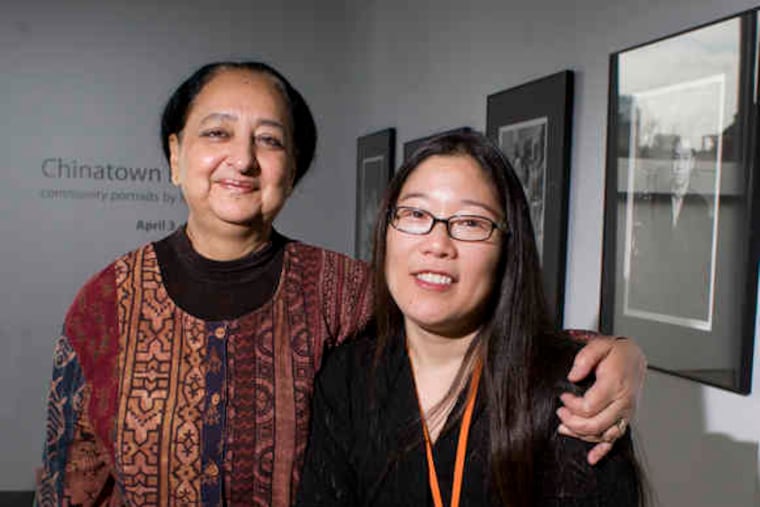
The new home of the Asian Arts Initiative boasts a storefront gallery, professionally lit performance areas, and plenty of rooms for after-school classes and artists' workshops.
The 16-year-old Philadelphia nonprofit's staff is thrilled with the building at 1219 Vine St., especially after three years of temporary locations with no heat, unlit bathrooms, and furry cotenants, board chairwoman Eva Ray said.
But the nonprofit doesn't own the building, which will soon host theater performances, film festivals, and art exhibits.
The option to buy from the landlord expires in September, and staff members say the $2.5 million purchase depends on securing money from the cash-strapped state.
That isn't stopping the organization from holding a free grand-opening celebration at 5:30 p.m. today and 3 p.m. tomorrow, featuring art and photography exhibits and performances by poets, dancers, and musicians.
Executive director Gayle Isa said she hoped the celebration would reintroduce the group to the city and build support for buying the site.
The group had occupied space in the nearby Gilbert Building, which became "one of the tragedies of the Convention Center expansion," Isa said. The building, which housed several other arts groups, at 1315 Cherry St. was demolished in 2007.
After that, the group moved twice to temporary spaces, the latest a former beauty salon next to its new building. It moved to its current home in July, but has needed time for renovations.
To buy and renovate the building, the organization is waiting for $2 million from the state, Isa said. The city would add $1 million, and another state grant would provide $500,000. So far, private donors have given nearly $250,000.
The group is on the state's list of approved capital projects, but that's no guarantee the money will come in time to buy the building, said Johnna Pro, a spokeswoman for State Rep. Dwight Evans (D., Phila.), chairman of the House Appropriations Committee.
"This is an extremely difficult budget year," Pro said. "The projects that are getting a serious look are ones that provide significant economic growth and that create a large number of jobs."
Isa and other supporters argue that the organization's programs and planned building renovations would bring both to the neighborhood.
According to one preliminary estimate by Urban Partners, a Philadelphia consulting group, the multi-tenant facility's activities and renovations would create 89 jobs and contribute more than $6 million annually to the city in expenses and money spent by visitors.
The Asian Arts Initiative hired Urban Partners "because we know that all our legislators are concerned about . . . making public dollars pay off," Isa said.
The move also adds to the redevelopment of what is now called Chinatown North, said John Chin, executive director of the Philadelphia Chinatown Development Corp.
"By drawing people in, we can actually use that opportunity to introduce them to other services and products in the community," he said.
Most of the storefronts on the 1200 block of Vine Street are vacant, but Isa said there were signs that the group was improving the area.
Shortly after renovations began on the bottom floor of the building, an adult filmmaker on the third floor moved out. A few weeks later, police raided a massage parlor down the street.
If it buys the building, the organization hopes to turn the warehouselike second floor into 25 workshops that artists can rent below market value. A mural or other large art installation is planned for the back alley.
Until the organization completes the purchase, though, its focus remains arts programs for young people and local artists. Isa estimated the group reaches close to 10,000 of community members each year through programs, workshops, and performances.
Said Ray: "We are one of the very few places that . . . provide a space for creative and positive expression" for Asian American teens navigating two cultures.
On the first floor, visitors can see paintings and sculptures by young people involved with the group.
Worried that an economic downturn might raise tensions among ethnic groups in the city, Isa said involving young people in the arts also made them "less likely to tolerate racist behavior."