Teen sentenced in fire that killed parents
A teenager who torched his family's Glassboro home, killing his mother and father, was sentenced yesterday to 20 years in state prison, ending a sensational case in which family, friends and teachers rallied to his defense.
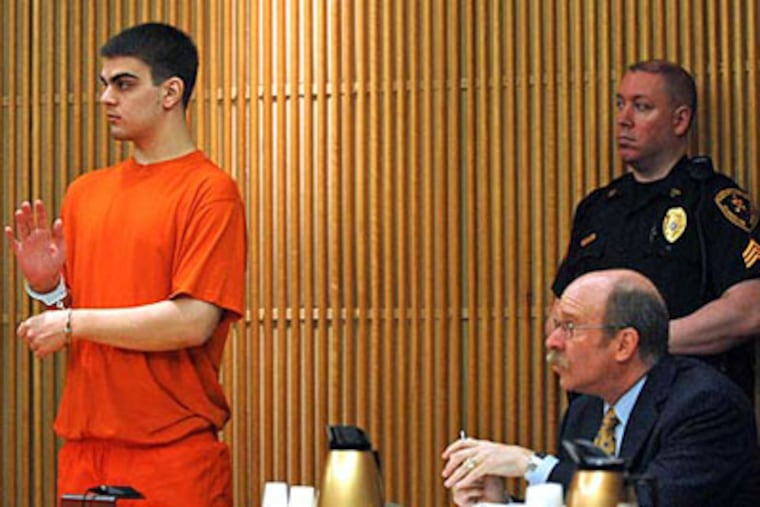
A teenager who torched his family's Glassboro home, killing his mother and father, was sentenced yesterday to 20 years in state prison, ending a sensational case in which family, friends and teachers rallied to his defense.
Jason Henry, who was a 16-year-old honors student when he set the fire on Feb. 13, 2007, must serve 17 years on two counts of aggravated manslaughter before he can be paroled.
He pleaded guilty in February in return for the dismissal of murder and arson charges.
At his sentencing, Henry showed no emotion as he stared at Superior Court Judge M. Christine Allen-Jackson, and he shook his head when asked if he wanted to speak.
He looked down as the judge described his crime as "cruel and depraved." Henry admitted dousing the house with gasoline and igniting it while his parents slept.
Henry's parents, Michelle Henry, 39, and Stephen Edwards, 43, barely escaped, but suffered severe burns over most of their bodies and died within a week.
Jason Henry's grandmother, sister and friends sat silently in the courtroom. Asked whether he had any questions, Henry mouthed "no."
"Since you've been detained for a little over two years, you've consistently maintained excellent behavior . . . and were a positive role model for others," said the judge, noting that the former Glassboro High School student received all A's while attending classes in the juvenile detention center.
Calling the case "a tragic incident," Allen-Jackson said she hoped Henry would spend his prison time "moving in the right direction . . . and continuing your education."
Why Henry, described as a loving son with a clean record, committed his crime may never be revealed, say those involved with the case.
"I don't think we'll ever know," Assistant Prosecutor Dana Anton said after the hearing. "I think he's shut down. . . . The hardest thing about this case was, we just couldn't figure out why this happened."
One day after the blaze, Henry told police he set the fire because he thought the insurance money could help his parents pay mounting medical bills. His father was an unemployed truck driver with an ailing back, and his mother was in the last stages of leukemia.
Henry said he expected his parents to escape. Edwards made it to a neighbor's home. Michelle Henry barely got out.
Anton said the family had no home insurance. She said she believes there is more to the story. Though she is convinced Henry committed the crime, "we can't tell whether this is something he planned a long time or did on a whim," she said.
Anton called the case the "most troubling" she has handled in seven years as a prosecutor.
Public defender Jeff Wintner said attorney-client privilege prevented him from divulging what, if anything, Jason Henry had told him about the incident.
"I'm not in the position to measure his remorse, but I am certain he feels very badly," Wintner said.
In his confession, Henry said that his mother was depressed after her six-year bout with cancer. His father, Henry said, once joked that they should pull out her medical tubing and collect her insurance to pay bills.
Henry said that his father never mentioned torching the house. The idea came to him, Jason Henry said, in a dream the night he sprinkled gasoline through their home.
"I was kinda laying downstairs watching TV . . . and then I kinda fell asleep and kinda had a dream of, like, us having, like, more money and my mom being fine and everything like that," he told police.
Neither Henry's grandmother nor his weeping sister would comment after the sentencing, but Henry's former Boy Scout master said he believed law enforcement mishandled the case.
"Jason did not do this. I don't understand what happened, but maybe one day we will," said Bruce Rundell, whose son is a close friend of the teenager's.
Rundell said he believed police coerced a confession from Henry, who he said was badgered and called a liar. In his taped confession, Henry several times denied setting the fire.
Anton said the police interview took only about 45 minutes. She said Henry was accompanied to the police station by his grandmother and officers never raised their voices.
Had Henry been found guilty of the murder and arson charges, he could have faced life in prison.