Heckler, Asplen spar to be Bucks DA
For as long as most Bucks County voters can remember, the election of a new district attorney has always had the feel of a promotion.
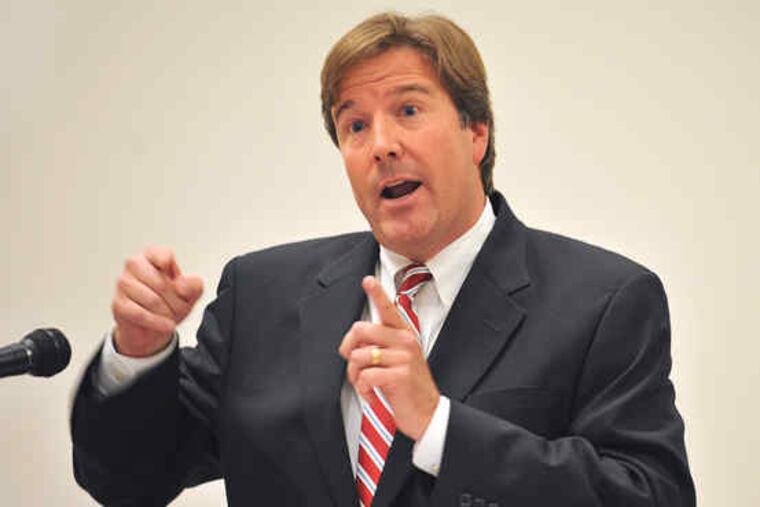
For as long as most Bucks County voters can remember, the election of a new district attorney has always had the feel of a promotion.
Since at least the 1950s, each person elected to the top job has ascended directly from the ranks of the assistant district attorneys.
That trend will end Tuesday, when voters choose Republican David W. Heckler or Democrat Chris Asplen. The winner will replace District Attorney Michelle Henry, who was appointed two years ago but decided not to seek a full four-year term at the polls.
Both Heckler and Asplen served long ago as assistants in the office - Heckler in the 1970s, Asplen in the late 1980s and early 1990s - before embarking on distinctly different career paths.
Heckler, 62, served 11 years on the county bench, including five as president judge, before stepping down this year to run for the county's most visible public office. Before that, he spent a decade as a legislator in the Pennsylvania House and Senate, and was counsel to the state District Attorneys Association.
Heckler, of Doylestown, said he offered "a breadth and depth of experience in all aspects of criminal law" that Asplen can't match. Central to his campaign is a pledge to forge closer working relationships between prosecutors and local police departments, to improve screening of cases, and to develop a more experienced and specialized corps of assistant district attorneys.
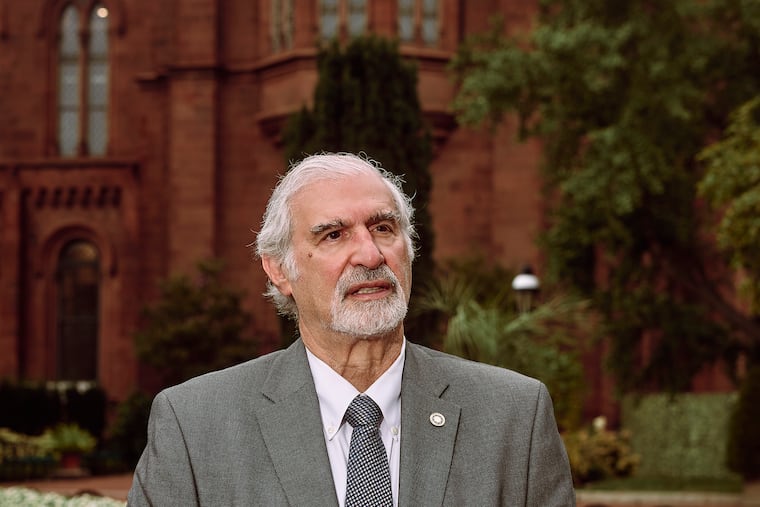
Asplen, 45, is an internationally known expert in DNA technology, employed by a law firm to consult and lobby for increased use of DNA in law enforcement. He worked as a federal prosecutor in Washington, directed the DNA unit of the National District Attorneys Association, and led a federal commission devoted to the future uses of DNA evidence.
Asplen, of New Britain, says he offers "experience that is more expansive, more recent, and significantly more updated" than Heckler's. He has pledged to expand the use of technologies such as DNA in solving and prosecuting a wide range of crimes.
Politically, their battle pits Heckler's name recognition and the GOP's long-held prominence in county-level elections against Asplen and the resurgent strength of the Bucks County Democratic Party. Registered Democrats overtook Republicans in the county last year for the first time in three decades, and today hold a 15,000-voter advantage.
In recent years, Democratic candidates have beaten Republicans in statewide and national contests among Bucks voters. But the GOP has continued to dominate county-level off-year elections, in which low voter turnout tends to favor Republicans.
Asplen's challenge is historically daunting: Bucks' last Democratic district attorney was elected in 1891.
Heckler and Asplen have waged an energetic, sometimes bitter campaign, jousting repeatedly in a series of debates around the county.
Asplen has cast Heckler as an unimaginative, stuck-in-the-past insider, unwilling to do what is necessary to stay a step ahead of criminals.
Heckler, in turn, has painted Asplen as little more than a Washington lobbyist for DNA interests, more profiteer than pioneer.
Asplen makes no apologies for his DNA ardor. Calling it the most formidable crime-solving tool available, he favors expanding its use here from cracking murder, rape, and assault cases into the realm of property crimes, in which burglars often leave DNA evidence behind.
Saying there is federal and state money available for criminal justice grants, Asplen pledged to hire a full-time grants specialist to help bring in money to help pay for such initiatives. "Because of my experience, I will be effective in identifying the appropriate tax dollars to bring back to Bucks County to fight crime," he said.
Heckler agrees that DNA is a powerful weapon for prosecutors, but pointed to the expense and current backlog of cases while using state police laboratories for testing. He proposes pooling funds from neighboring counties and exploring setting up a regional lab that could handle the work. In the meantime, he said, establishing a forensic computer lab in the county courthouse would be more effective and cost-efficient than expanding DNA usage.
Heckler also opposes hiring a grants specialist, saying the county already has an employee assigned to do such work.
Asplen "likes to posture me as this old fogy who doesn't know how to use a telephone," Heckler said. "But computer evidence crops up a whole lot more than DNA does."
Both candidates favor creating a satellite office in Lower Bucks, where much of the county's crime occurs. They also want to cultivate more specialists in the office for certain areas of the law, such as elder abuse and crimes involving child victims.
Both claim management experience - Heckler as judicial overseer of a 500-employee court system, Asplen as head of a federal commission stocked with experts having divergent agendas.
"I stepped down from a more comfortable life to run for district attorney because I care," Heckler said. "I believe I can lead and get people excited about their work."
Said Asplen: "It is a good office with a good bunch of prosecutors. We just want to do it better."
at 215-345-0446 or lking@phillynews.com.