Annette John-Hall: Sisters follow faith on hajj
When Naeemah Khabir heard the news that an Army psychiatrist of Middle Eastern descent was accused in the shooting rampage that killed 13 people at Fort Hood, Texas, one of her first thought was: "Oh, goodness. I bet he's Muslim."
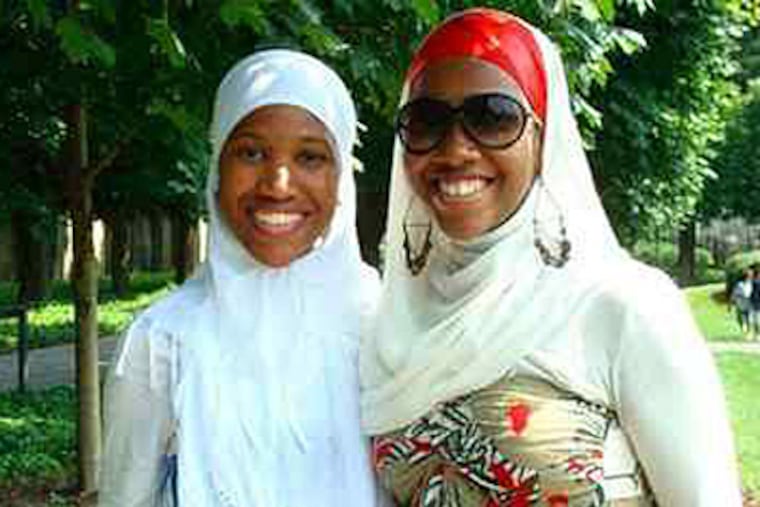
When Naeemah Khabir heard the news that an Army psychiatrist of Middle Eastern descent was accused in the shooting rampage that killed 13 people at Fort Hood, Texas, one of her first thought was: "Oh, goodness. I bet he's Muslim."
She was right. Maj. Nidal Malik Hasan calls himself a Muslim, as do all the other so-called Muslims who commit murderous acts in the name of Allah.
"Things like this don't help people see Islam in a nonthreatening way," Khabir says.
"You have to pray for someone like that as far as guidance from Allah to rid himself of ill thoughts in the name of Islam."
Already, some critics are blaming diversity, of all things, for the massacre. The Army was too politically correct, one columnist wrote. Too tolerant of anybody else.
Yep, in melting-pot America.
Never mind the thousands of Muslims serving in the military who have put their lives on the line.
Khabir wishes she could explain to people threatened by her faith that her God is one of love and peace, no different from their own.
Which is why after two years of planning, Khabir, 27; her sister, Ameerah, 23; and their father, Ameen Abdul Khabir, from Hunting Park, are making the trip to Mecca, in Saudi Arabia. They will join millions of Muslims from all over the world in the annual pilgrimage, or hajj.
Focus on Mecca
The Fort Hood tragedy no doubt will bring a backlash. Ameerah is used to having to defend her faith, but her focus is her transforming journey.
"Just the slightest amount of irritability can throw you off," she says. "Any type of anger can discredit your whole trip."
The Khabirs are already in Mecca, having taken the 13-hour flight with about 150 other Philadelphia-area pilgrims on Tuesday. Now they're preparing for the five-day ritual of the hajj, where masses reenact the story of Abraham and his son Ishmael, with prayer as its centerpiece.
The best way to think of the hajj is as an ultimate New Year's resolution.
"Except you make it to God," Ameerah says, "so you can't go back on your word."
Female friends and family organized a send-off for Naeemah, Ameerah, and other first-time hajjis at the Sister Clara Muhammad School in West Philly. There was plenty of food, fellowship, and advice from women who had already made the journey:
"There's a lot of hurry-up-and-wait, so bring something to read."
"Pack light, because you have to carry everything."
"Mecca has everything a Muslim woman could want. But do not shop till you drop. Remember why you're there."
For many, a hajj is a once-in-a-lifetime journey. Old and sick Muslims don't expect to return.
And many don't.
Experienced doubts
Even though they are second-generation Muslims, Naeemah, who earned a master's degree in journalism at Syracuse University, and Ameerah, a graduate of Virginia State University, wondered at first if the hajj was for them.
For one, they're African Americans. And though most of the 125,000 Muslims in the Philadelphia region are black, journeying to the Middle East can be a foreign concept to Americans "who grew up in the 'hood," Naeemah said.
Not only that, but "we associated hajj with something old people did," added Ameerah, laughing. "All the pictures we'd see in National Geographic were of old people sitting in tents."
But as they heard their family and friends testify about how the trip had renewed them, the sisters declared the intention to go and began their research - on YouTube.
Immediately, their faith was put to the test.
Naeemah worked hard to save $3,000 toward the hajj, about half the cost, when "I had to get another apartment and my computer broke down," she recalled. "My hajj account completely fell apart."
She chalked it up to negative forces and refocused her commitment. And "the money just started to come," she said.
Naeemah, Ameerah, and the other hajjis gratefully received gifts, cash, and hugs. They all accepted the prayers that family and friends scribbled in their prayer books for the pilgrims to recite on their behalf once they got to the Holy Land.
Their three-week journey would be life-changing.
"Remember one prayer in Mecca is worth 100,000 anywhere else," said one of their well-wishers. "Be grateful."