W. Laurel Hill Cemetery plans Jewish section
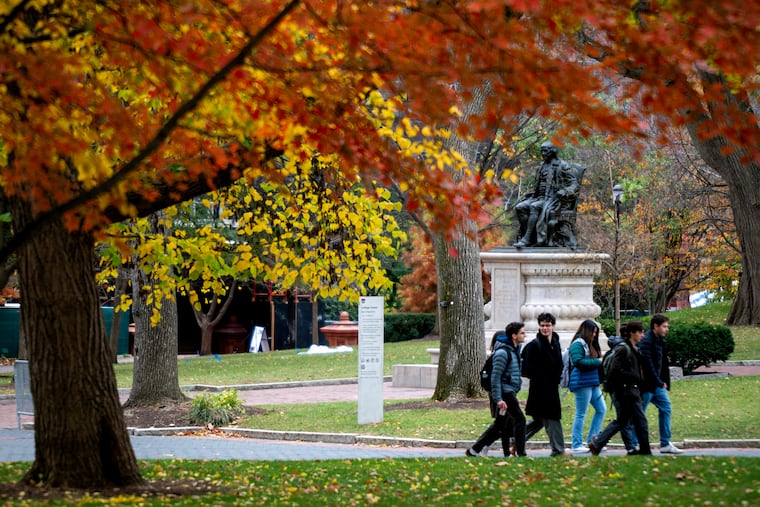
On leisurely walks through West Laurel Hill Cemetery, George Frank and his wife, Carole, never saw on a headstone a name that sounded Jewish.
On leisurely walks through West Laurel Hill Cemetery, George Frank and his wife, Carole, never saw on a headstone a name that sounded Jewish.
The couple, who live within blocks of the cemetery, figured the memorial park was a place where only Christians found eternal rest. As Jews, the Franks did not see themselves reflected in the granite monuments they passed.
That image of exclusivity has continued to haunt West Laurel Hill despite its nonsectarian roots and openness, said Pete Hoskins, the cemetery's chief executive officer and president. By the spring, cemetery officials hope to have taken a big step toward ensuring that the community knows there is room for everyone.
Officials are planning to open a Jewish cemetery within the 187-acre grounds of West Laurel Hill in May. The two-acre space off Belmont Avenue in Bala Cynwyd will provide the kind of separate burial ground for Jews that their tradition mandates.
"In Jewish law, someone who is Jewish should be buried in a Jewish cemetery," said Rabbi Avraham Shmidman, of Lower Merion Synagogue in Bala Cynwyd. "This will provide the local community with a meaningful and convenient option."
Shmidman is serving on the advisory board that is helping to create the cemetery. Lower Merion Synagogue, an Orthodox congregation, has committed to buying several hundred plots in the cemetery for its membership.
The new burial ground, to be called Chesed Shel Emes ("a true act of kindness" in Hebrew), will include space for 1,500 people and will join about 20 active Jewish burial grounds in the region that serve the area's more than 206,000 Jews. The project is expected to cost $600,000.
West Laurel Hill, a sister cemetery to 81-acre Laurel Hill Cemetery in Philadelphia, was founded in 1869. It is the final resting place of famed Philadelphians including John Thompson Dorrance, inventor of condensed soup and founder of Campbell Soup; Anna Jarvis, the founder of Mother's Day; and jazz musician Grover Washington Jr.
Jews including William Goldman, a philanthropist and founder of the Goldman Theater, and deejay Hy Lit are also buried there, but among non-Jews. The perception of exclusivity remains, but it is evolving, Hoskins said.
The lingering image is a function of public relations and religious tradition, Hoskins said.
The cemeteries have long been promoted as historic burial grounds for the prominent when, in fact, all kinds of people have been buried there, Hoskins said. Also, Jewish law requires a separate section for Jews, which the cemetery did not have.
"There are ways to overcome the distinctions," Hoskins said. "You have to work hard to show that you are truly open to all."
In organizing the cemetery, planners will have to incorporate Jewish law and tradition, which can be interpreted differently depending on where a Jewish denomination falls on the continuum from traditional to liberal, said Rabbi Jay Stein, senior rabbi at Har Zion Temple in Penn Valley and president of the Vaad: Board of Rabbis of Greater Philadelphia.
So far, plans are for the cemetery to be clearly demarcated from the surrounding West Laurel Hill grounds by a border of trees. There will be two entrances. One section will be for Orthodox Jews, who are among the strictest followers of Jewish law. The remaining section will be divided among Conservative, Reform, and Reconstructionist families.
Other plans include a place for benches where families can sit Shiva (a Jewish mourning period); a washbasin for cemetery visitors to wash the uncleanliness of the cemetery off their hands; and a container of remembrance stones that visitors can place on a grave marker so that others know the deceased was loved.
Historically, Jewish cemeteries were among the first entities organized by immigrant Jews when they arrived in the United States, said Saul P. Wachs, the Rosaline B. Feinstein professor of education and liturgy at Gratz College in Melrose Park.
Typically, the cemeteries were established by synagogues in places far from neighborhoods, but as city dwellers moved away from the center of town, communities grew around the cemeteries.
Rabbi Linda Holtzman, of Mishkan Shalom, a Reconstructionist synagogue in Manayunk, said she was "definitely interested" in the cemetery and the service it could provide for members.
"We are a congregation with a high percentage of baby boomers who are all starting to think about the fact that we may not live forever," she said. "Making those plans is on people's minds."
George and Carole Frank, 71 and 68, say they would consider West Laurel Hill if they did not already have plans at Montefiore Cemetery in Rockledge.
But at the least, in future walks through the cemetery, the Franks will pass by a new burial ground that reflects their heritage. They call that "a marvelous happening."