Documents from toxic day care were too "hot" to handle
Documents retrieved from the toxic Kiddie Kollege day-care center the morning it was razed were contaminated to the point that lawyers who represent the children were not allowed to touch the materials with their bare hands.
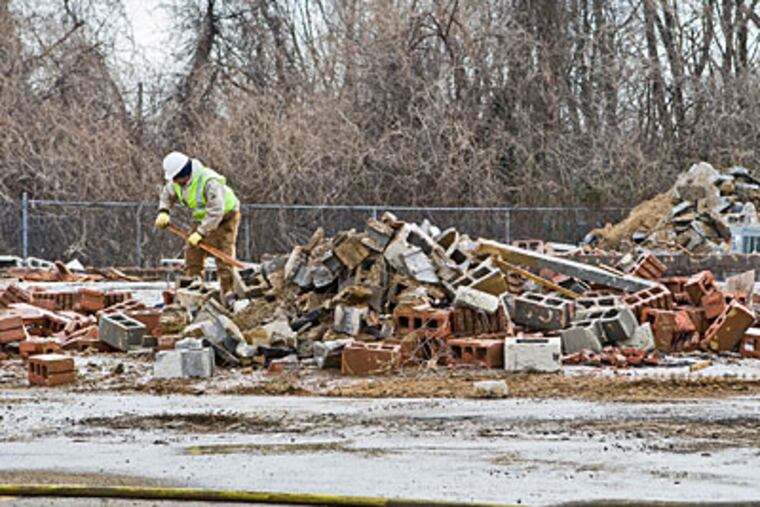
Documents retrieved from the toxic Kiddie Kollege day-care center the morning it was razed were contaminated to the point that lawyers who represent the children were not allowed to touch the materials with their bare hands.
State officials decided the documents - which were still emitting hazardous mercury vapors in January, four years after the Franklinville building was closed - should be photographed and then carted to a landfill for toxic substances.
On Friday, five compact discs full of pictures were provided to the lawyers who filed a lawsuit in Gloucester County soon after the day care was shuttered.
"It is clear from even the few photographs I looked at this afternoon that the person holding the documents for the photographer is wearing large, thick gloves," said Jim Pettit, who represents the families of nearly 100 babies and children who attended the day care at various times starting in 2004. He said it was ironic that state officials were "concerned about lawyers looking at the papers, but they stopped the testing for kids who were breathing the air" in a building where mercury was recorded at 27 times the acceptable level.
The suit seeks to have the state, the building owners, and others pay for medical monitoring to make sure the children are promptly treated for any ailments that could arise from their exposure to the toxin. Mercury vapors can cause neurological and kidney problems.
The state Department of Health tested the children shortly after the day care closed and determined a few weeks later that no further evaluation was needed. Health officials said they didn't believe the children would suffer long-term effects.
Parents are less certain.
To prepare for trial, the lawyers asked to examine the documents that were left behind in the rush to vacate the building after the day-care operator, who was pregnant, learned from Department of Environmental Protection inspectors that it was toxic.
The trial is scheduled for Sept. 13. The lawyers said the documents they have examined so far included business records, contact information for the children, and receipts for tuition.
Joseph Oschefson, one of the lawyers representing the families, said he was shocked when he learned a few months ago about the "hot documents" in the building. He mused that the state workers may have had to put on "hazard suits to look at the documents" and photograph them for the lawyers.
Richard Engel, a state deputy attorney general, said he didn't know precisely what precautions the DEP workers took. He said they put the documents in a plastic bag and then "stuck a wand into the bag just to see if there was mercury." The reading, he said, was elevated, but he didn't know the level.
Randy Weaver, another deputy attorney general in the case, characterized the mercury level as "minutely elevated."
DEP spokesman Larry Hajna said in an e-mail that he could not find out the mercury level and did not know how the DEP workers handled the documents.
Tina DeSilvio of Franklinville, who has two children who attended Kiddie Kollege, said the state's concern for the welfare of the lawyers but not the children "just goes to show their lack of priority and concern for who really matters in this situation - the children."
Last month, the DEP completed demolition and cleanup of the site. More than 1,500 tons of soil were taken to a toxic-waste landfill, along with the building debris. The building, a former thermometer factory with a history of spills, had been on the state's contaminated-sites list but was converted to a day care through a series of errors.
The lawsuit blames all levels of government for failing to prevent the day-care center from opening in the building, which had not been properly decontaminated.
Jim Sullivan Jr., one of the building owners, said he and family members bought the building in a tax foreclosure and assumed the contamination was minimal. He testified that he misread an environmental report that said the building was toxic.
Local, county, and state governments blamed one another for failing to take a closer look before approvals were granted for the conversion.