Rutgers going to court over Whitman Arts Center
Rutgers University-Camden will go to court Wednesday to fight a restraining order blocking its plans to convert a Walt Whitman Arts Center theater into classrooms.
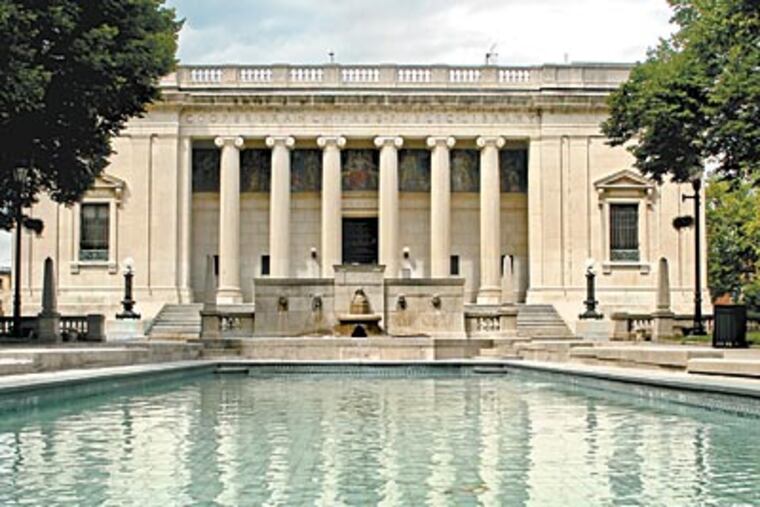
Rutgers University-Camden will go to court Wednesday to fight a restraining order blocking its plans to convert a Walt Whitman Arts Center theater into classrooms.
Rutgers had planned to begin construction Monday to turn the 184-seat theater into two lecture rooms, but the center filed a lawsuit last week in Superior Court.
"The burden is on [the university] to show why there shouldn't be any restraints in place and, even more significantly, why that venue is necessary to house the classroom," said arts center president and chief executive officer Philip Freeman.
The center's lawsuit is based on an implied verbal agreement when Rutgers acquired the building at 101 Cooper St. and a long-standing lease between the nonprofit center and university.
Judge Louis Melonie issued a restraining order Friday halting renovations.
"We think our position is very strong, because that venue was meant to be used for the arts programs and also in the community's interests," Freeman said.
Rutgers officials declined to comment.
The most recent written lease expired in December 2009. Freeman said the parties agreed on a new lease but never signed it.
Freeman said he had been led to believe that any renovations would take about three weeks and would not harm the stage area. The lease also specified that the arts center be notified 90 days before any renovations took place.
The City of Camden - which opened the building in 1918 as the Cooper Branch of the Free Public Library - deeded it to Rutgers in 1986, 11 years after the center was founded there. Strapped for upkeep costs, Freeman said, the city turned it over with the understanding that the center could continue its operations rent-free.
"We knew Rutgers would take better care of it than the city was doing," said Frank Fulbrook, Cooper neighborhood association vice president.
Fulbrook spoke in favor of Rutgers when the university acquired the building. Since then, he has been disappointed with Rutgers' stewardship, he said.
"There are things that they need to do to renovate that building, but butchering it is not one of them," Fulbrook said.
Rutgers has offered two of the school's theaters, a black-box theater and the 600-seat Gordon Theater, as alternative space for Whitman center, but the center's administrative director, Pattricia Patiño, says they are both insufficient.
The black box is "really small, and it's not sufficient for the programs we have here . . . and the Gordon Theater is too big," Patiño said.
The Gordon also would be shared with Rutgers students and staff, which would limit available times for the Whitman center. Besides the center's packed arts schedule - including a nine-month opera series and a youth summer camp - the community also uses the building.
"At the beginning of June, we had a graduation of almost 400 kids from kindergarten. . . . I heard the ABCs from 9 a.m. to 1 p.m.," Patiño said. The site also hosts mayoral debates and town hall meetings.
"How are we going to accommodate all this stuff in the Gordon Theater? We're going to have it occupied from 9 a.m. to 9 p.m.," she said.
In addition to availability issues, the Gordon - albeit rent-free - would necessitate fees for security, stage crews and the like, Freeman and Patiño said. For the Whitman Center's two-week production of the opera Carmen, these fees would total at least $3,000.
"That doesn't seem like it's much of an accommodation," Freeman said.
"To close the center for the purposes of having a classroom would be a travesty and, on a larger scale, would disenfranchise Camden's residents," he said.