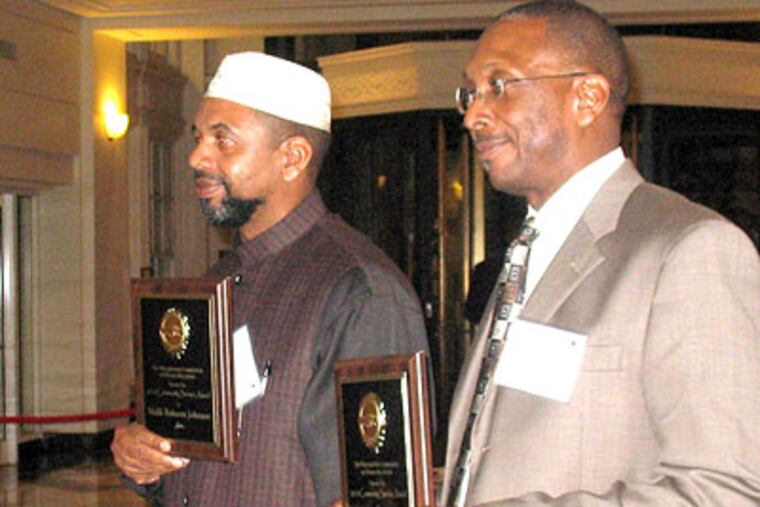
Malik and Calvin Johnson honored for founding Philadelphia's Weekend of Peace
Before they had hundreds of participants, a dozen locations, and passionate supporters, Malik and Calvin Johnson had basketball. With their mother as one of the first female coaches in their West Philadelphia neighborhood in the 1960s, the Johnson brothers and their family used sports - informal basketball, baseball, and football games - to bring their street together and help young people stay out of trouble.
Before they had hundreds of participants, a dozen locations, and passionate supporters, Malik and Calvin Johnson had basketball.
With their mother as one of the first female coaches in their West Philadelphia neighborhood in the 1960s, the Johnson brothers and their family used sports - informal basketball, baseball, and football games - to bring their street together and help young people stay out of trouble.
Seven years ago, the brothers organized another basketball tournament in their community, an event that grew into an annual citywide gathering. The Weekend of Peace brings together community organizations to hold simultaneous events during the last week of July to focus on neighborhoods' needs. On Thursday night, Mayor Nutter and the Philadelphia Commission on Human Relations presented the Johnson brothers with an award for coordinating the events. It was the first time the Weekend of Peace had been honored.
The Johnsons were among 16 Philadelphia community leaders the commission honored. Judges C. Darnell Jones and Annette M. Rizzo also were recognized for founding the Philadelphia Residential Mortgage Foreclosure Diversion Program, which has saved more than 900 homeowners from foreclosure.
The way the Weekend of Peace evolved and the brothers' humility inspired Patricia Coyne to nominate them for the award. Coyne, a staff member of the human-relations commission since 1996, said Malik and Calvin Johnson were "symbolic of the kind of work that's being done out there in the community."
"It wasn't about ownership," she said. "They're always expanding and embracing more and more ethnic and religious groups."
Malik Johnson, who now runs the Village of Champions youth group at the Cobbs Creak Recreation Center in West Philadelphia, described the peace weekend as like a block party. But instead of just food and socializing, the various locations throughout the city address issues such as AIDS, sexual assault, and gun violence through fairs, poetry contests, and music.
"Just imagine if you woke up on a Saturday morning and a section of Philadelphia was engaged in a demonstration of peace," he said of the weekend, which brings attention to the work of groups active in their communities throughout the year.
Each event during the Weekend of Peace is tailored to the issues of a neighborhood, from Roxborough and Mount Airy to South Philadelphia. The only requirement, Calvin Johnson said, is that each site observe a moment of silence at noon for those who have lost their lives to violence.
Though the brothers' work has grown beyond its roots in their childhood neighborhood, two elements remain the same: basketball and the support of their mother.
"Whatever they had, I tried to be there," Mary Johnson, 83, said of her sons at the awards ceremony.
Calvin Johnson, 55, has headed various community groups since 1979 and is now codirector of the Eastwick Recreation Center in Southwest Philadelphia. He sees the most positive effect of the peace weekend in the young men who play basketball at Eastwick: There are no more physical fights.
In a world dominated by violent images in video games, films, and television, Calvin Johnson said, he can provide to young girls and boys the structure and support that many of their households lack.
"They say, 'You know, Mr. Calvin, you're kind of mean and everything,' " he said of the young people at Eastwick. "But sometimes they're just looking, sometimes they want that discipline."
Malik Johnson, 50, shares his brother's goals.
"If a person could put a gun down one day," he said, "maybe they could change their life forever."