Decade of explosive growth is reshaping Woolwich Twp.
When Larry Wallace moved to Woolwich seven years ago, he was drawn by the Gloucester County township's rural character, reasonably priced housing, good schools, and low crime. His property tax was about $5,500.
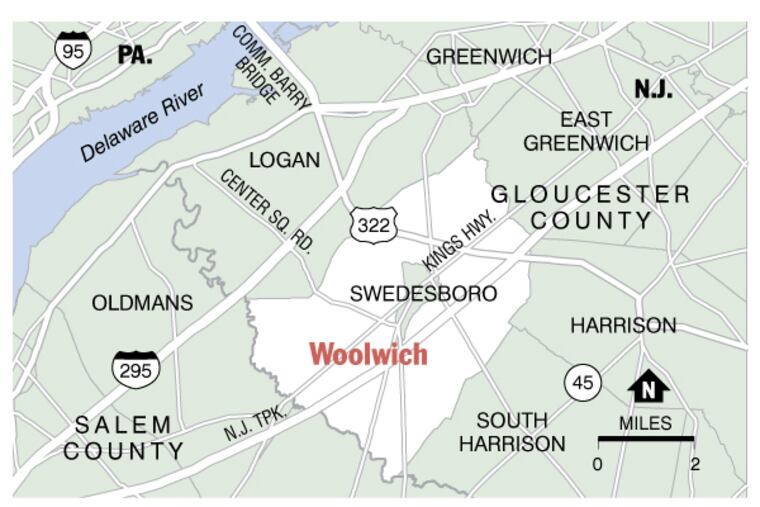
When Larry Wallace moved to Woolwich seven years ago, he was drawn by the Gloucester County township's rural character, reasonably priced housing, good schools, and low crime. His property tax was about $5,500.
Since then, much has changed.
"It's been a paradise for a lot of people. Now it's a tax nightmare," said Wallace, a county freeholder.
Woolwich - the fastest-growing town in New Jersey's fastest-growing county, according to U.S. Census data released last week - has gradually increased its levy to provide services to its ballooning population.
"The irony is that everyone wanted to move here and now that they're here, they don't want anyone else to move in," said Wallace, whose tax bill is now nearly $10,000.
The number of residents in the township more than tripled to 10,200 from 2000 to 2010, census figures show.
There are 3,421 children in Woolwich, more than its entire population in 2000. And that number weighs heavy on the schools.
The Kingsway Regional School District, which has a middle school and a high school, sought approval for a major expansion and was turned down by voters in a December referendum.
Even in a place where 2005-09 census figures show that 55 percent of households included children, and where 44 percent of residents older than 25 had at least a bachelor's degree, residents had had enough. "People are tapped out. They're not willing to fork over any more cash," said Wallace, 48, who owns a dental practice management company. "Governments are dealing with a double-edged sword - maintaining services and a quality school system while finding resistance from taxpayers to pay more."
The average tax bill in Woolwich has doubled to $8,625 since 2000. The municipal budget is $8.9 million.
The schools are caught between the need to expand, the Christie administration's cut in state education aid, and the public's demand that districts hold down taxes. The influx of residents "has placed an almost unbearable pressure" on the district, Superintendent James Lavender said. "The growth problems have been compounded by the state's failure to fund our schools.
"Class sizes are increasing - some are tipping 30. The cafeterias are maxed out. The corridors can't accommodate the population."
Some of Woolwich's change can be traced to construction, starting in 1998, of hundreds of houses at a development called Weatherby. The homes are a half-hour from Philadelphia and close to the New Jersey Turnpike and I-295.
"I think the location of Woolwich Township was the reason for the growth," said Joe Chila, a former Woolwich mayor and a current township committeeman and county freeholder. "The county's slogan is 'Close to everything, far from it all,' and it applies to the township."
The town's population was 1,129 in 1980, 1,459 in 1990, and 3,032 in 2000, Chila said. Between 2005 and 2009, the median household income was $109,588, and 55 percent of residents worked in management or professional occupations, according to census data.
In 2003, "in the early years of my tenure [as mayor], we were seeing close to a house a day" being built, Chila said. "The Weatherby project brought in considerable growth."
The new arrivals meant "we had to increase our services," he said. "We tried to provide park land, an increased police force, and recreation."
The Public Works Department also had to be increased, said Sam Maccarone, a retired corrections officer who this year followed Chila as mayor. For $9 million, "we built a new municipal complex to meet the growing needs of the community," Maccarone said. "We replaced an old municipal building with a trailer hooked up to it."
Woolwich helped lead the way for growth across Gloucester County, whose population rose 13 percent in the last decade.