Caregiver in death sent to prison
Stacey Strauss, a former caregiver who fatally forgot a helpless autistic man inside a hot van last summer, was sent to state prison Monday by a Bucks County judge clearly miffed at her lack of repentance.
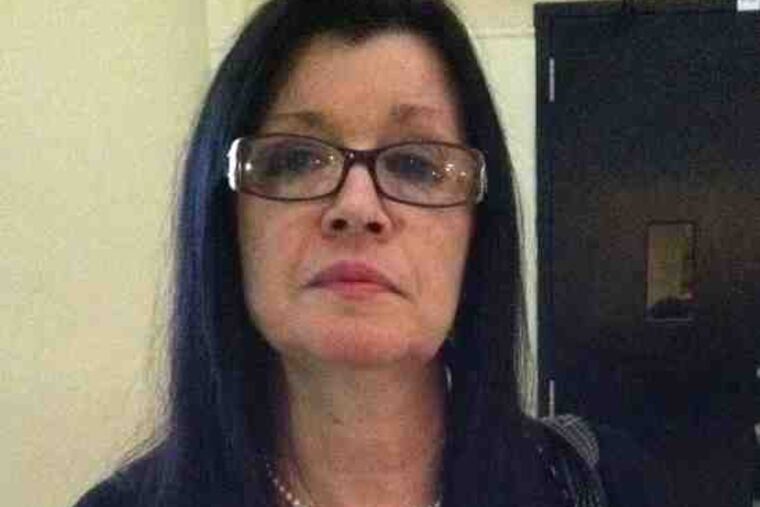
Stacey Strauss, a former caregiver who fatally forgot a helpless autistic man inside a hot van last summer, was sent to state prison Monday by a Bucks County judge clearly miffed at her lack of repentance.
"Frankly, Ms. Strauss, I don't believe I've heard . . . a less remorseful statement from someone about to be sentenced," Judge Albert J. Cepparulo told her.
He then slapped her with a two- to five-year sentence for involuntary manslaughter, six months short of the maximum allowed for that misdemeanor crime. Her lawyers had argued for a sentence of one year or less.
Strauss, 41, whose courtroom statements to Cepparulo had ranged from sobs to frosty denials, showed no emotion as she departed silently in handcuffs.
On July 24, one of the hottest days of the summer, Strauss had left 20-year-old Bryan Nevins in a closed van at Woods Services in Middletown, where Nevins lived and Strauss worked as a residential counselor. He was found more than five hours later, dead of hyperthermia.
The tragedy happened after Strauss and a coworker had returned from a trip to nearby Sesame Place. Nevins, who functioned at the level of a 2-year-old, was unable to get out of the van on his own.
Competing for Strauss' attention was the apparent allure of her cell phone.
Records showed that she talked on the phone for more than three hours of her eight-hour shift, and made or received 71 text messages, all in violation of Woods Services regulations. Among the calls was a 44-minute chat with her boyfriend during the time Nevins is believed to have died inside the van.
"During that phone call, if the defendant had gone to Bryan, his life would have been saved," Deputy District Attorney Robert James told Cepparulo.
Instead, James said, "Bryan literally baked in that vehicle while she was on the cell phone with her boyfriend."
Strauss had begun her day in court by pleading guilty to misdemeanor charges of neglecting a care-dependent person, involuntary manslaughter, and recklessly endangering another person.
Prosecutors had reduced the neglect charge from a felony after defense attorneys Gregory Pagano and Robert Lynch challenged the legality of the charge in a death case. The two sides had agreed upon a sentence of five years' probation on that charge.
But after character witnesses testified about her caring nature and the depth of her sorrow, Strauss became her own worst enemy.
Despite strong evidence to the contrary, Strauss continued to deny that she had been assigned responsibility for Nevins on the trip to Sesame Place. She also insisted that she had carefully checked the inside of the van after parking it, and said that everyone had gotten out of the vehicle.
Her statements prompted Cepparulo to reject two of her guilty pleas and change them to pleas of "no contest."
Strauss tearfully apologized to Nevins' family.
"Bryan wasn't just a client to me," she said. "I love Bryan, and I say 'love' instead of 'loved' because love never dies."
But when Strauss went on about her own suffering since Nevins' death, Cepparulo eyed her incredulously.
"You've suffered for seven months," he said, repeating what Strauss had just told him. "Can you imagine how the Nevins family must feel?"
Nevins' parents described their son as challenging but endearing.
They told of a son so childlike he would stand in a corner with his eyes closed and think he could not be seen. Of a smiling boy who could not converse, but loved to ride in cars, walk in the woods, and be praised as a "good boy."
"He lit up my life, and I don't know how I will face all the rest of my days without him," said his mother, Diane.
Bryan was among triplets, one of whom, Billy, is also severely autistic. The brothers' sister, Kelly, who was born without disabilities, visited them every other weekend at Woods, aspired to a career helping special-needs children, and planned to build onto her house to care for them.
Since her brother's death, Kelly Nevins has been diagnosed with posttraumatic stress syndrome, seldom ventures outside, and is in weekly counseling. Too distraught to attend court Monday, she sent a statement that was read aloud.
"How can an innocent, beautiful person be taken away from his world and the woman responsible for it be free and claim that it was an accident?" she wrote. "Our only hope for a small sense of peace will be a sentence that will be a fair representation of what this negligent woman has taken away from my family and myself."
William Nevins, an ex-New York City homicide commander, spoke of the wrenching decision to send his sons to Woods Services six years ago to help them progress.
The boys had been scheduled to leave Woods for a facility closer to their home in Oceanside, N.Y. William Nevins spoke of Bryan's delight at the bedroom his father painstakingly refurbished two years ago and stocked with toys and stuffed animals. He has left it as it was, except for a small wooden box atop the dresser.
"It contains Bryan's ashes," he said. "Bryan is home now."
Bryan's brother Billy, his mind at a 5-year-old's level, is the most affected, his mother said.
Unable to understand death or where his brother is, "Billy cries for Bryan and asks for him all the time," Diane Nevins said. "Billy's psychiatrist says he is grieving and he cannot help him get past it, nor does he know if he will ever get past it."
Cepparulo recounted those tales as he stared down at Strauss.
"People assume that disabled children are incapable of touching others," he said. "This young man, in his short time here, has touched many people."
Bryan Nevins had been dealt a bad hand in life, he said, but had met "a lot of aces, kings, and queens" who gave him a chance at a good life.
"Ms. Strauss," he said, "today you will be paying a price for taking that chance away."