Request refused to toss first-degree charge in Khalil Wimes case
A Common Pleas Court judge rejected a defense lawyer's request Tuesday to toss out a first-degree murder charge against the father of Khalil Wimes, the 6-year-old South Philadelphia boy allegedly starved and beaten to death by his parents.
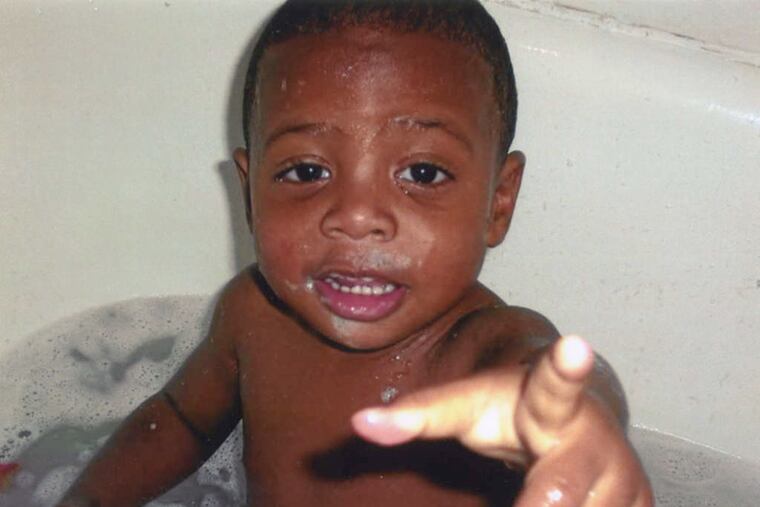
A Common Pleas Court judge rejected a defense lawyer's request Tuesday to toss out a first-degree murder charge against the father of Khalil Wimes, the 6-year-old South Philadelphia boy allegedly starved and beaten to death by his parents.
The decision came on the same day that the Department of Human Services announced that the agency would take "appropriate disciplinary action" against staff members as a result of Khalil's death in March.
Khalil's parents, Floyd Wimes, 48, and Tina Cuffie, 44, were arrested after they brought Khalil's emaciated and beaten body to Children's Hospital of Philadelphia.
During Tuesday's pretrial conference, Wimes' lawyer, Derrick Coker, argued that Cuffie, not his client, was Khalil's primary caretaker and was responsible for the fatal abuse.
Prosecutors earlier said Khalil endured years of beatings by his parents, often with belts and extension cords, and was routinely denied food.
At an earlier hearing, a medical examiner needed 61 minutes to list the new and old scars on Khalil's body and said the wounds were "too numerous to put a number on."
Weakened and sick from the prolonged abuse - and weighing only 29 pounds - Khalil died from head trauma after Cuffie smacked him in the bathroom on the morning of his death.
In a motion submitted to the court for Tuesday's hearing, First District Attorney Edward McCann and Assistant District Attorney Carolyn Naylor argued that Wimes was equally responsible for Khalil's death.
At the time of his arrest, Wimes told investigators he visited Khalil every other day, and knew his son was "covered with scars and bruises" and "grossly underweight" as a result of being starved.
Wimes told investigators he had not contacted authorities because he did not want his wife to lose custody of her children.
"The inaction plus the starvation equals a specific intent to kill," McCann said Tuesday.
Prosecutors expect evidence will show that both parents physically abused Khalil. A trail date has yet to be set.
Meanwhile, DHS Commissioner Anne Marie Ambrose released a statement saying the agency had completed an internal investigation of Khalil's death and "will take the appropriate disciplinary action in light of our findings."
Alicia Taylor, a DHS spokeswoman, said city policy prohibits the agency from releasing names of employees or actions taken against them. And confidentiality restrictions prevent DHS from discussing the findings of the internal investigation, Taylor said.
In April, an Inquirer review of Khalil's death showed that DHS staffers had regular contact with him in the final months of his life.
At that time, Mayor Nutter announced that the city had removed from active casework the social worker who had contact with Khalil and would examine all other cases handled by the worker and the worker's supervisor.
A separate inquiry into Khalil's death was conducted by a multidisciplinary team of child-welfare experts as part of a state mandated review of all child-fatality cases.
That review, conducted weeks after Khalil's death and known as an Act 33 report, is expected to be released next month. An Act 33 report does not suggest disciplinary action but can critique practices.
"We will follow all the recommendations made by the Act 33 team regarding the tragic death of Khalil Wimes," Ambrose said in her statement.
Frank Cervone, a member of the child welfare review panel that examined the agency after the 2006 of 14-year-old Danieal Kelly in DHS care, said Act 33 reports are key to reform.
But Cervone, executive director of the Support Center for Child Advocates, an independent agency, said the "continued need for transparency" should also extend to DHS internal review.
"I don't see any reasons why a public agency shouldn't disclose the results of its internal investigation," Cervone said. "We have to look at mistakes we might have made in working with a child or family.
"Without a full explanation," he continued, "we're left to wonder."