PBS revisits the 1932 Lindbergh kidnapping
On March 1, 1932, the 20-month-old son of the aviator Charles A. Lindbergh was kidnapped for ransom from the family's Hunterdon County, N.J., mansion in a crime that stunned the nation and remains the subject of doubt and speculation more than 80 years later.
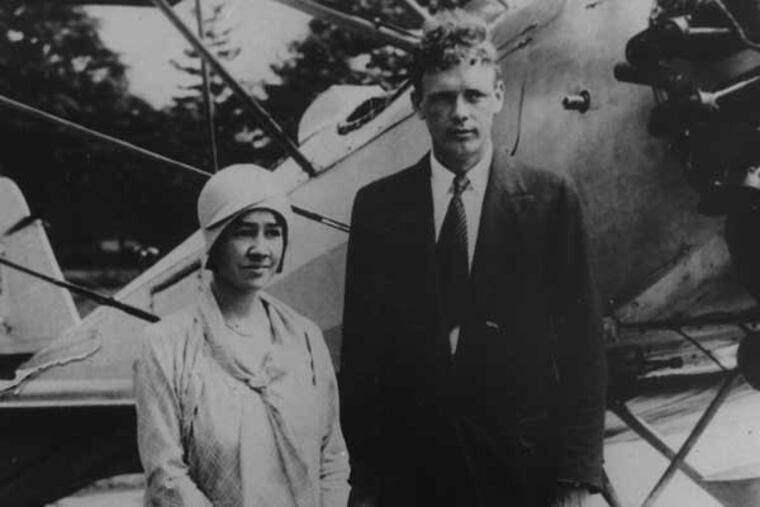
On March 1, 1932, the 20-month-old son of the aviator Charles A. Lindbergh was kidnapped for ransom from the family's Hunterdon County, N.J., mansion in a crime that stunned the nation and remains the subject of doubt and speculation more than 80 years later.
Now the PBS science program Nova is weighing in on the case, relying on behavioral science and forensics to try to solve it.
But, as in past efforts, the program, scheduled to air at 9 p.m. Wednesday on WHYY TV12, offers answers to some questions but raises others as well.
The documentary focuses mainly on the analysis of John E. Douglas, a former FBI agent and one of the agency's first criminal profilers.
Douglas says his investigation proved to him that Bruno Richard Hauptmann, who was executed for the crime, did not act alone.
Hauptmann and his accomplices killed Charles Lindbergh Jr. because they did not want to care for a toddler while waiting to collect their $50,000 ransom, Douglas said.
Some have suspected that the child's skull was fractured as he was carried down a ladder from his second-floor bedroom.
Douglas spends some time exploring the possible role in the kidnapping of John Knoll, a German immigrant whose name was not linked to the case until recently.
In Cemetery John: The Undiscovered Mastermind of the Lindbergh Kidnapping, Robert Zorn recounts the story based on a recovered memory told to him by his father, Eugene Zorn.
Robert Zorn, in an interview with The Inquirer in July, said his father was a 15-year-old boy in 1931 when he accompanied Knoll, a neighbor, on an outing to Palisades Amusement Park.
There, John and his brother Walter met with another German named Bruno, and Eugene Zorn heard them talking about Englewood, where the Lindberghs then lived.
Cemetery John was the name given to the person to whom a Lindbergh intermediary, John F. Condon, passed the ransom money in a New York City cemetery a month after the kidnapping.
Condon later provided a description police used to create a drawing of the ransom taker and said the man had a fleshy lump on his right thumb.
Douglas agrees with the book's findings that John Knoll matches the drawing and notes that other photographs of Knoll show he had unusually large thumbs.
An expensive first-class trip by ship to Germany that Knoll took with his wife during Hauptmann's trial also raises suspicions, according to the book.
Douglas says he would consider Knoll a prime suspect worthy of further investigation, but the existing evidence would not be enough to charge him.
One thing is clear, Douglas said: "Someone absolutely got away with money and murder."