Does violent art promote violence?
That's Virginia Tech gunman Cho Seung-Hui pictured above right, wielding a hammer in a pose obviously modeled on the vengeful central character in South Korean director Park Chan-wook's disturbing 2003 film, Oldboy. The film received a four-star review from Roger Ebert and won a jury prize at the Cannes Film Festival (and was featured at the 2005 Philadelphia Film Festival). It is about a man imprisoned in solitary confinement for 15 years who, once freed, goes on a bloody rampage mowing down his captors.
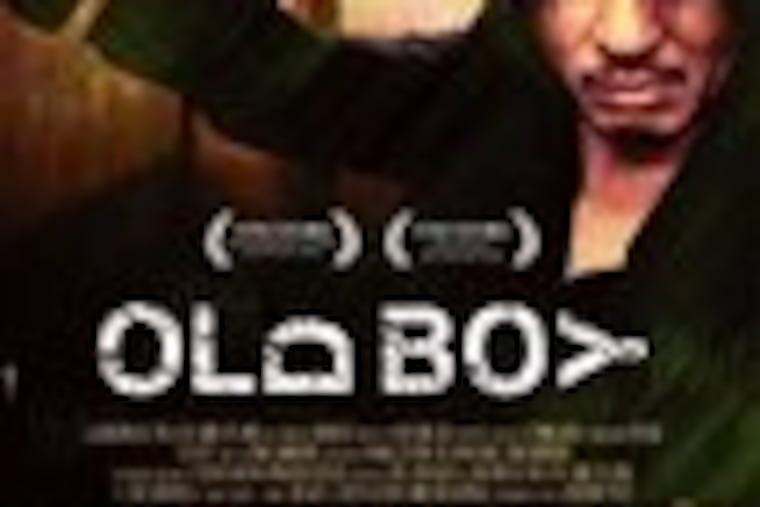
That's Virginia Tech gunman Cho Seung-Hui pictured above right, wielding a hammer in a pose obviously modeled on the vengeful central character in South Korean director Park Chan-wook's disturbing 2003 film,
Oldboy
. The film received a four-star review from Roger Ebert and won a jury prize at the Cannes Film Festival (and was featured at the 2005 Philadelphia Film Festival). It is about a man imprisoned in solitary confinement for 15 years who, once freed, goes on a bloody rampage mowing down his captors.
The Oldboy connection raises the chicken-or-egg question of whether violent imagery causes violent acts. Does a toxic movie incite toxic action, or is a sick soul unusually suggestible to toxic images?
This pertinent question is periodically asked, but never conclusively answered. We asked it when John Hinckley, under the influence of Taxi Driver's Travis Bickle, attempted to assassinate President Ronald Reagan. Like Bickle, Hinckley said, he was trying to impress Jodie Foster, the young co-star of the 1976 film.
We asked it again after the Columbine massacre when killers Eric Harris and Dylan Klebold were found to be fans of the Leonard DiCaprio film The Basketball Diaries - in which DiCaprio's character has a slo-mo fantasy of himself, clad in a long trench coat, entering a classroom and killing fellow students - and the question had tragic currency.
Now Cho, who took a break between murders to mail an Oldboy-influenced videotape of his isolation and anger and ranting to NBC News, obliges us to ask this question again.
In 2002, a federal judge dismissed the lawsuit claiming that moviemakers and game-makers shared blame for Columbine. Judge Lewis Babcock ruled that a decision against the moviemakers would have a chilling effect on First Amendment protections of free speech.
He said that setting aside his personal distaste, there was a social utility in expressive and imaginative forms of entertainment, even if they contained violence.
In other words, rather than commit acts of violence, filmmakers and audiences vicariously can experience them in the movies rather than perpetrate them in life. Ideally, popular art can be society's safety valve. At Virginia Tech, the valve burst.