Newfound caves may be link to long-lost Marine
A U.S. team made the find on Iwo Jima. Its leader wants a wider effort and excavation.
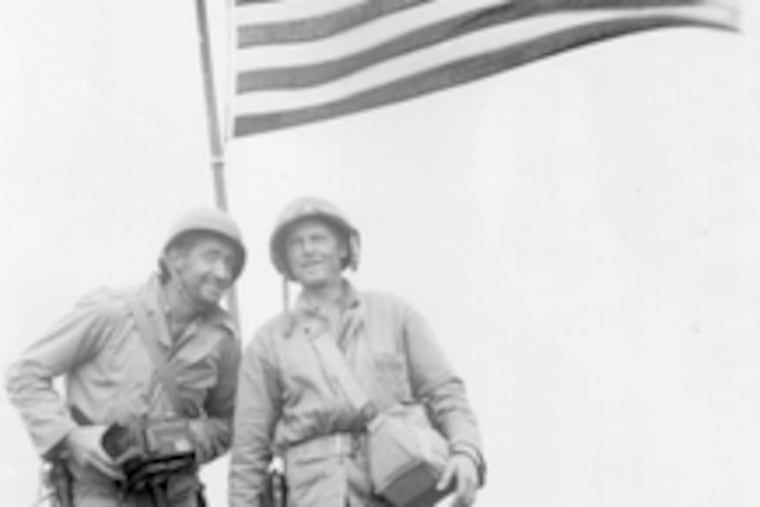
IWO JIMA, Japan - Avoiding unexploded grenades and hacking their way through cactus under a blazing sun, an American search team has located two caves where they believe a Marine who filmed the iconic flag-raising on Iwo Jima may have been killed 62 years ago in one of World War II's most symbolic battles.
The team, which wrapped up its 10-day expedition yesterday, was the first U.S.-led search on this remote volcanic island since 1948.
Army Maj. Sean Stinchon, who led the effort, said the team conducted an extensive search on the southwestern side of Hill 362A, where Sgt. William H. Genaust was believed killed by enemy gunfire March 4, 1945.
Stinchon's team located two previously unmapped sites but was unable to search them because of the possibility of a collapse and because of obstacles blocking the way. He said the team would recommend that a larger search party be sent in with heavy equipment to excavate.
An explosives expert was on the team - Iwo Jima continues to be riddled with unexploded ordnance - and checked before the team did any digging. Shrapnel from the battle, a turning point of the war, still littered the ground.
The condition of the two caves also underscored the difficulty of the mission.
One was blocked by craggy debris, and searchers had to dig through five feet of dirt to get to the opening of the second cave. Bullets riddled the entrances to several caves and tunnels nearby.
"It's not a best-case scenario," Stinchon said.
Still, he said the mission was "very successful" and has created hope that the bodies of Genaust and possibly others will be found. "This is an initial investigation," he said. "We are definitely hopeful."
The team was sent by the Joint POW/MIA Accounting Command, stationed at Hickam Air Base in Hawaii.
Iwo Jima was the site of some of the fiercest fighting of World War II, and the photograph taken by AP photographer Joe Rosenthal of the flag-raising atop Iwo Jima's Mount Suribachi on Feb. 23, 1945, came to symbolize the Pacific War and valor of the Marines.
Genaust helped escort Rosenthal up the mountain, then filmed the flag-raising from just feet away from Rosenthal, who won the Pulitzer Prize for his photograph.
The United States officially took the island on March 26, 1945, after a 31-day battle that pitted about 100,000 U.S. troops against 21,200 Japanese. American deaths totaled 6,821, and only 1,033 Japanese survived. Still missing from the campaign are 280 U.S. troops, not including pilots and those lost at sea.
Japan's government and military are helping with the search on Iwo Jima, which this month was officially renamed Iwo To, the island's name before the war.
See video from AP, with war footage, via http:// go.philly.com/iwojima2 EndText