New list of 7 wonders of the world chosen
LISBON, Portugal - The Great Wall of China, Rome's Colosseum, and India's Taj Mahal were among seven architectural marvels named the new wonders of the world yesterday.
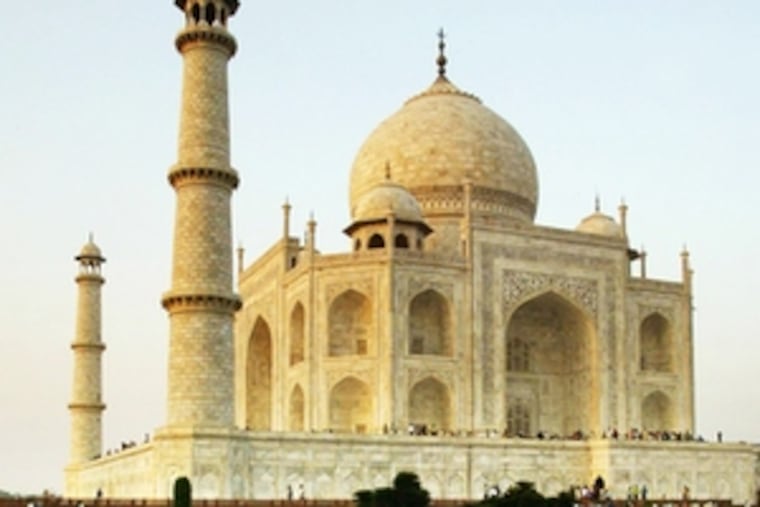
LISBON, Portugal - The Great Wall of China, Rome's Colosseum, and India's Taj Mahal were among seven architectural marvels named the new wonders of the world yesterday.
The other four winners, chosen by a global poll, were Peru's Machu Picchu, Brazil's Statue of Christ Redeemer, Jordan's Petra, and Mexico's Chichen Itza pyramid.
About 100 million votes were cast through the Internet and cell-phone text messages, the nonprofit organization that conducted the poll said.
The seven beat out 21 other nominated landmarks, including the Eiffel Tower, Easter Island, the Statue of Liberty, the Acropolis, Cambodia's Angkor, Spain's Alhambra, Turkey's Hagia Sophia, Japan's Kiyomizu Temple, Russia's Kremlin and St. Basil's Cathedral, Germany's Neuschwanstein Castle, Britain's Stonehenge, Mali's Timbuktu, and the Sydney, Australia, Opera House.
The campaign was launched in 1999 by the Swiss adventurer Bernard Weber. Almost 200 nominations came in, and the list was narrowed to the 21 most-voted by the start of 2006. Organizers admit there was no foolproof way to prevent people from voting more than once for their favorite.
The Great Pyramids of Giza, the only surviving structures from the original seven wonders of the ancient world, were assured of retaining their status in addition to the new seven after indignant Egyptian officials said it was a disgrace they had to compete.
The U.N. Educational, Scientific and Cultural Organization, or UNESCO, keeps a list of World Heritage Sites, which now totals 851 places, but the agency was not involved in Weber's project.
The traditional seven wonders were concentrated in the Mediterranean and Middle East. That list was derived from lists of marvels compiled by ancient Greek observers, the best known being Antipater of Sidon, a writer in the second century B.C.
The Hanging Gardens of Babylon, the Statue of Zeus at Olympia, the Temple of Artemis at Ephesus, the Mausoleum of Halicarnassus, the Colossus of Rhodes, and the Pharos lighthouse off Alexandria have all vanished.