Steam blast catches eye of many cities
It may be too soon to pinpoint the explosion's cause, but experts had a warning: Pipes don't last forever.
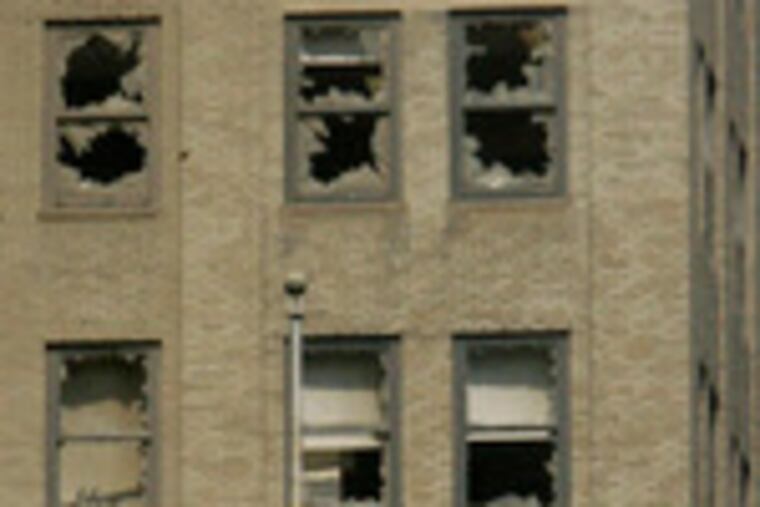
NEW YORK - With a blast that made skyscrapers tremble, an 83-year-old steam pipe sent a powerful message that the miles of tubes, wires and iron beneath New York and other U.S. cities are getting older and could become dangerously unstable.
The steam conduit that exploded beneath a Manhattan street at the height of rush hour Wednesday, just a block from Grand Central Terminal, was laid when Calvin Coolidge was president, and was part of a system that began providing energy to city buildings in 1882.
Investigators are still trying to determine what caused the explosion, but some experts said the age of the city's infrastructure was a possible factor. Pipes don't last forever.
"This may be a warning sign for this very old network of pipe that we have," said Anil Agrawal, a professor of civil engineering at the City College of New York. "We should not be looking at this incident as an isolated one."
From Boston to Los Angeles, a number of American cities are entering a middle age of sorts, and the infrastructure propping them up is showing signs of strain.
DePaul University transportation professor Joe Schwieterman said his city of Chicago, where much of the infrastructure dates to the early 20th century, was faced with tough choices on what to fix first.
"The aging infrastructure below the streets is an enormous liability for the city," he said. "We know it needs modernization, but the cost is staggering. We're forced to pick our battles wisely."
Thousands of miles of underground water and sewage pipes are nearing the end of their expected life, sometimes with a bang and a flash flood.
Electrical systems, operating with components that are decades old, have been groaning to handle record power demand.
The American Society of Civil Engineers estimates that it would take $1.6 trillion over the next five years to get the nation's roads, bridges, dams, water systems and airports into good condition.
But replacing old parts in a labyrinth of cables, tunnels and piping, often extending hundreds of feet down, is rarely easy.
"The fact that all of this stuff is crowded together in a very small space can also make accidents worse," said Rae Zimmerman, director of the Institute for Civil Infrastructure Systems at New York University.
"When one thing goes, other things go," she said. "When you have a water main break, it will wash out a street and break a gas line."
Smaller steam systems have operated largely without mishap in Chicago, Boston, Philadelphia and Baltimore, although a pipe explosion in the nation's capital near the White House badly injured two workers in 2004.
In New York, home to the largest steam system in the world, steam is pumped through more than 100 miles of mains and service pipes to customers such as the Empire State Building and Rockefeller Center. It is also widely used by dry cleaners and hospitals.
Just how much of a factor aging infrastructure was in Wednesday's steam main break is unclear.
Consolidated Edison, the utility that operates the steam system, insisted its equipment was in good shape.
The company said it was spending $20 million this year on upgrades, and has been removing older cast-iron components, eliminating asbestos from manholes and installing improved joints less likely to fail.
"I don't think there is any reason to worry," New York Mayor Michael Bloomberg said in the aftermath of the blast, which killed one person and injured dozens, some seriously. "I think that you see that these pipes generally perform fine."
Tests showed the explosion did not leave asbestos in the air, but it was found in some solid debris and dust that settled after the blast, the city said yesterday.
Some speculate that rainwater or water from a main break somehow seeped onto the pipe, and the sudden interaction between cold water and super-hot steam burst the conduit.
Watch videos of the explosion as it happened and New Yorkers' reaction via http://go.philly.com/steamEndText