Woods of East Texas draw unwanted crowd: Fugitives
The region was known as a haven for outlaws in the early 19th century. Some contend it still is.
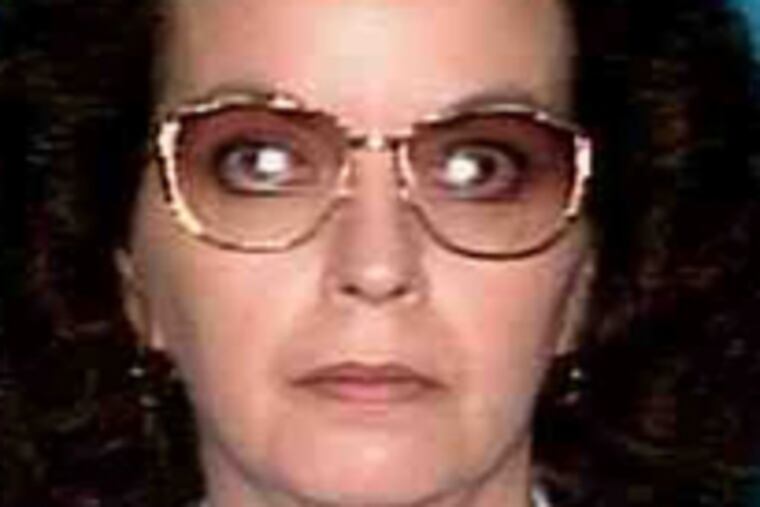
FRANKSTON, Texas - Living near the dense pine woods where some believe Bigfoot still covertly skulks, escaped convict Deborah Ann Gavin Murphey perhaps thought she, too, would not be found.
When she was arrested by U.S. marshals earlier this month, it had been 33 years after she slipped out of a Georgia prison. For someone on the lam since 1974, Murphey, 53, could hardly have picked a better area to hole up.
"It does seem that fugitives congregate here," said Corey Britt, a deputy with the U.S. Marshals' Joint East Texas Fugitive Task Force.
Murphey was arrested at the cottage-style house where she lived with her husband, raised two children, and napped afternoons before her shifts as a night nurse at a hospital in nearby Tyler. She is fighting extradition to Georgia, where she was sentenced to prison for the armed robbery of a store.
The arrest evoked memories of the 2005 capture in East Texas of an Oklahoma fugitive who had disappeared with the wife of an assistant prison warden 10 years earlier. Authorities found them living on a chicken farm near Campti, just east of the Louisiana border.
Not everyone buys the notion that this thickly wooded swath of Texas is a favorite destination for those running from the law. Yes, 112 fugitives were nabbed by U.S. marshals in Tyler during the last year, but that is far fewer than the number captured in Dallas or Fort Worth.
Anderson County Sheriff Greg Taylor dismisses the idea that the region's remoteness makes being a fugitive any easier. "We've got the same technology as everyone else," Taylor said. "We're not behind the piney curtain anymore."
Maybe not. But Archie McDonald, a professor at Stephen F. Austin University in Nacogdoches and executive director of the East Texas Historical Association, believes the region's terrain, culture and attitudes offer a near-perfect environment for lying low.
"East Texas, they respect your privacy, if that's what you want," McDonald said. "Basically, we are a live-and-let-live people."
The region's reputation as a criminal safe haven goes back to the Louisiana Purchase, when a boundary dispute between the United States and Spain left a strip of land known as the Neutral Ground. It remained a refuge for outlaws until 1812, when Spanish and U.S. soldiers finally ousted them.
Deborah Ann Gavin was a modern-day outlaw after she escaped the low-security Georgia Women's Correctional Institution. She eventually settled in this rural and sparsely populated area.
Her husband, Richard Murphey, bristles at media portrayals of his wife as a Bonnie Parker-like bandit who spent three decades constantly looking over her shoulder.
Indeed, other than changing her last name when she got married, Murphey wasn't exactly living off the grid. She enrolled in school to get her nursing degree, watched her son play defensive end on Friday nights for the Frankston Indians, and often was photographed when her quarterhorses won races in nearby Sulphur Springs.
Nor was Frankston a deliberately obscure choice for a place to settle down; Richard Murphey simply moved back to his hometown after he and Deborah met near Dallas in the 1970s.
Richard Murphey said his wife had told him "bits and pieces" of her past over the years, but he never pressed for details. He said she was not involved in the robbery and was asleep in the backseat when police surrounded a car linked to the case.
"We were just everyday people," he said. "We haven't been running."
If they were, count the Texas Bigfoot Research Conservancy among those impressed with Murphey's choice. Eighty percent of Sasquatch sightings the group receives are from the eastern third of the state.