Investigator says plane fell flat onto house
CLARENCE, N.Y. - A commuter plane that smashed into a house apparently plunged flat to the ground rather than nose-diving, ending up pointed away from the airport it was trying to reach, investigators said yesterday.
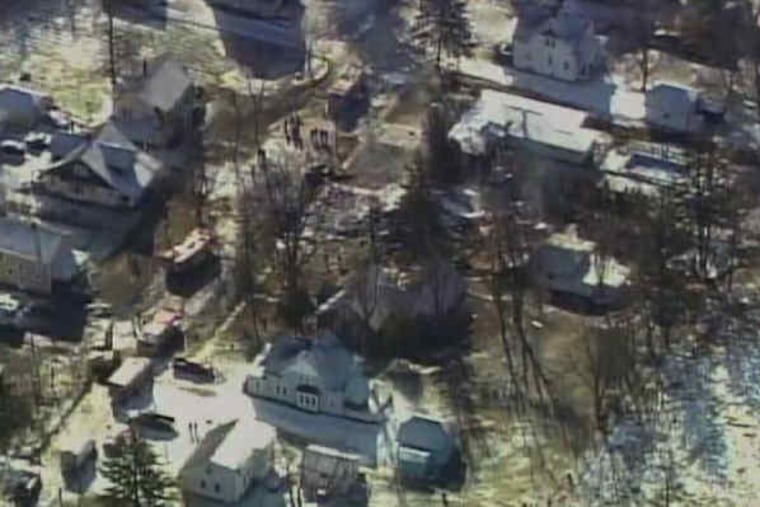
CLARENCE, N.Y. - A commuter plane that smashed into a house apparently plunged flat to the ground rather than nose-diving, ending up pointed away from the airport it was trying to reach, investigators said yesterday.
Investigators did not offer an explanation as to why the plane ended up pointed away from the Buffalo airport, but it does raise the possibility that the pilots were fighting an icy airplane: Air-safety guidelines say pilots can try a 180-degree turn to rid a plane of ice.
Other possible explanations are that the aircraft was spinning or flipped upon impact.
Flight data showed the plane's safety systems warned the pilot that the aircraft was perilously close to losing lift and falling from the sky. The ensuing crash killed 49 people on the plane and one in the house.
Continental Connection Flight 3407 was cleared to land on a runway pointing to the southwest, but it crashed with its nose pointed northeast, said Steve Chealander, a National Transportation Safety Board member.
The Newark-to-Buffalo flight didn't nose-dive into the house, as initially reported by some witnesses, Chealander said.
It will take up to four days to remove human remains from the site, which he called an "excavation."
"Keep in mind, there's an airplane that fell on top of a house, and they're now intermingled," he said.
The plane - on its descent to Buffalo Niagara International Airport in a light snow and mist - plunged suddenly about six miles shy of the runway and exploded.
A "stick shaker" and "stick pusher" mechanism had activated to warn Capt. Marvin Renslow that the plane was about to lose aerodynamic lift, a condition called a stall. When the "stick pusher" engaged, it would have pointed the nose of the plane toward the ground to try to increase lift.
Crash investigators picked through incinerated wreckage yesterday, gathering evidence to determine what brought down the plane. Icing on the aircraft is suspected to have played a role, but officials have stopped short of calling that the cause.
Chealander said that indicator lights showed the deicing equipment was working and that investigators who examined both engines said it appeared they were functioning normally at the time of the crash.
Experts were analyzing data from the black boxes, including statements by crew members about a buildup of ice on the wings and windshield of the plane, Chealander said.
If a deicing system isn't working, guidelines from the Aircraft Owners and Pilots Association Air Safety Foundation say, pilots can take a number of steps, including changing speed, pulling the nose up or down, or trying a 180-degree turn.
On Friday, Sen. Robert Menendez (D., N.J.) said that Transportation Secretary Ray LaHood had told him he believes the aircraft made a 180-degree turn at 5,000 feet.
But there could be other explanations for why the plane was facing the wrong way.
Chealander said the NTSB would use data on the black boxes to determine whether the plane was in a flat spin before it crashed. Flight data indicated "severe" pitching and rolling before impact, so the violent nature of the crash also could have turned the aircraft around.