New journey for Amistad
A replica of the ship sails south, aiming to promote U.S.-Cuba ties.
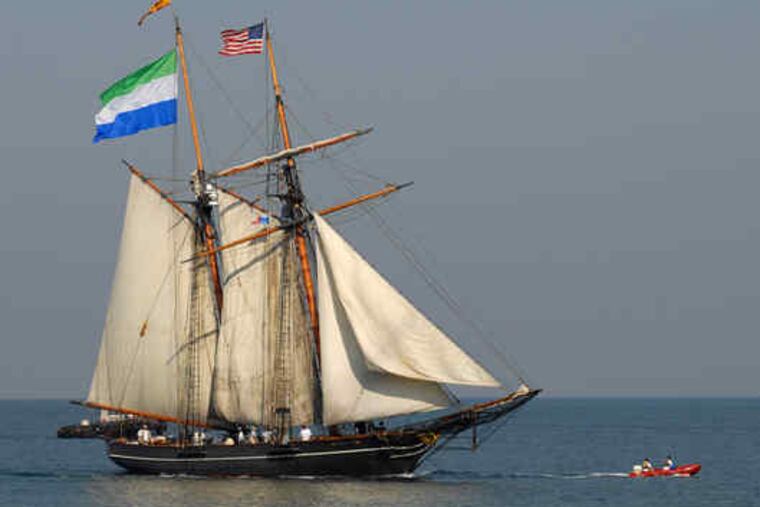
WASHINGTON - It will be the rarest of sights: a black-hulled, two-masted replica of a slave-carrying schooner slipping into Havana's harbor flying two flags - those of the United States and Cuba.
That's how it is for the Amistad, a symbol of both a dark 19th-century past and modern public diplomacy.
The Amistad is the 10-year-old official tall ship of the state of Connecticut and a replica of the Cuban coastal trader that sailed from Havana in 1839 with a cargo of African captives, only to become an emblem of the abolitionist movement.
The ship's 10-day, two-city tour of Cuba provides a counterpoint to new and lingering tensions between Washington and Havana and stands out as a high-profile exception to the 47-year-old U.S. embargo of the Caribbean island.
For the Amistad, it also represents a final link as it retraces the old Atlantic slave-trade triangle, making port calls that are not only reminders of the stain of slavery but also celebrations of the shared cultural legacies of an otherwise sorry past.
When it drops anchor in Havana's harbor on March 25, the Amistad will not only observe its 10th anniversary, it will commemorate the day in 1807 when the British Parliament first outlawed the slave trade.
The powerful image of a vessel displaying home and host flags docking in Cuba is not lost on Gregory Belanger, the chief executive officer and president of Amistad America Inc., the nonprofit organization that owns and operates the ship.
"We're completely aware of all of the issues currently surrounding the U.S. and Cuba," he said. "But we approach this from the point of view that we have this unique history that both societies are connected by. It gives us an opportunity to transcend contemporary issues."
It's not lost on Rep. William Delahunt, either. The Massachusetts Democrat has long worked to ease U.S.-Cuba relations and he reached out to the State Department to make officials aware of the Amistad's proposal.
U.S.-flagged ships have docked in Havana before, but none as prominently as the Amistad. The Treasury's Office of Foreign Assets Control has periodically approved Cuba stops for semester-at-sea educational programs for American students, and the Commerce Department has authorized U.S. shiploads of exports under agriculture and medical exemptions provided in the Trade Sanctions Reform Act of 2000.
"Obviously we have serious differences, disagreements," Delahunt said. "But in this particular case the two governments, while not working together, clearly were aware of the profound significance of this particular commemoration."
The Amistad's visit comes as international tension over Cuba's human rights has heightened since the Feb. 23 death of Orlando Zapata Tamayo after a long hunger strike in jail. Another dissident has refused to eat or drink since shortly after Zapata Tamayo's death. Both men are of African descent.
The original Amistad's story, the subject of a Steven Spielberg movie, began after it set sail from Havana in 1839. Its African captives rebelled, taking over the ship and sending it on a zigzag course up the U.S. coast until it was seized off the coast of Long Island.
The captured Africans became an international cause for abolitionists; their fate was finally decided in 1841 when John Quincy Adams argued their case before the Supreme Court, which granted them their freedom.
Miguel Barnet, a leading Cuban ethnographer who has studied the diaspora, said it is only appropriate that the new Amistad would call on the place of the original ship's birth. Indeed, he said, it is the horror of the slave trade that left a rich common bond - not just between the United States and Cuba, but with the rest of the Caribbean - that is rooted in Africa.
"That's why this is an homage to these men and women who left something precious for our culture," he said.
The new Amistad has crossed the Atlantic and wended its way through the Caribbean since 2007. It has worked with the United Nations and UNESCO's Slave Route Project. Using high technology hidden in its wooden frame, the ship's crew of sailors and students simulcasts to schools and even the U.N. General Assembly.
It will do so again - with Cuban students - from Havana.