Crash amounts to a hoax
Zimbabwe's airport made a false report to test the emergency response.
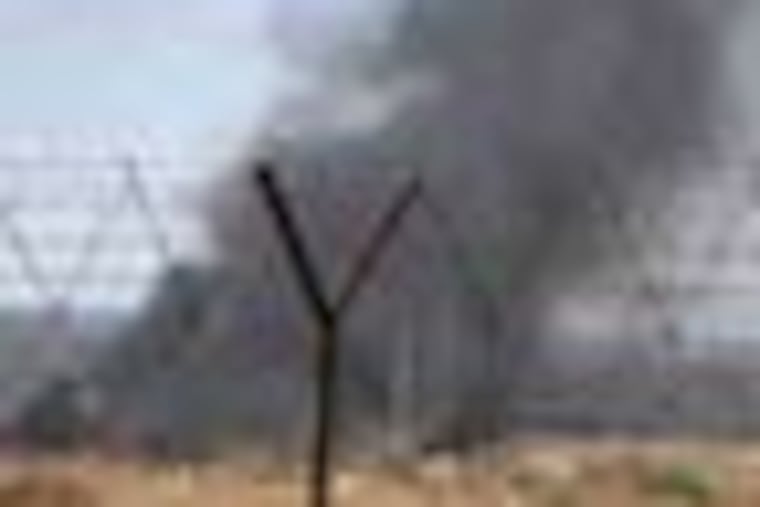
HARARE, Zimbabwe - Around the world, the news went out: Plane accident in Zimbabwe, black smoke on runway, ambulances screaming in.
Except the disaster never happened.
Harare airport authorities tricked the public and the world's media into believing a security drill Thursday was a crash to make the drill and the emergency response seem more real.
It's a practice that has been used elsewhere but is seen as especially risky in a world where panic is only a few tweets or clicks away.
"Emergency drills are all well and good as part of regular safety procedures and operational awareness in the event of the real thing, but there is a danger of a 'cry wolf' syndrome if emergency drills are repeatedly confused with 'real-life' events," said Neil MacKinnon, global macro strategist at VTB Capital.
Financial markets appeared unperturbed by Thursday's incident in economically and politically isolated Zimbabwe. But the lie disrupted hospital staff in the capital and confused air passengers.
It started about midday, when Zimbabwean aviation officials told news organizations that a Boeing 767 arriving from London was involved in an accident at Harare's airport.
Soldiers, paramilitary police, and security agents sealed off approaches to the airport. Military helicopters hovered aloft as smoke rose from one runway.
At Harare's Parirenyatwa hospital, extra doctors and nurses were rushed in and told to expect casualties from the airport. The atmosphere at the hospital was tense with staff evidently believing it was a genuine emergency.
All-news TV networks and websites in several countries flashed the reports of an accident, and the alerts were passed along dozens of times via Twitter.
Several hours later, David Chawota, head of the Zimbabwe Civil Aviation Authority, told journalists that the drill's scenario - involving a nonexistent Boeing 767 airliner arriving from London - was designed to simulate a hijacking in which nine people had been killed and 30 were injured.
"Telling the media was part of the exercise," he said. "We wanted to see how the media would react. In the event, the drill was a success because all our systems worked perfectly. Police, security, and hospital staff reacted swiftly" - along with the media.
Emergency hospital facilities in Zimbabwe have suffered acute shortages of equipment and drugs in the nation's economic meltdown. Emergency services are ill-equipped to handle bus crashes and highway accidents.
It was not the first time civil aviation authorities have intentionally issued fake statements to the public, only to retract them after the exercise ended.
In 2002, a false report of an airplane crash at Nairobi's Jomo Kenyatta International Airport sent journalists rushing to the scene only to discover it was a practice drill. And in 2006, Kenyan officials again told journalists that a passenger plane had crashed near a Nairobi airport with 80 people on board - but when reporters arrived, they found that nothing had happened.
Media watchdogs warned against such manipulation.
Gilles Lordet, editor-in-chief at Paris-based Reporters Without Borders, called the incident "totally absurd" and said the media should have been warned in advance.
"You must think about the human consequences, but also those for the media," he said. "This further discredits journalists, and encourages those who say journalists only flap their gums."
"It's not just Zimbabwe's goof," said William Voss of the Flight Safety Foundation based in Alexandria, Va. He cited examples in the United States where security exercises had caused alarm among people convinced that a real attack was taking place.
"The planning of emergency preparedness drills is something that needs to be thought out carefully, because they can easily go wrong," he said.
"There's a very fine line between simulating emergencies and actually creating them," Voss said.