Tree that comforted Anne Frank is toppled
A storm brought down the already-diseased chestnut. The teen's diary told of the tree.
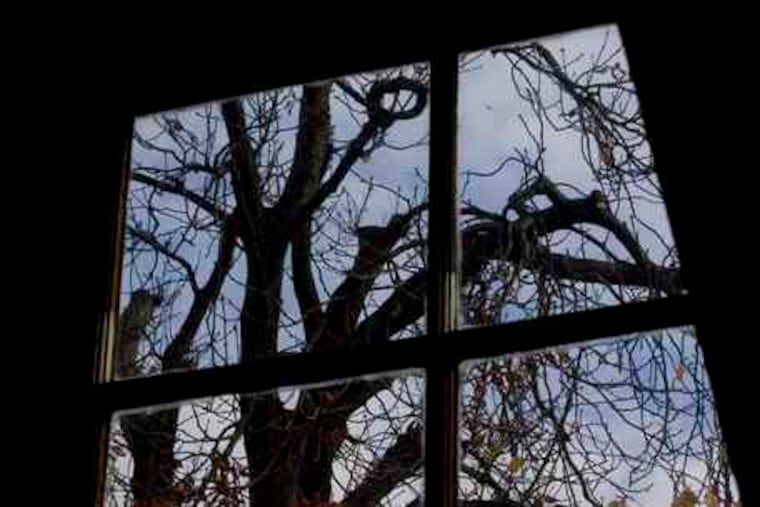
AMSTERDAM - The monumental chestnut tree that cheered Anne Frank while she was in hiding from the Nazis was toppled by wind and heavy rain Monday.
The once-mighty tree snapped about three feet above ground and crashed across several gardens. It damaged a brick wall and several sheds, but nearby buildings - including the Anne Frank House museum - escaped unscathed. No one was injured, museum spokeswoman Maatje Mostart said.
"Someone yelled, 'It's falling! The tree is falling!' and then you heard it go down," Mostart said.
A global campaign to save the 150-year-old chestnut, widely known as the Anne Frank Tree, began in 2007 after city officials deemed it a safety hazard and ordered it felled. The tree was granted a last-minute reprieve after a battle in court.
The tree, which weighed an estimated 60,000 pounds, had fungus and moths that had caused more than half its trunk to rot.
Two years ago, the city encased the trunk in a steel support system to prevent it from falling, but that failed Monday.
The Netherlands' Trees Institute, one of the most prominent supporters of the preservation project, said it was "unpleasantly surprised" by news of the tree's fall.
"On the advice of experts in tree care, it had been calculated that the tree could live several more decades" with the support structure, the institute said in a statement.
"Alas," it said, "it seems that nature is stronger."
Many saplings of the tree have been taken, including 11 planted at sites around the United States and dozens more in Europe, including 150 at a single park in Amsterdam. It is not clear whether a new tree will replace the original one on the same spot, since it grew in the backyard of a private home.
The Jewish teenager made several references to the tree in the diary she kept during the 25 months she remained indoors until her family was arrested in August 1944.
"Nearly every morning I go to the attic to blow the stuffy air out of my lungs," Anne wrote Feb. 23, 1944. "From my favorite spot on the floor I look up at the blue sky and the bare chestnut tree, on whose branches little raindrops shine, appearing like silver, and at the seagulls and other birds as they glide on the wind."
Anne Frank died of typhus in the Bergen-Belsen concentration camp in March 1945, at age 15. Her diary, recovered and published after her death, has become the most widely read document to emerge from the Holocaust.