Leprosy cases in U.S. South linked to armadillos
LOS ANGELES - With some genetic sleuthing, scientists have found a likely culprit in the spread of leprosy in the American South: the nine-banded armadillo.
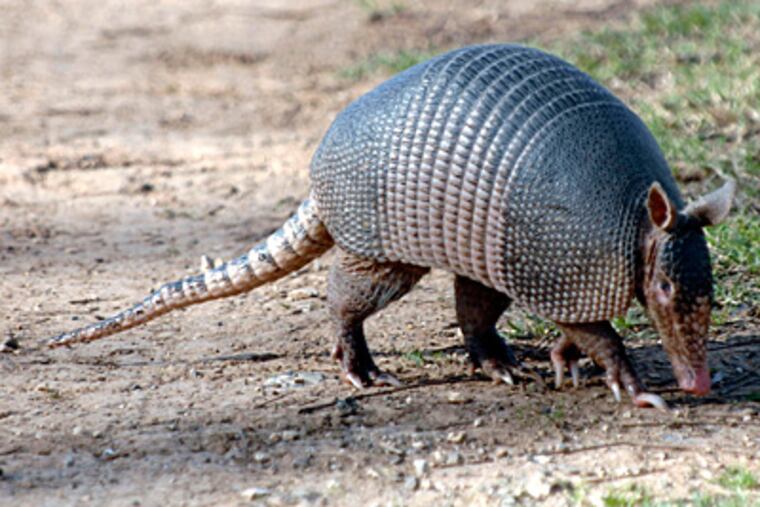
LOS ANGELES - With some genetic sleuthing, scientists have found a likely culprit in the spread of leprosy in the American South: the nine-banded armadillo.
DNA tests show a match in the leprosy strain between some patients and these prehistoric-looking critters - a connection scientists had suspected but could not pin down.
"Now we have the link," said James Krahenbuhl, who heads a government leprosy program that led the new study.
Only about 150 leprosy cases occur each year in the United States, mostly among travelers to places such as India, Brazil, and Angola where it's more common. The risk of getting leprosy from an armadillo is low because most people who get exposed don't get sick with the ancient scourge, known as Hansen's disease and now easily treatable.
Armadillos are one of the very few mammals that harbor the bacteria that cause the sometimes disfiguring disease, which first shows up as an unusual lumpy lesion.
Researchers at the National Hansen's Disease Programs in Baton Rouge, La., led an international team of scientists who published its findings in Thursday's New England Journal of Medicine. The researchers think it requires frequent handling of armadillos or eating their meat for leprosy to spread.
DNA samples were taken from 33 wild armadillos in Arkansas, Alabama, Louisiana, Mississippi, and Texas, where they are sometimes referred to as "hillbilly speed bumps" because they are often run over by cars.
Scientists also took skin biopsies from 50 leprosy patients being treated at a Baton Rouge clinic. Three-quarters had never had foreign exposure but lived in Southern states where they could have been exposed to armadillos.
An analysis found that samples from the patients and armadillos were genetically similar and were different from leprosy strains found elsewhere in the world. The unique strain was in 28 armadillos and 25 patients.
Of the 15 patients for whom researchers had information, seven said they had had no contact with armadillos; eight said they had, including one who hunted and ate them.
While the work did not document direct transmission from animal to human, "the evidence is pretty convincing that it happens," said Brian Currie, an infectious-diseases expert at Montefiore Medical Center in New York, who had no role in the study.
Leprosy remains a problem in tropical hot spots of the world with 250,000 new infections reported each year. Like tuberculosis, it can stay dormant for years before attacking the skin and nerves.
While leprosy is infectious, it's hard to catch. Those most at risk are family members who are in constant contact with an untreated person. Leprosy can't be spread through casual contact such as handshaking, or sexual intercourse.
The disease has long been misunderstood and those who contracted it were often shunned. The disease is curable with prompt treatment of antibiotics before complications set in.