Big-spending groups turn their sights on local races
Democrat John Tierney might normally be a shoo-in for reelection in his deep-blue northeast Massachusetts district. But a well-funded outside group is trying to change that.
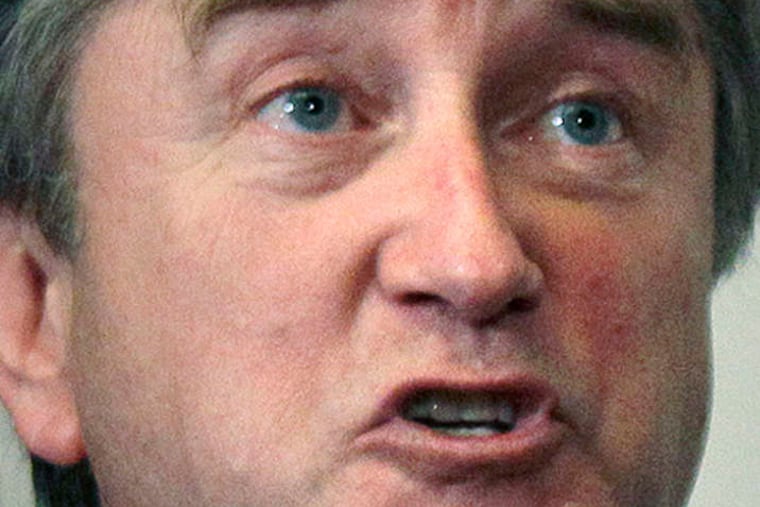
Democrat John Tierney might normally be a shoo-in for reelection in his deep-blue northeast Massachusetts district. But a well-funded outside group is trying to change that.
The YG Action Fund, a super PAC funded almost entirely by Las Vegas casino magnate Sheldon Adelson and his wife, has unleashed an ad campaign this month attacking Tierney in starkly personal terms for his wife's legal troubles and his denials of wrongdoing.
"What's the truth about John Tierney?" the ad's narrator asks.
The campaign of Republican opponent Richard Tisei says it did not ask for help from the super PAC, and had nothing do with the spot, even if it applauds the message. "I think it highlights one of the key issues of this campaign, which is integrity," spokeswoman Jennifer Drogus said.
Most of the public's attention this year is focused on the presidential race, where big-spending advocacy groups are lining up to drown swing states in political ads. But the biggest impact of all that money may come in down-ballot contests, particularly in House races, where even a few hundred thousand dollars can decide the outcome.
Those who appear to be most worried are Tierney and other Democrats, who are reeling from an onslaught of spending by conservative super PACs and nonprofit organizations aiding Republican candidates. The groups, which can collect unlimited checks from wealthy donors, have so much money that they can afford to target Democrats in blue states such as Massachusetts, California, and Illinois who might have gone largely unchallenged in previous elections.
Major GOP allies have outspent independent pro-Democratic groups by more than 3 to 1 on broadcast advertising since June in congressional races, according to new data from the Wesleyan Media Project, which tracks political ads. The wave will get only larger in the weeks ahead, with groups such as Crossroads GPS planning to spend tens of millions of dollars in support of Republican congressional candidates.
The main fear among Democrats is a repeat of 2010, when newly formed conservative super PACs took advantage of legal changes to dominate the airwaves and help propel Republicans to a historic takeover of the House. Republicans are attempting to keep control of the House while gaining a majority in the Senate.
"It's definitely a concern, of course," said Andrew Stone, of House Majority PAC, a pro-Democratic super PAC that plans to spend nearly $30 million on ads over the next two months. "That specter is out there of having overwhelming money from outside Republican groups, just like two years ago. . . . But we have been planning for this for a long time and will be involved in lots of districts nationwide."
The biggest groups on the right include American Crossroads and its sister nonprofit group, Crossroads GPS, which together plan to spend up to $70 million on Senate races and $30 million on House races in the 2012 cycle. The U.S. Chamber of Commerce might also approach $100 million in ads supportive of Republicans, officials have said, while Americans for Prosperity, the Club for Growth and others spend millions of dollars more.
At the House level, two new GOP super PACs have emerged as key players, sharing similar funding streams and pursuing complementary strategies. The Congressional Leadership Fund, staffed by former aides to House Speaker John A. Boehner (R., Ohio), and an affiliated advocacy group, the American Action Network, will focus on boosting Republicans in traditional swing states such as Ohio and Pennsylvania.
At the same time, the YG Action Fund, named for the "Young Guns" initiative spearheaded by House Majority Leader Eric Cantor (R., Va.), has been going on the offense, targeting Democrats in blue states such as Massachusetts and Illinois and in the newly emergent swing state of North Carolina.
YG Action and CLF have received $5 million each from Adelson and his wife, Miriam, plus a smattering of other corporate and PAC donations, records show. Adelson, whose family has donated at least $36 million to super PACs, has vowed to spend up to $100 million to unseat President Obama and help congressional Republicans.
Dan Conston, a spokesman for the Congressional Leadership Fund, said his group will help Republicans protect their 25-seat majority in the House, and perhaps even pick off a few vulnerable incumbents in blue-leaning districts.