Liberation for lab chimps?
NEW ORLEANS - Chimpanzees that have spent their lives in U.S. research labs being prodded, poked, and tested may be headed for retirement in a leafy sanctuary where they can climb trees, socialize at will, play with toys, even listen to music.
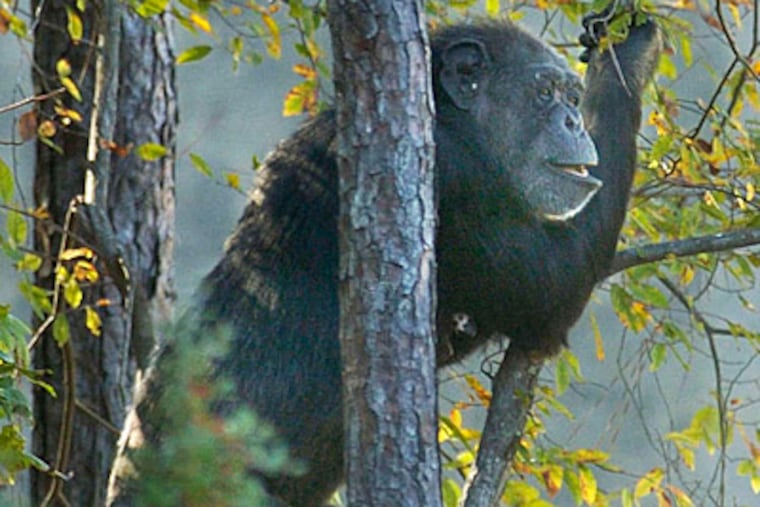
NEW ORLEANS - Chimpanzees that have spent their lives in U.S. research labs being prodded, poked, and tested may be headed for retirement in a leafy sanctuary where they can climb trees, socialize at will, play with toys, even listen to music.
More than 300 chimpanzees should be retired from government-funded research and sent to live in a sprawling refuge outfitted with play areas under a recommendation approved Tuesday by a top national panel of scientists.
The proposal from a National Institutes of Health committee is the latest step in a gradual shift away from using chimps as test subjects, because of technological advances and because of ethical concerns about their close relation to humans. It would affect all but 50 of more than 350 chimpanzees in labs around the country. The remaining group kept for future federally funded research would have to be housed in spacious conditions laid down in the detail by the committee.
The NIH Council of Councils Working Group proposal, which will go to the agency's director after a 60-day period for public comment, also calls for major cuts in grants to study chimps in laboratories and for no return to breeding them for research.
The chimpanzees would be sent to a national sanctuary, Chimp Haven, that opened in 2005 to house former federal research chimps on a 200-acre site in rural northwest Louisiana.
Under an agreement made late last year, before the proposal, nine chimpanzees arrived Tuesday at Chimp Haven from the University of Louisiana at Lafayette's New Iberia Research Center, which no longer has an NIH chimp-research contract. Seven more are expected Thursday, and an additional 95 will arrive over several months.
After decades of being taken from cages to be poked and prodded, they'll be part of larger social groups with access to forest habitats, play yards, courtyards, and jungle gyms.
They'll get a daily assortment of fresh fruits and vegetables along with their nutritionally balanced biscuits. They'll have toys to play with, from balls and backpacks to anything else that's safe and might amuse them. Drummers and other musicians have been brought in to play for them, and administrative associate Steve Snodgrass sometimes plays "lyrical" Irish fiddle tunes.
"They're very attentive," he said Wednesday. "They are calm, and it seems to soothe them."
The animals that arrived Tuesday - eight females and a male ages 29 to 52 - made up one group housed together at New Iberia, and those scheduled Thursday made up another group, said Chimp Haven spokeswoman Ashley Gordon. They include a 2-year-old female and 3-year-old male born in New Iberia and coming with their mothers.
Once their quarantine period is over and the sanctuary's behaviorist and veterinary staff have had a chance to get to know them, they'll be put in a "howdy" - a fenced-off part of a larger living area - to become acquainted with the group that seems the best match for them. Once they seem to be getting along well across the barrier, it will be removed.
Animal-rights activists said they were pleased by the recommendations.
People for the Ethical Treatment of Animals said in a statement, "At last, our federal government understands: A chimpanzee should no more live in a laboratory than a human should live in a phone booth."