The Delaware is an economic and ecological treasure
With the exception of the Eagles and Phillies, perhaps no civic treasure does as much to unify and energize the region as the Delaware, a river that for centuries has been the area's life source and an avenue of commerce.
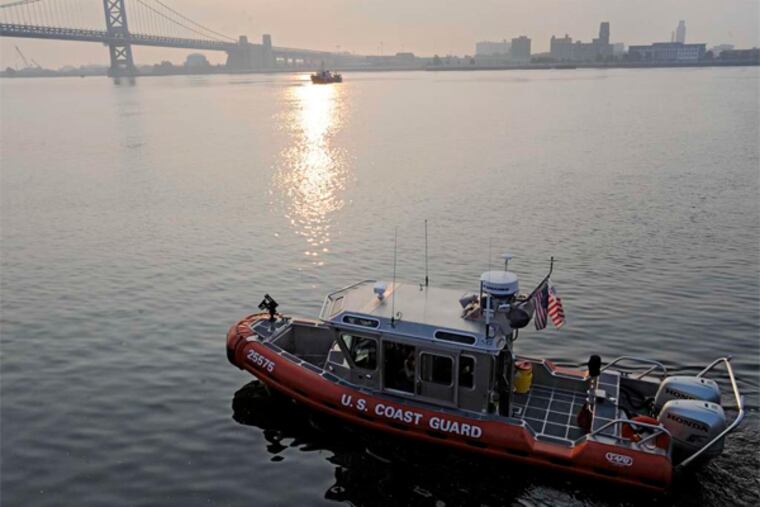
With the exception of the Eagles and Phillies, perhaps no civic treasure does as much to unify and energize the region as the Delaware, a river that for centuries has been the area's life source and an avenue of commerce.
The William Penn Foundation in Philadelphia recently announced that it will use its environmental grant-making to drive preservation and restoration of water quality in critically important places within this huge watershed, and it is convening a forum of stakeholders and decision-makers Monday and Tuesday to advance the conversation.
The Delaware is the longest undammed river east of the Mississippi, extending 300 miles from Cape May to the Catskills. The basin provides drinking water to 16 million people (5 percent of the U.S. population) in Delaware, New Jersey, New York, and Philadelphia, including the largest and seventh-largest metropolitan economies in the country. Most of Manhattan drinks water from the Delaware, not the Hudson. The river is the largest freshwater port in the world, yet sustains a recovering American shad and striped bass fishery.
The ecological value of the Delaware River system is well-known. Less well-known is its economic value.
An analysis by the University of Delaware concludes the Delaware Basin is an economic engine that (1) contributes more than $20 billion in annual economic activity from recreation, water quality, water supply, hunting and fishing, ecotourism, forest, agriculture, open space, and port benefits; (2) provides ecosystem goods and services (natural capital such as the water-treatment and fishery benefits of forests and wetlands) of $21 billion per year; and (3) is directly or indirectly responsible for 600,000 jobs in the shipping, manufacturing, agriculture, tourism, and other industries, with $10 billion in annual wages.
The tale of the ebb and flow of the Delaware is all too familiar across the United States.
When William Penn founded Philadelphia in 1682, after arriving on the Welcome, he wrote about 6-inch oysters too big to be eaten whole and large sturgeon that played in the river all summer. Yet in 1739, Benjamin Franklin petitioned the Pennsylvania General Assembly to remove the tanneries near his Market Street print shop and wrote in the Pennsylvania Gazette that Dock Creek was choked with: "hair, horns, guts and skins" and fish "soon floated belly up." In 1790, concerned about polluted drinking water, Franklin willed funds to Philadelphia to build the first municipal water system in America.
By the 19th century, the Delaware was an open sewer. By the turn of the 20th century, the largest population of American shad and sturgeon along the Atlantic seaboard had collapsed from overfishing and pollution. By the 1950s, the Delaware had zero oxygen at the Ben Franklin Bridge. In 1961, President John F. Kennedy and the governors of four states signed the Delaware River Basin Compact, the first-ever federal-state watershed accord, which kicked off the river's revival.
A cost-benefit analysis concludes that investing in watershed restoration and the jobs that go with it can result in big payoffs. Improved water quality will lower water-treatment costs for cities such as Philadelphia, where the annual value of drinking water exceeds $3 billion. Watershed restoration will boost boating, fishing, and birdwatching, which is already a $1.4 billion economy in the Delaware Valley.
With cleaner water, more tourists will visit places like the Delaware Water Gap, which recorded five million visits at the country's eighth-most visited national recreation area and $100 million in sales, which supported more than 7,000 jobs. A $100 million annual investment in Delaware River watersheds would generate 2,000 jobs and add half a billion dollars to the region's gross domestic product.
The Delaware River is still the priceless treasure William Penn first saw 331 years ago. Fueled by successful conservation by private land trusts, stream restoration and citizen monitoring by watershed associations, and public and private funding for high-impact projects, the next great Delaware River revival is on its way.