John Scott Award going to 3 researchers
Philadelphia's Board of Directors of City Trusts will honor three researchers with the 2014 John Scott Award for their discoveries, which led to a new cancer treatment and understanding of how people age.
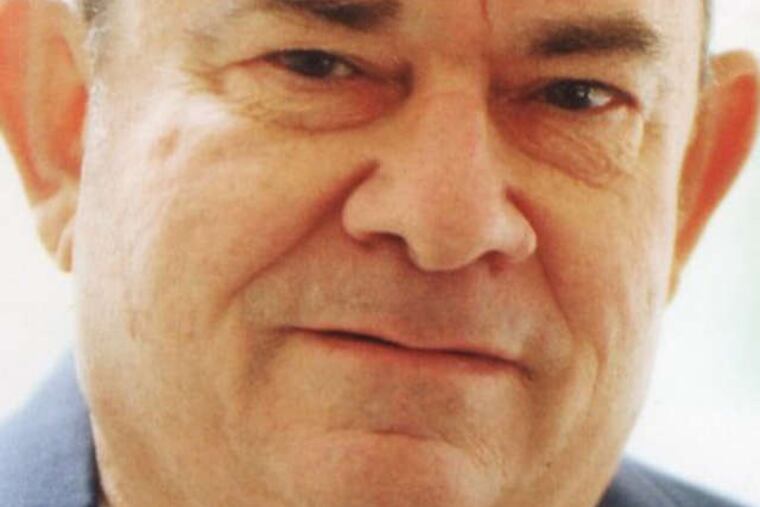
Philadelphia's Board of Directors of City Trusts will honor three researchers with the 2014 John Scott Award for their discoveries, which led to a new cancer treatment and understanding of how people age.
Susan Band Horwitz, Leonard Hayflick, and Paul Moorhead will be awarded cash prizes and the Scott Medal on Friday at the American Philosophical Society.
Horwitz, who co-chairs the department of molecular pharmacology at Albert Einstein College of Medicine in New York, got a letter from the National Cancer Institute in 1977 asking her to work on Taxol. Derived from Pacific yew tree bark, the compound was known to kill cancer cells, but researchers did not know how.
Horwitz, a graduate of Bryn Mawr College, was attracted to the work because of the complexity of the Taxol molecule, which she said no chemist would make: "It's the kind of molecule that only a tree would make."
Soon after she began the work, Horwitz looked at a treated cell under a microscope and saw it was filled with bundles of microtubules, structures essential for cells to divide and live normally.
She realized Taxol worked in a way that had not been appreciated, killing cancer cells because the microtubules stopped working. So she pushed the National Cancer Institute to study it, though interest from drug companies lagged.
Now, Taxol is used as part of the chemotherapy cocktail to treat breast, ovarian, and lung cancers. But it took nearly 10 years for the drug to get to patients after Horwitz found how it kills cancer.
"Millions of people have taken this drug," and many have lived for years or gone into remission, Horwitz said. "When I started out, no one was interested."
Now she is interested in drugs derived from corals and sponges, and other natural products from the ocean, one of the last places on Earth not fully investigated.
Cell biologist Hayflick, now an anatomy professor at the University of California at San Francisco, and cytogeneticist Moorhead are co-winners for their work at the Wistar Institute in Philadelphia during the early 1960s. Accepted science had long said humans and animals aged due to extracellular events, such as radiation and stress. If raised in perfect conditions, human cells could grow indefinitely, it was thought.
But Hayflick found that is not true for normal human cells, which are mortal, and which divide only a certain number of times, he said. Moorhead then helped him prove that the cells stopped growing because of something internal, not because of how they were grown.
The discovery changed human aging research.
Hayflick then found cancer cells are immortal under the right conditions, while normal cells retain a memory of how many times they have divided.
Hayflick also was the first to develop a strain of normal human cells in culture, WI-38, used as the basis of almost every human virus vaccine since. More than two billion people have gotten vaccines grown on the strain.
Hayflick has received more than 25 awards for his work. A Philadelphia native, he graduated from John Bartram High School, earned degrees from the University of Pennsylvania, and worked at Wistar for 10 years.
Moorhead said this was the first time he had been recognized. He's spent 30 years in the city, at Wistar, Children's Hospital of Philadelphia, and Penn.
The cash prize for Horowitz is $12,000; Hayflick and Moorhead will split the prize, receiving $6,000 each.