Sex offenders in Calif. prisons are killed at twice national rate
SACRAMENTO, Calif. - Shortly after 2 a.m. on April 6, 2010, a guard at Salinas Valley State Prison noticed Alan Ager's cellmate trying to stuff something under a mattress. It was the 63-year-old Ager, blood trickling from his mouth and a cloth noose tied around his neck.
SACRAMENTO, Calif. - Shortly after 2 a.m. on April 6, 2010, a guard at Salinas Valley State Prison noticed Alan Ager's cellmate trying to stuff something under a mattress. It was the 63-year-old Ager, blood trickling from his mouth and a cloth noose tied around his neck.
The convicted child molester, who was 5-foot-4 and weighed 135 pounds, died 10 days later without regaining consciousness, his death earning his cellmate a second life sentence.
California state prisoners are killed at a rate that is double the national average - and sex offenders such as Ager account for a disproportionate number of victims, according to an Associated Press analysis of corrections records.
Male sex offenders made up about 15 percent of the prison population but accounted for nearly 30 percent of homicide victims, the AP found in cataloging all 78 killings that corrections officials reported since 2007, when they started releasing slain inmates' identities and crimes.
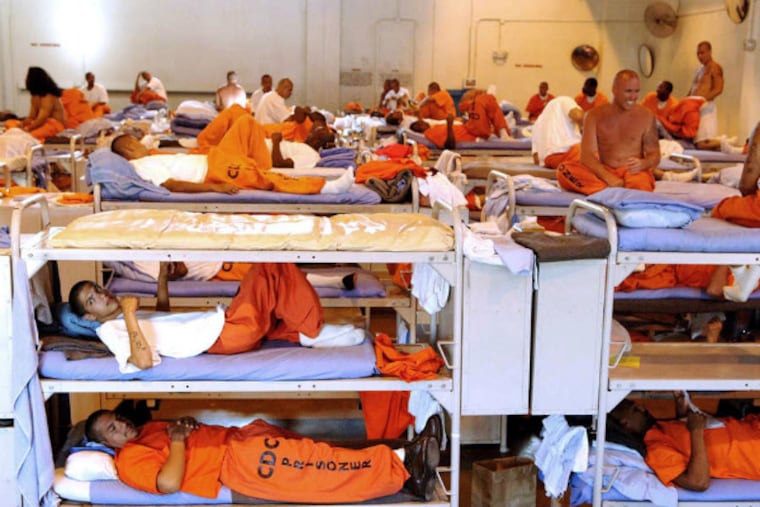
The deaths - 23 out of 78 - come despite the state's creation more than a decade ago of special housing units designed to protect the most vulnerable inmates, including sex offenders, often marked men behind bars because of the nature of their crimes.
In some cases, they have been killed among the general prison population and, in others, within the special units by violence-prone cellmates. Officials acknowledge that those units, which also house inmates trying to quit gangs, have spawned their own gangs.
Corrections officials blamed a rise in the prison homicide rate on an overhaul meant to reduce crowding.
As part of the effort, the state in 2011 began keeping lower-level offenders in county lockups, leaving prisons with a higher percentage of sex offenders and violent gang members.
Experts said the state could better protect sex offender inmates by separating them into their own facilities.
Prison gangs, though made up of inmates often convicted of heinous crimes themselves, have long made it a practice to target sex offenders.