'I identify as black,' Rachel Dolezal says in NBC interview
NEW YORK - Rachel Dolezal, the former NAACP leader at the center of a controversy over her claim to be African American, said Tuesday that she had viewed herself as black since childhood and was being attacked in a "viciously inhumane way" over her chosen racial identity.
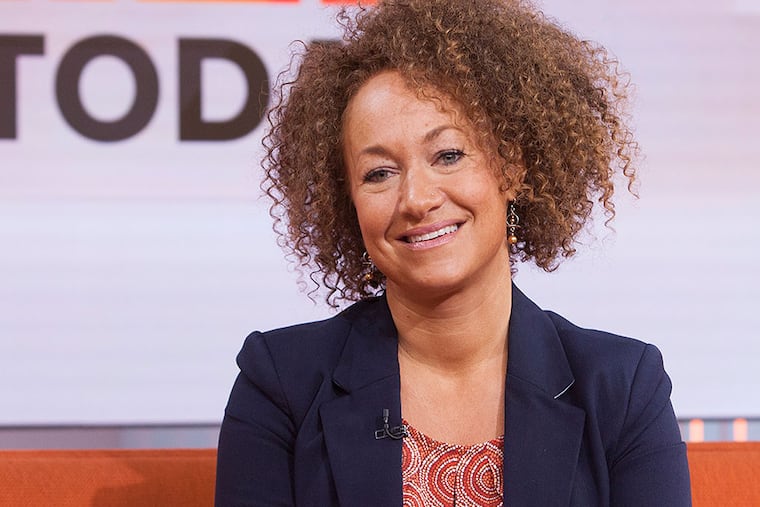
NEW YORK - Rachel Dolezal, the former NAACP leader at the center of a controversy over her claim to be African American, said Tuesday that she had viewed herself as black since childhood and was being attacked in a "viciously inhumane way" over her chosen racial identity.
"I identify as black," a composed, smiling Dolezal said during a 10-minute interview on NBC's Today show, less than 24 hours after resigning from her NAACP position, in Spokane, Wash.
Ultimately, Dolezal said, she hoped that what had happened would lead to a deeper conversation on ethnicity and race.
"The decision really is what it is to be human," she said.
Despite losing that job and becoming the target of angry social media and other campaigns accusing her of faking blackness, Dolezal said she did not regret what she had done, and she did not offer any apologies.
Asked by NBC's Matt Lauer whether she would again make the same choices that led to the uproar, Dolezal replied: "I would."
Dolezal said she had thought of herself as black since about the age of 5.
"I was drawing self-portraits with the brown crayon instead of the peach crayon," she said.
Years later, when Dolezal emerged as a civil rights activist in northern Idaho, she said news stories began describing her as biracial or mixed-race, and she did not correct them.
By then, Dolezal's skin was noticeably darker, and she wore her hair in braids or tightly wound curls.
"I certainly don't stay out of the sun," she replied when asked whether she had done something to change her skin color.
Dolezal did not say why in years past she chose not to correct the news stories that described her as biracial.
Dolezal denied that she had adopted her racial identity for opportunistic reasons and cast herself as the victim of a difficult life - something her parents have denied.
"My life has been one of survival, and the decisions I have made along the way, including my identity, have been to survive and to carry forward in my journey," said Dolezal. Those decisions include suing Howard University, a historically black school in Washington, when she was a graduate student there, alleging she was discriminated against for being white.
Asked about the lawsuit, which was dismissed, Dolezal said she filed it after being told that she was losing a scholarship and teaching-assistant job at Howard because other people needed help more than she did and that as a white woman, she probably had relatives to help her financially.
Howard University has not responded to Dolezal's claims.
"This is not some freak Birth of a Nation mockery blackface performance," Dolezal said, denying some critics' allegations that what she did was akin to a white performer donning a crude blackface disguise.
She said her two sons are among her staunchest supporters. One of them is one of the four black children her parents adopted; Dolezal says she later was given custody of the young man, who is now in high school. The other is the son she had with her ex-husband, Kevin Moore, who is black.