A prize breed to owner, a menace to others
A quiet suburb known for its Victorian homes and quaint downtown, Haddonfield has no shortage of dog owners. So when borough commissioners called a meeting two weeks ago to announce they had reached a deal with a local surgeon whose prize Rhodesian ridgeback show dogs have become public enemy number one in recent years, residents turned out irate.
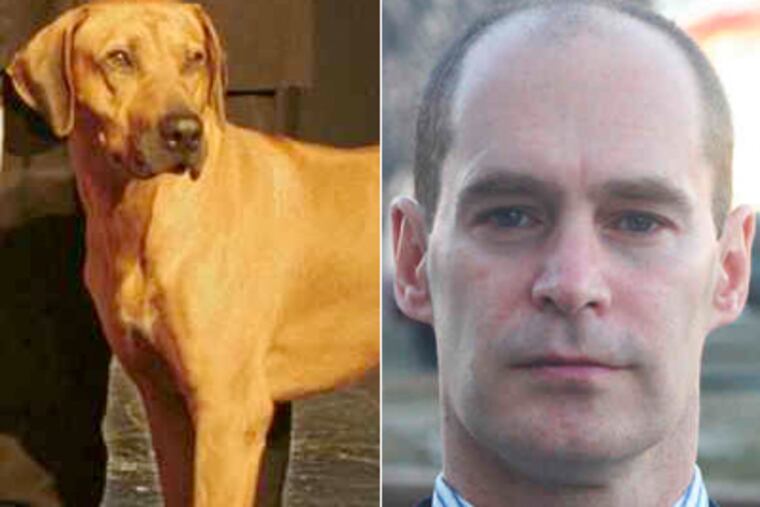
A quiet suburb known for its Victorian homes and quaint downtown, Haddonfield has no shortage of dog owners.
So when borough commissioners called a meeting two weeks ago to announce they had reached a deal with a local surgeon whose prize Rhodesian ridgeback show dogs have become public enemy number one in recent years, residents turned out irate.
Equipped with stories about the dogs' past attacks on children and data on Rhodesian ridgebacks' maximum jumping height and their breeding to hunt lions in Africa, they offered their take on the question: Isn't there any way to lock these dogs up or throw them out of town? The meeting went late into the night.
The borough's attorney, Mario Iavicoli, listened patiently until finally offering his legal opinion: The town was powerless against all but one of the five dogs - the one that had, in fact, been involved in the attacks.
The owner "could build an enclosure for the one dog and tear down the existing fence around his yard," Iavicoli said. "We can't force him to put up a taller fence. We can't discriminate against breeds. The law is very clear on this."
Once a dog bites someone, local ordinances in the United States are generally pretty clear: The offending owner goes before a judge, who will determine whether the dog is vicious or dangerous and needs to be put down or locked up.
But how far can government go in preventing dog attacks?
Some places put restrictions on certain breeds. In Ohio, for instance, pit bull owners must house their dogs in locked enclosures and maintain at least $100,000 of liability insurance.
But like a small minority of states, New Jersey and Pennsylvania prohibit cities and towns from making breed-specific laws. The thinking, which many dog experts support, is that the task of identifying a dog as of a certain breed is fraught with difficulty, and even then, who's to say what a vicious breed is? For a time, German shepherds were considered dangerous.
"It's misleading. An unsocialized dog is dangerous no matter what the breed," said Colin Campbell, New Jersey deputy public health veterinarian.
The U.S. Centers for Disease Control and Prevention stopped tracking dog attacks by breed in 1998, after concluding the data were not significant.
There's little science determining whether certain types of dogs are dangerous, said Ken Phillips, a lawyer in Los Angeles.
"It's like that old line about pornography. 'I can't define it, but I know it when I see it,' " he said.
Phillips has been working dog-bite cases for two decades, primarily on the victim's side, and has assembled a near-encyclopedic collection of laws and statutes on his Web site, www.dogbitelaw.com.
The way governments protect their residents from dog attacks is vast and varied: from the old standard under British law that an owner could be held financially liable for a dog attack only if the dog had a history of aggressive behavior to public housing limiting the size of residents' dogs.
The Humane Society of the United States, which has lobbied heavily against breed-specific laws, finds a correlation among certain types of owners, breeds, and incidence of attack.
"There's a vicious cycle where dogs who are thought of as dangerous attract the wrong types of owners. They're not responsible and the reputation worsens," said Adam Goldfarb, a director with the society. "These breed-specific laws really address the wrong end of the leash."
In Haddonfield, where the saga of the Rhodesian ridgebacks has taken the borough and owner Bob Taffet in and out of court since 2007, the two sides have agreed to a settlement in which Taffet will, among other things, keep no more than two dogs in town at any time. The others will remain at the family's Salem County farm.
But some residents objected to the deal releasing Taffet from some of the requirements of a recent state appeals court ruling, including a provision that he maintain a $1 million liability insurance policy.
Iavicoli said he hadn't seen so many people coming to borough meetings since the town proposed hiring someone to trap raccoons a couple of years ago.
"Usually, we get about six people turning up," he said. "But if an animal issue comes up, it's a packed house."