Rancocas Nature Center set to showcase its rebound
Nets in hand, scooping tadpoles from a frog pond and squealing at dragonflies, Chris Reeh and Isabella Vilic had no idea they were making childhood memories.
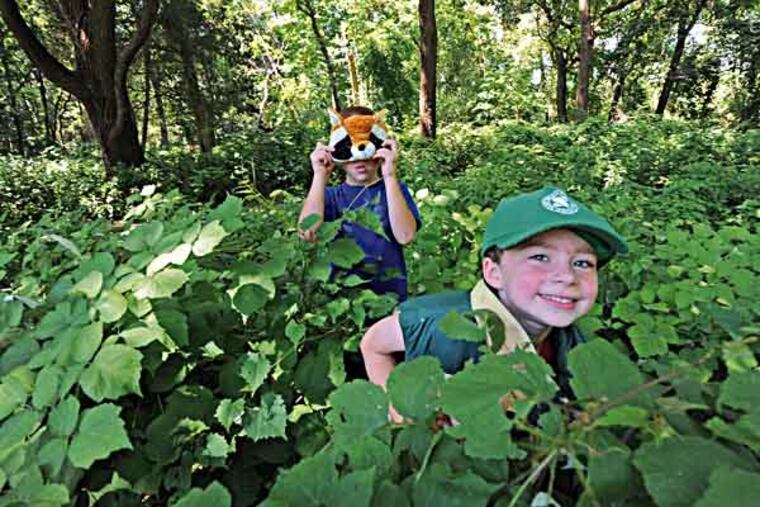
Nets in hand, scooping tadpoles from a frog pond and squealing at dragonflies, Chris Reeh and Isabella Vilic had no idea they were making childhood memories.
That's how it is when you're 6 and 7 - especially at summer camp.
But the pond, the bee meadow, the surrounding streams, the hiking trails, the child garden brimming with honeysuckle and chocolate mint, and that field where children squish mud between their toes when it rains, nearly became a vanished memory this year.
"We got a call from the New Jersey Audubon Society in December," Toni Price recalled this week, perched on a wooden picnic table at the Rancocas Nature Center in Westampton.
"They said they could no longer maintain us, and they were shutting us down in two weeks."
And yet here she was, at the end of July, preparing for Sunday's Garden Day as a wide-eyed girl approached with a clenched hand.
"What have you got?" Price, 64, asked.
"I found it over there," replied Lexie Young, 10, of Cherry Hill, opening her hand to reveal a lobed piece of grayish bone.
A former special-ed teacher, a naturalist, a professional beekeeper and lavender farmer, and now volunteer cochair of the Friends of Rancocas Nature Center, Price has led the effort to save this 215-acre center.
"It looks like a vertebra," she told Lexie, though she could not say from what animal.
Lexie tucked it into a pocket for safekeeping. This was her third summer in day camp at Rancocas, she explained, and her third week here this summer.
Lexie wandered off to join the other children, some of whom were plucking worms out of a crabgrass field turned to mud by Sunday's torrential rains.
"That's the big thing this week," counselor Chris Gallagher said with a shrug. "Worms."
A short while later, though, Gallagher had dressed a dozen children in camouflage clothing for a game of hide-and-seek to teach them the ways animals hide from predators. Later he had them divided into "foxes" and "otters," searching among trees and shrubs for illustrated cards identifying which foods each animal eats.
"We don't have swimming and boating," explained Gallagher, 25, formerly a counselor at YMCA camps in Medford Lakes. "But we do a lot of hands-on nature."
Price agreed. "This place is small, rustic, old-fashioned, and that's the beauty of it. The kids really do come to learn."
Its six one-week summer camp sessions are a major revenue stream for the still-struggling center, which sits within the 1,252-acre Rancocas State Park. New Jersey Audubon began leasing the site from the state in 1977 to create the center but late last year concluded it could no longer carry its $55,000 operating deficit.
The society maintains five staffed centers and 30 nature sanctuaries around the state.
Its December closure announcement provoked such dismay, Price said, that Audubon postponed the shutdown to April 30 while center staff and friends sought new sources of support.They not only found enough donors to keep the lights on, but in four months had talked the Burlington County freeholders, the state Division of Parks, Westampton Township, and the Rancocas Conservancy into a shared operating agreement.
The county has arranged with the state to manage the land and buildings and pay some operating expenses. The state is responsible for capital improvements, while Westampton is providing two full-time employees, insurance, and staff training.