Ellis Island's shuttered history slowly opening to public
ELLIS ISLAND, N.J. - Ellis Island closed in 1954, shutting with it a chapter of history shared by generations of immigrant families who arrived in America from foreign shores.
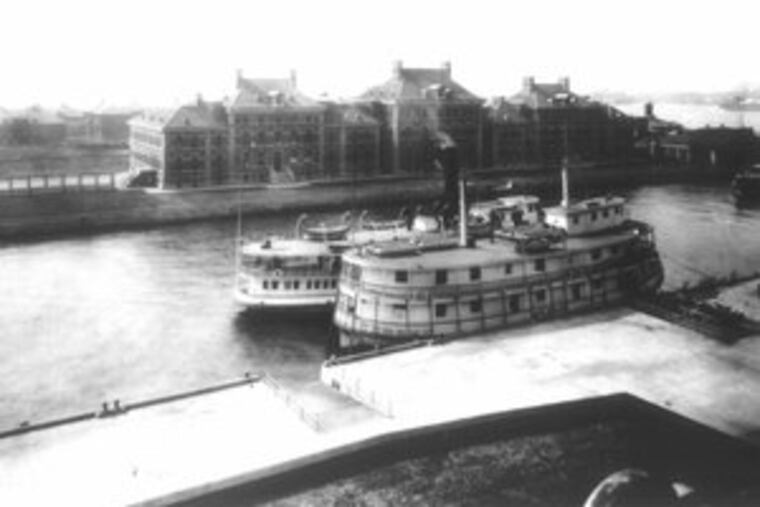
ELLIS ISLAND, N.J. - Ellis Island closed in 1954, shutting with it a chapter of history shared by generations of immigrant families who arrived in America from foreign shores.
Though parts of the island were opened to the public in 1990, few visitors have been able to explore the rest of the historic island, including 30 shuttered buildings closest to the Statue of Liberty.
Today, the first of those buildings will reopen after extensive restoration, a development that historians say is long overdue and will allow Americans to see parts of the island that have been unavailable for more than a half-century. "Every square inch has significance to American history," said Kenneth T. Jackson, a history professor at Columbia University.
The island was the gateway to America for more than 12 million immigrants who flowed through the main processing center. As many as 5,000 people passed through there a day at its peak in the early 1900s.
Ellis Island has been a popular tourist destination since the Immigration Museum opened in 1990; last year, 1.7 million people visited. But the 30 buildings on the southern part of the 27.5-acre island sat untouched for decades.
Part of the reason was that it wasn't clear which state controlled the island, New York or New Jersey.
When the Supreme Court in 1998 granted sovereignty over 22.5 acres to New Jersey, a nonprofit group, Save Ellis Island, began raising money to restore the buildings on the New Jersey side that had been deteriorating and vacant since 1954.
The first structure to be restored was the ferry building, from where many new Americans left to begin their new lives all over the country after passing legal and health inspections.
"This was one of the happiest places on the island," said Elizabeth Jeffery, director of program development and administration for Save Ellis Island, which has helped lead the $6.4 million restoration of the ferry building.
Constructed in 1934 as a Depression-era Works Projects Administration undertaking, the art deco building originally cost $133,000.
Exterior work on the 5,500-square-foot ferry building - including masonry repairs, a new roof, and restoration of the steel windows and ornate lead-coated copper cupola - began in 2000. Renovations on the interior started last year.
Terra-cotta blocks on the walls have been repaired and replaced. The dark terrazzo floor has been patched and restored, and a new 180-pound bronze chandelier, a replica of the original, hangs in the central pavilion of the ferry building. Two white oak benches, on which family members often waited for new arrivals, have been restored, and another two were replaced.
Money for the restoration came from the federal government, the state of New Jersey, and private donations.
Workers for the National Park Service, which operates the Statue of Liberty National Monument and Ellis Island, are finishing work on other buildings on the New Jersey side, sealing windows and installing new roofs and gutters.
They've completed that work on the island's hospital campus, a series of interconnected buildings where sick immigrants were taken. The buildings, which have some of the best views of the Statue of Liberty, could be sealed off to quarantine patients who had infectious diseases.
The National Park Service will join Save Ellis Island today to open a new exhibit, "Future in the Balance: Immigrants, Public Health, and Ellis Island's Hospitals," dispersed throughout the ferry terminal and an adjoining corridor.
Panels in the exhibit explain the history of the hospital, told from the perspectives of the immigrant patients, doctors, nurses, military personnel and support staff who worked in the buildings between 1901 and 1954.
The next structure to be restored is a building that housed ancillary services for the hospital, such as laundry rooms.
"There was no roof here," said Don Fiorino, the project supervisor for the Park Service, touring a room that once housed a working laundry mangle - an industrial washing machine. That building is expected to be finished in 2008. The other buildings will open gradually as money is raised for their restoration.
Over the next decade, the long-term plan of the National Park Service and Save Ellis Island is to establish the Ellis Island Institute, an educational and cultural center with conference facilities.
For More Information
To learn more about the Ellis Island renovations, visit www.saveellisisland.org
or the Web site of the Statue of Liberty-Ellis Island Foundation at www.ellisisland.org EndText