Court rejects taking case of church's struggles
For 21 years now, the struggle over who should have succeeded to the leadership of the Church of the Lord Jesus Christ of the Apostolic Faith has played itself out in Pennsylvania's courts among the putative successors to the late Bishop S. McDowell Shelton.
For 21 years now, the struggle over who should have succeeded to the leadership of the Church of the Lord Jesus Christ of the Apostolic Faith has played itself out in Pennsylvania's courts among the putative successors to the late Bishop S. McDowell Shelton.
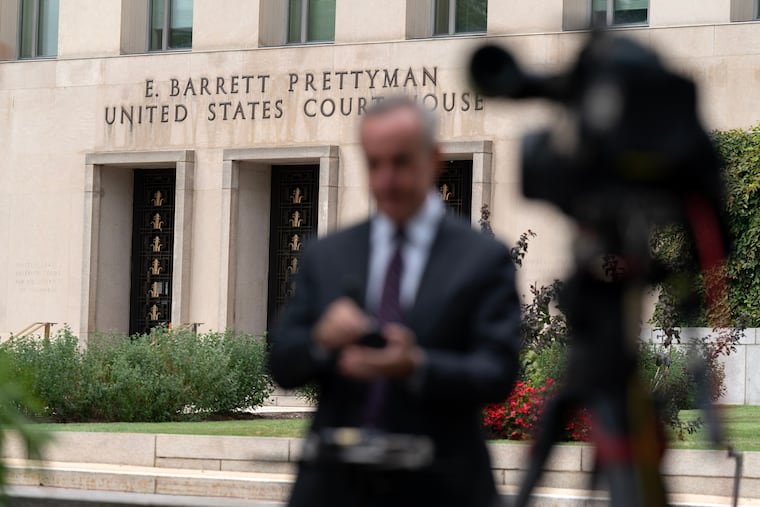
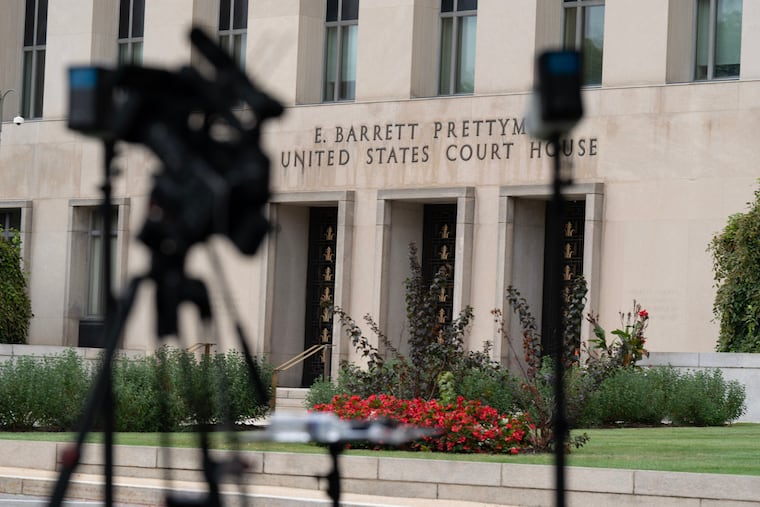
On Thursday, the latest attempt to move the dispute to federal court ended when a federal appeals court ruled that the church's problems should remain in the church.
The three-judge panel of the U.S. Court of Appeals for the Third Circuit unanimously affirmed dismissal of the 2009 suit by Joseph Askew, an excommunicated member of Shelton's thriving South Philadelphia congregation.
The court cited the First Amendment's religion clauses, saying it had no authority to second-guess Bishop Kenneth Shelton's decision about who is a church member. And given that Askew is no longer a member, the court continued, he has no legal right to intervene in the church's internal workings.
"Determining when excommunication is necessary . . . undoubtedly involves a complex balancing of spiritual and pragmatic considerations, all properly left to the highest church authority, not civil courts," U.S. Circuit Judge Michael A. Chagares wrote.
Chagares added: "Any other approach would embroil this court in a two-decade-long intra-church battle central to its mission and spiritual identity."
Lawyer Fincourt B. Shelton - like Kenneth, one of the late bishop's sons - represents Askew and others who have sued in the state courts over Bishop Shelton's leadership of the church at 22d and Bainbridge Streets. Lawyer Shelton said he did not know whether he would ask the full Third Circuit Court to reconsider the panel's ruling.
But Shelton denounced state court judges who ultimately approved of Kenneth Shelton - now known as Bishop Omega - as the rightful bishop.
"Why didn't the state courts follow the same reasoning?" Fincourt Shelton asked. Shelton referred to a 2001 Commonwealth Court ruling that reversed an arbitrator's finding challenging Kenneth Shelton's election as bishop and general overseer of the church's controlling nonprofit corporation.
Danielle Banks, the lead attorney for Bishop Shelton, said she believes the Third Circuit ruling could spell the end of the legal challenges, which she calls the work of a handful of dissidents in "storefront churches."
"I'm optimistic that this may finally bring some closure to this church after 21 years of litigation," Banks said.
Askew, of Glen Burnie, Md., sued in federal court in Philadelphia in the latest round of the fight to control the congregation founded in 1919 by Sherrod C. Johnson.
When Johnson died in 1961, control of the church passed to S. McDowell Shelton. When he died in 1991, a fight over control of the prosperous church erupted between Kenneth Shelton and his brother Roddy.
The dispute resulted in a schism in 1992 in which the followers of each of the Sheltons went their separate ways and launched years of litigation.
Like the other challengers, Askew, who court records say was an adherent of Roddy Shelton's, accused Kenneth Shelton and his followers of looting the church treasury for personal gain. The suit asked for a court-appointed receiver to take control.