Ragan A. Henry, pioneering media mogul and lawyer, dies at 74
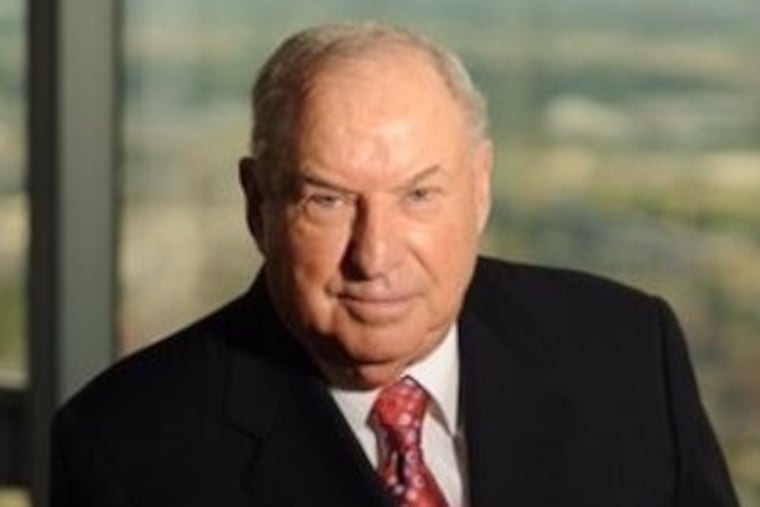
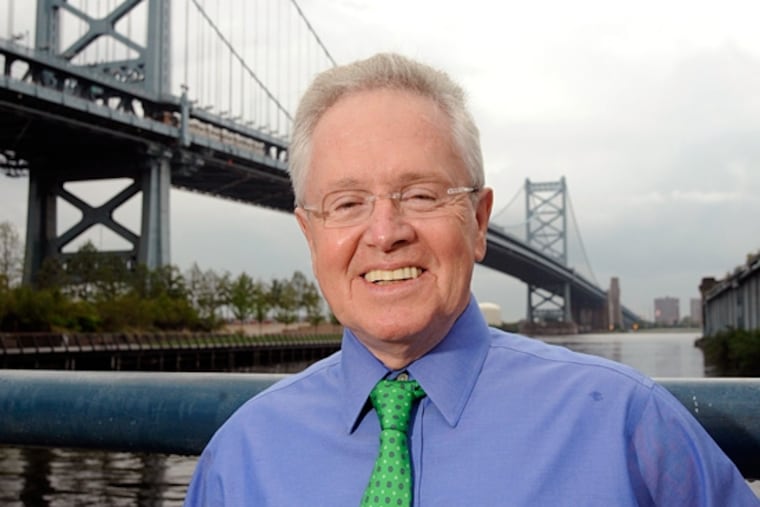
The son of a Kentucky tobacco sharecropper, Ragan A. Henry went on to become a Harvard-educated lawyer, a pioneering media mogul, an active participant in Philadelphia's civic life, and one of the region's richest African Americans.
The son of a Kentucky tobacco sharecropper, Ragan A. Henry went on to become a Harvard-educated lawyer, a pioneering media mogul, an active participant in Philadelphia's civic life, and one of the region's richest African Americans.
Still, he maintained a modest public profile, and when he died July 26 at the age of 74 after a long illness, his passing went unannounced, just as he wanted.
Mr. Henry, of Merion, also directed that there be no funeral, memorial service or obituary after his death, the cause of which has not been disclosed.
News of his death circulated in broadcasting circles Wednesday after friends and associates received a card from his family.
The first African American to own a network-affiliated TV station (WHEC in Rochester, N.Y.), he was often mentioned in newspapers, but usually in short items about his business ventures or appointment to a variety of public and private boards, including the Greater Philadelphia Partnership and the Philadelphia Museum of Art. He was rarely quoted in recent years.
Calling Mr. Henry a "very intelligent, capable and decent man," the longtime Philadelphia journalist Claude Lewis said he could not understand the lawyer-businessman's last wishes.
"He was well known and very wealthy," said Lewis, who was editor of the National Leader, a short-lived African American newspaper that Mr. Henry founded in the early 1980s.
In 1986, Philadelphia Magazine listed Mr. Henry, who also was a partner in the Center City law firm now known as WolfBlock, as the wealthiest African American in the region.
Mr. Henry and his partners bought their first radio station - WAOK-AM in Atlanta - in the early 1970s. By 1980, the number had grown to nine radio stations, plus the Rochester TV station.
In an Inquirer interview that year, Mr. Henry said four of the stations featured African American-oriented programming, while the other five had "everything from good music, to top 40, to a mixed kind of format."
None of them was in Philadelphia.
Ron Davenport, a Philadelphia native who founded the Sheridan Broadcasting Corp., recalled meeting Mr. Henry in the early 1960s. Mr. Henry had come to Philadelphia to join his first law firm, and Davenport was a student at Temple Law School.
"He was a very smart guy," said Davenport. "He and I talked about the possibilities of African Americans going into business."
When Davenport and his wife, Judith, formed Sheridan Broadcasting, Mr. Henry became a minority partner in 1972.
"The brilliant guy he was, I knew he would go off and do things on his own," Davenport said. "And he did."
Over the years, Mr. Henry would buy and sell other broadcast outlets as the major shareholder of different corporations, including Broadcast Enterprises National, US Radio Group, National Radio Inc., NEWSystem Group, and Zoma Corp.
Perhaps his most public acquisition of a radio station was that of Philadelphia's WWDB-FM in 1986 in a competition involving a number of local and out-of-town players.
The purchase led to talk-show host Mary Mason's moving to WWDB after 27 years at WHAT-AM.
Mr. Henry sold the station in 1987 as part of a $38.7 million deal.
Black Enterprise Magazine said that by 1990, Mr. Henry owned more than 60 stations nationwide.
Bill Morehouse, a partner at WolfBlock, said Mr. Henry had the distinction of not only working in the firm's corporate law department, but also being one of its biggest clients.
"I had to fight with him over the bills like any other client," Morehouse joked.
But he said it was wonderful to watch Mr. Henry in the thick of a deal.
"He brought this tremendous energy to everything he did," Morehouse said.
That was echoed by another former law partner, former Mayor William J. Green III, who counted Mr. Henry among his supporters.
"When I hear his name, what comes to my mind . . . is Barack Obama's slogan, 'Yes, we can,' " Green said. "Ragan Henry was a yes-we-can person."
H. Patrick Swygert, another Philadelphia native and president emeritus of Howard University, described Mr. Henry as a mentor and said the lawyer/businessman and his wife, Regina, were givers - helping charities and individuals alike.
"I know firsthand they helped a lot of people - small people, little people, not-so-small people, big people," he said.
Swygert recalled a fund-raising dinner for the YMCA in North Philadelphia when he was a vice president at Temple University some years ago.
"I looked out, and there in the audience was Ragan Henry," he said. "Someone had reached out to him to sponsor the dinner. And not only did he sponsor it, he attended.
"I'll never forget that," Swygert said. "To me, that speaks volumes about the person, not the public person but the private person."
In 2003, the University of Maryland's Library of American Broadcasting named Mr. Henry one of the "First Fifty Giants of Broadcasting," along with such familiar names as Jack Benny, Bill Cosby, Edward R. Murrow, William S. Paley, and David Sarnoff.
According to the Complete Marquis Who's Who, Mr. Henry was born in 1934 in Sadiesville, Ky., the son of Augustus and Ruby Henry.
He graduated from Harvard in 1956 and obtained his law degree there in 1961. He served in the Army from 1957 to 1959, the publication said.
Details on survivors were not available. His remains were cremated.