'Mama Africa,' a voice of hope
JOHANNESBURG, South Africa - She died just how she wanted to - singing on stage for a good cause. Her songs wafted out of taxis and radios, as fellow Africans struggled with their grief at her passing.
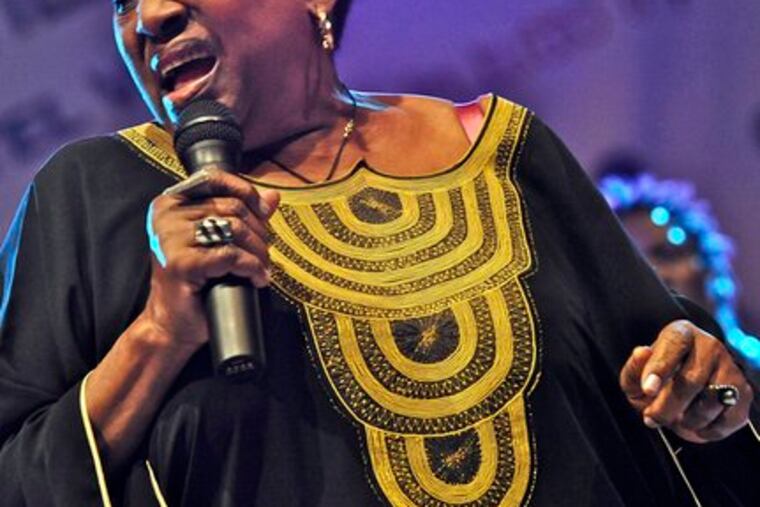
JOHANNESBURG, South Africa - She died just how she wanted to - singing on stage for a good cause. Her songs wafted out of taxis and radios, as fellow Africans struggled with their grief at her passing.
Miriam Makeba, 76, the "Mama Africa" whose sultry voice gave South Africans hope when the country was gripped by apartheid, died early yesterday of a heart attack after collapsing on stage in Italy.
In her dazzling career, Ms. Makeba performed with musical legends from around the world - jazz maestros Nina Simone and Dizzy Gillespie, Harry Belafonte, Paul Simon - and sang for world leaders such as John F. Kennedy and Nelson Mandela.
Her distinctive style, combining jazz, folk, and South African township rhythms, managed to get her banned from South Africa for more than 30 years.
"Her haunting melodies gave voice to the pain of exile and dislocation which she felt for 31 long years. At the same time, her music inspired a powerful sense of hope in all of us," Mandela said in a statement. He said it was fitting that her last moments were spent on stage.
Ms. Makeba collapsed after singing one of her most famous hits, "Pata Pata," her family said. Her grandson, Nelson Lumumba Lee, was with her as well as her longtime friend Roberto Meglioli, an Italian promoter.
"Whilst this great lady was alive she would say: 'I will sing until the last day of my life,' " a family statement said.
Ms. Makeba died at the Pineta Grande clinic in Castel Volturno, near the southern city of Naples, after singing at a concert dedicated to six immigrants from Ghana who were shot to death in September in the town. Investigators have blamed the attack on organized crime.
The death of "Mama Africa" sent shock waves through South Africa, where callers flooded local radio stations with their recollections of her. In Guinea, where Ms. Makeba lived most of her decades in exile, radio and television stations played mournful music and tributes.
The first African to win a Grammy Award, Ms. Makeba started singing in Sophiatown, a cosmopolitan neighborhood of Johannesburg that was a cultural hotspot in the 1950s before its black residents were forcibly removed by the apartheid government.
She teamed up with South African jazz trumpeter Hugh Masekela - later her first husband - and her rise to international prominence started in 1959 when she starred in the antiapartheid documentary Come Back, Africa.
When she tried to fly home for her mother's funeral the following year, she discovered her passport had been revoked.
In 1963, Ms. Makeba appeared before the U.N. Special Committee on Apartheid to call for an international boycott of South Africa. The white-led South African government responded by banning her records, including hits like "Pata Pata," "The Click Song" ("Qongqothwane" in Xhosa), and "Malaika."
Ms. Makeba received the Grammy for Best Folk Recording in 1966 together with Belafonte for An Evening With Belafonte/Makeba. The album dealt with the political plight of black South Africans under apartheid.
Thanks to her close relationship with Belafonte, she received star status in the United States and performed for President Kennedy at his birthday party in 1962.
After three decades abroad, Ms. Makeba was invited back to South Africa by Mandela shortly after his release from prison in 1990 as white racist rule crumbled.
"It was like a revival," she said about going home. "My music having been banned for so long, that people still felt the same way about me was too much for me. I just went home and I cried."