Dermatologist's work was felt far and wide
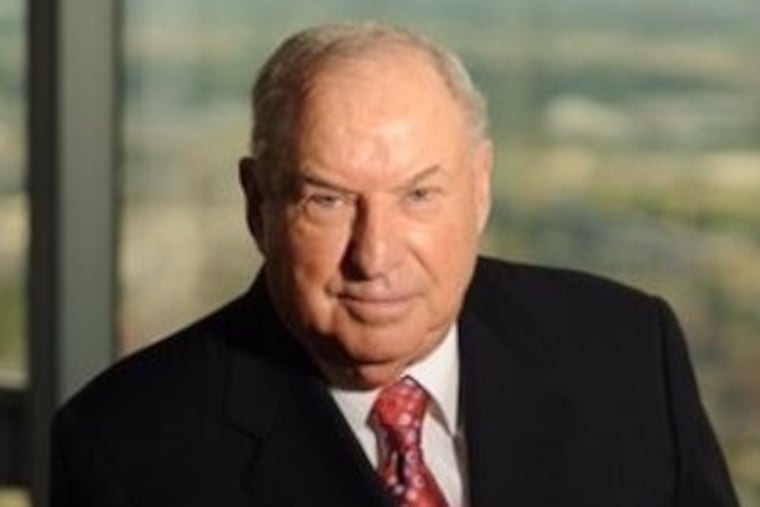
Walter Brown Shelley, 91, a renowned dermatologist whose research over 30 years at the University of Pennsylvania led to the development of anti-itch powder and an effective antiperspirant, died of colorectal cancer Jan. 30 at home in Grand Rapids, Ohio.
Walter Brown Shelley, 91, a renowned dermatologist whose research over 30 years at the University of Pennsylvania led to the development of anti-itch powder and an effective antiperspirant, died of colorectal cancer Jan. 30 at home in Grand Rapids, Ohio.
Dr. Shelley died surrounded by his collection of 30,000 books in his 175-year-old home on a nine-acre farm beside the Maumee River.
Although Dr. Shelley was an unusually bright child, he failed the second grade because he talked too much.
"His mother told him he was staying in the second grade to be the teacher's assistant and would enter the fourth grade the following year," said longtime friend C. William Hanke, head of the American Academy of Dermatology.
"The family moved near Minneapolis at the end of the school year, and Shelley was very tall – tall enough to be in the eighth grade. When asked what grade he was in, his mother said, 'Why, he is in the fourth grade.' From then on, he was the best student," Hanke said.
Dr. Shelley wrote 16 books (some with coauthors) and more than 600 scientific articles. His books included Consultations in Dermatology: Studies of Orphan and Unique Patients (2006); a major textbook, Dermatology (1956); and his autobiography, The Skin Around Me: Adventures in Dermatology (2007).
Born in St. Paul, Minn., he earned bachelor's, doctoral and medical degrees from the University of Minnesota. While in the Army during World War II, he conducted research on how the body acclimatizes - and sweats - in tropical conditions.
In 1950, Dr. Shelley began teaching and conducting clinical studies at Penn. Much of his research centered on orphan patients - those with diseases doctors have given up on. These included such medical odysseys as a liver disease that produces a rotten-fish odor, a man who could not sweat, uncombed-hair syndrome, blisters due to hormones, and fiery-red legs.
Dr. Shelley divided his time between teaching and laboratory research. He discovered 12 diseases, including allergies to female hormones, and a milklike secretion of the armpit glands responsible for odor that led to the development of antiperspirant. Dr. Shelley introduced cutaneous surgery and the use of Botox injections to control sweaty palms. In the 1960s, he devised a test to detect penicillin sensitivity, and in the 1970s, he pinpointed the cell causing an allergic reaction to poison ivy contact.
He retired from Penn in 1980 as chairman of the department of dermatology.
Dr. Shelley had several careers and two families in his lifetime.
He married Marguerite Weber, and the couple raised three children in Radnor. Dr. Shelley's daughter Barbi died in 1965, and his wife died in 1979.
In 1980, Dr. Shelley married dermatologist Ellen Dorinda Loeffel, and the couple had three children. They moved to Toledo, Ohio, where husband and wife were professors of dermatology at the Medical College of Ohio (now the University of Toledo College of Medicine) and saw patients in their clinics. Dr. Shelley retired in 1997 and continued to write until 2008.
In addition to his wife, Dr. Shelley is survived by sons Peter, Thomas and William; daughters Anne Kiselewich and Katharine; and three granddaughters. No services are planned.