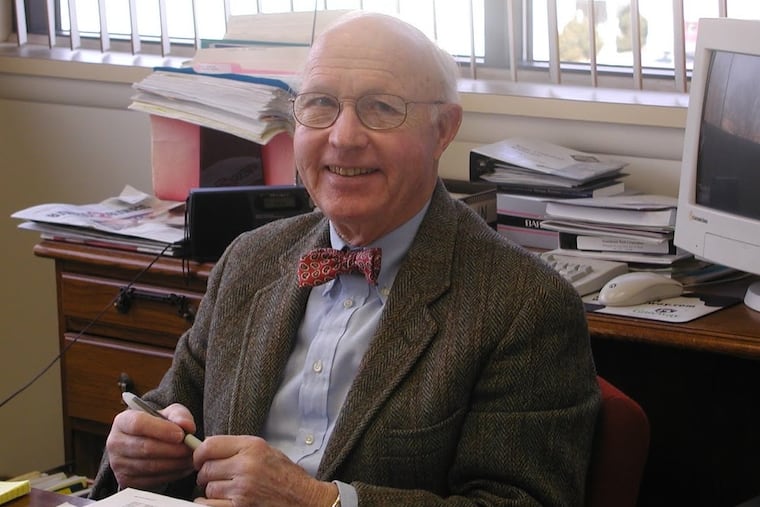
Morris Hamburg, 89, renowned professor of statistics at Wharton
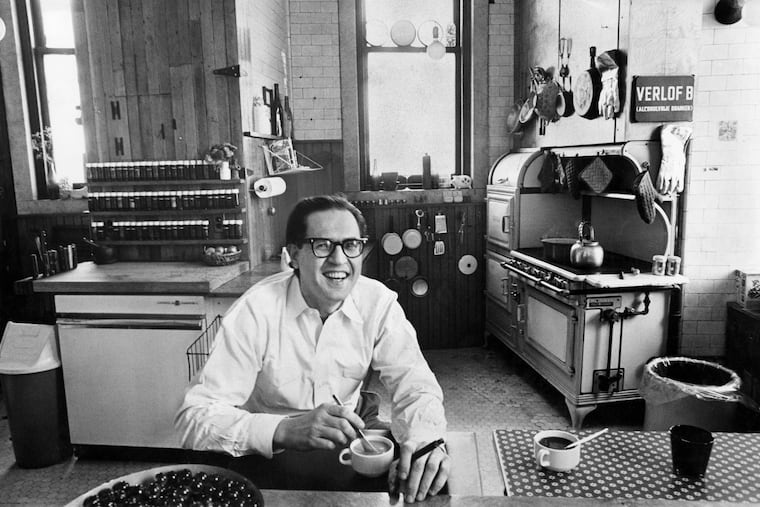
MORRIS HAMBURG grew up in North Philadelphia with what might have seemed impossible disadvantages. He and his three brothers and their immigrant parents were crammed into a tiny rowhouse in Strawberry Mansion. Nothing would indicate that he would go very far in life - nothing, that is, except his brilliant mind.
MORRIS HAMBURG grew up in North Philadelphia with what might have seemed impossible disadvantages.
He and his three brothers and their immigrant parents were crammed into a tiny rowhouse in Strawberry Mansion. Nothing would indicate that he would go very far in life - nothing, that is, except his brilliant mind.
Morris Hamburg rose from this meager beginning to become an internationally known expert in the esoteric world of statistics and operations research at the University of Pennsylvania's Wharton School, a world-traveler, an author of numerous books and articles in learned journals, and a recipient of many honors.
He also became a revered teacher who helped launch the careers of hundreds of students over the years, but who, with all of his accomplishments, said that his family was the most important part of his life.
He died Monday. He was 89 and lived in Society Hill.
At his death, Morris was emeritus professor of statistics and operations research at Wharton. Even after retirement in 1992, he continued to teach at Wharton in a master's-degree program for executives.
He was an Army veteran of World War II, serving in the Asia-Pacific Theater.
Morris was born in Philadelphia to Joseph Hamburg and the former Sarah Kenig, immigrants from Ukraine who met as teenagers in a sweatshop in Philadelphia in 1906.
He graduated from Simon Gratz High School and had no prospects for higher education until he took a citywide examination and won first place. He was given a full scholarship to Penn.
Even then, life was hardly easy. He rode three trolley lines to get to Penn from North Philadelphia, and took a job shoveling coal to pay for books and other expenses.
He became a teacher at the Wharton School in 1946, and earned his Ph.D. after studying under the late Nobel Laureate Professor Simon Kuznets.
Morris' principal fields of research were managerial decison analysis, forecasting and planning, economics, securities markets and industrial basic and applied research.
These might seem dry topics, but Morris had a way of making them fascinating.
"He was an enthusiastic and energetic teacher, whose lectures were enlivened by his sense of humor and wry wit," said his son, Neil J. Hamburg.
"He jocularly referred to the lecture system as 'the mysterious process by which the notes of the professor are transferred to the notes of the student without passing through the minds of either.' "
In an interview in the Daily Pennsylvanian, the campus newspaper, before his retirement, Morris said, "I've enjoyed my entire academic life. I've always looked at it as a way of making a life as well as a way of making a living.
"One of the best rewards of academia has been the psychic income that I derived from my contacts with former students."
During World War II, he was a first lieutenant serving as a meteorologist who advised the Air Corps on when the weather favored bombing runs and troop movements. He won a Bronze Star.
After his service, Morris retained a fascination for Asia and returned several times to China and Japan, often in connection with University of Pennsylvania programs.
"Notwithstanding his many accomplishments and academic prowess, his family rose above all else," his son said.
Besides his son, he is survived by his wife of 58 years, Jean Hamburg; a daughter, Bobbie Weisbein, and two grandchildren.
Services: In accordance with his wishes, there will be no funeral service.
Contributions may be made to the Morris Hamburg Fund, University of Pennsylvania, 344 Vance Hall, 3733 Spruce St., Philadelphia 19104.