Paul Motian | Drummer, composer, 80
Paul Motian, 80, a drummer, bandleader, composer, and one of the most influential jazz musicians of the last 50 years, died Tuesday in Manhattan. The cause was complications of myelodysplastic syndrome, a blood and bone-marrow disorder.
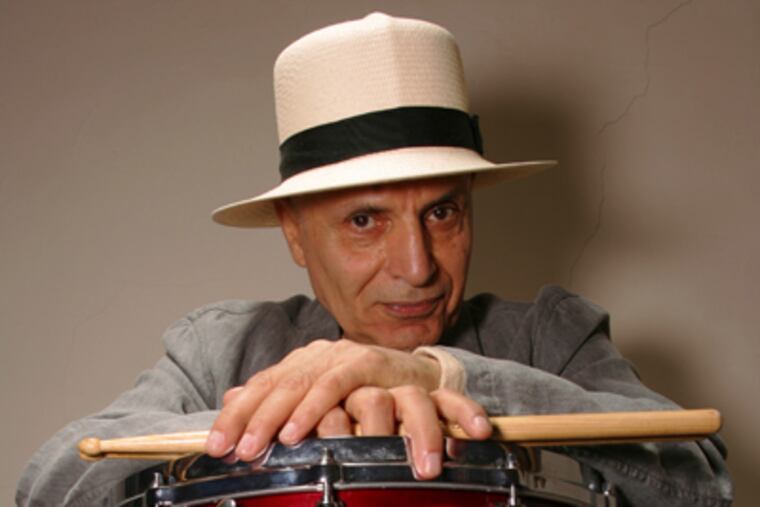
Paul Motian, 80, a drummer, bandleader, composer, and one of the most influential jazz musicians of the last 50 years, died Tuesday in Manhattan. The cause was complications of myelodysplastic syndrome, a blood and bone-marrow disorder.
Mr. Motian was a link to groups of the past that influenced what jazz sounds like today. He had been in the pianist Bill Evans' great trio of the late 1950s and early 1960s and in Keith Jarrett's so-called American quartet during the 1970s. But it was in the second half of his life that Mr. Motian found himself as a composer and bandleader.
He had the support of the record producers Stefan Winter and Manfred Eicher, who released his music on the labels Winter & Winter and ECM, and of Lorraine Gordon, the proprietor and presiding spirit of the Village Vanguard, who booked him many times a year.
The many musicians he played with regularly included the saxophonist Joe Lovano and the guitarist Bill Frisell, with whom he had a working trio; the pianist Masabumi Kikuchi; the saxophonists Greg Osby, Chris Potter, and Mark Turner, with whom he played in trios and quartets; the members of the Electric Bebop Band, with multiple electric guitars, which in 2006 became the Paul Motian Band; and dozens of others, from developing players to old masters.
For nearly all of his bands, his repertory was a combination of terse and mysterious originals he composed at the piano, American-songbook standards, and music from the bebop tradition of his youth by the likes of Bud Powell, Thelonious Monk, Charlie Parker, and Charles Mingus.
Stephen Paul Motian (he pronounced his surname, which was Armenian, like the word motion) was born in Philadelphia on March 25, 1931, and reared in Providence, R.I. In 1950 he entered the Navy.
He met Evans in 1955, and by the end of the decade he was working in a trio with Evans and the bassist Scott LaFaro. That group, in which the bass and drums interacted with the piano as equals, continues to serve as an important source of modern piano trio jazz.
- N.Y. Times News Service