John Payton | Civil rights lawyer, 65
John Payton, 65, a civil rights lawyer who defended the University of Michigan's affirmative-action policy before the Supreme Court and led the NAACP Legal Defense and Educational Fund, died Thursday at Johns Hopkins University Hospital in Baltimore after a brief illness.
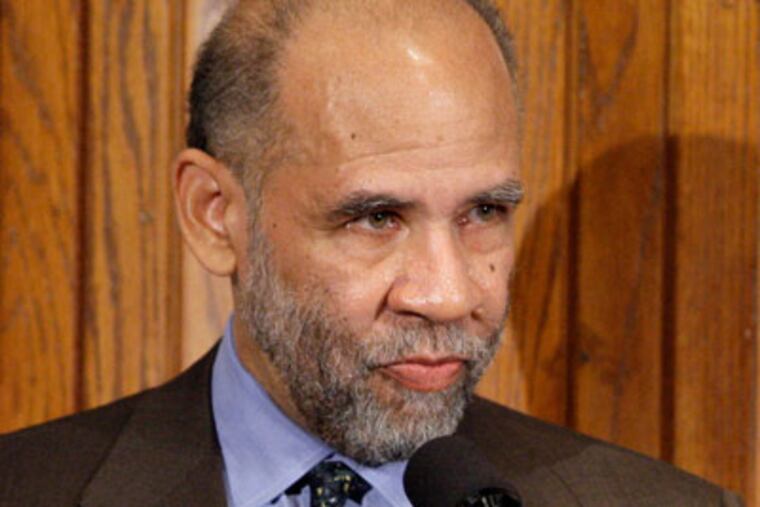
John Payton, 65, a civil rights lawyer who defended the University of Michigan's affirmative-action policy before the Supreme Court and led the NAACP Legal Defense and Educational Fund, died Thursday at Johns Hopkins University Hospital in Baltimore after a brief illness.
President Obama said in a statement that he and Michelle Obama were saddened to learn that their "dear friend" had died.
He was a "true champion of equality," Obama said. "The legal community has lost a legend, and while we mourn John's passing, we will never forget his courage and fierce opposition to discrimination in all its forms."
After graduating from Pomona College in California, Mr. Payton went to Harvard Law School and joined the Washington firm of Wilmer Cutler Pickering Hale & Dorr in 1978.
He argued affirmative-action cases before the Supreme Court, including 2003's Gratz v. Bollinger, which involved the admissions policies at the University of Michigan.
The court ruled, 6-3, against the university in Gratz, but in a companion case, Grutter v. Bollinger, the court ruled, 5-4, that the law school's race-conscious admissions policy did not amount to a quota system.
The National Law Journal named Mr. Payton to its list of the decade's most influential lawyers in 2010.
Wade Henderson, president and chief executive officer of the Leadership Conference on Civil and Human Rights, said in a statement that Mr. Payton "was a warrior for justice and equality."
"He was arguably a 21st-century Thurgood Marshall," Henderson said.
Survivors include his wife, Gay McDougall, also a notable civil rights lawyer. - AP