Harry Byrd Jr., 98, longtime Va. senator
RICHMOND, Va. - Former Sen. Harry F. Byrd Jr., 98, the Democrat turned independent who began his career as a staunch segregationist and preached fiscal restraint in Washington long before it became fashionable, has died.
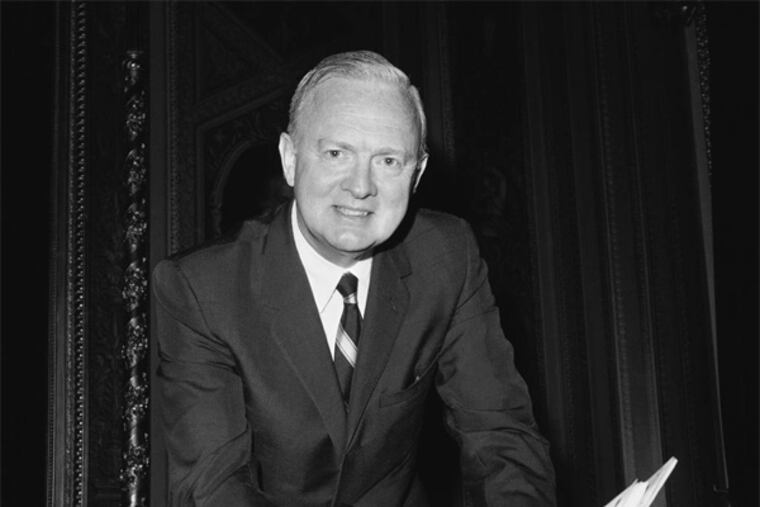
RICHMOND, Va. - Former Sen. Harry F. Byrd Jr., 98, the Democrat turned independent who began his career as a staunch segregationist and preached fiscal restraint in Washington long before it became fashionable, has died.
Byrd's son, Tom, is president and publisher of the Winchester Star, which first reported the death. Tom Byrd's office confirmed that the former senator died Tuesday.
Sen. Byrd served 17 years in the Senate, replacing his father, Harry Flood Byrd, a senator from 1933 until failing health forced him to retire in 1965. Gov. Albertis Harrison appointed the younger Byrd, a longtime state senator who, like his father, supported segregation.
In 1966, the younger Byrd won a special election for the remaining years of his father's term. Switching from Democrat to independent, he won reelection in 1970 and 1976.
"It's a hard way to run, but if you can win that way, it's the best way to win," he later said. "You're totally free of obligations to anybody."
Sen. Byrd, who served as a lieutenant commander in the Navy during World War II, made a career of preaching the value of fiscal restraint. He criticized President Ronald Reagan's military buildup as "giving the Pentagon the impression it has a blank check."
When he retired in 1982, Sen. Byrd said he was leaving public service with his convictions and integrity intact, but with regret that "Congress refuses to obey its own law which mandates a balanced budget."
Both Byrds supported Virginia's stand against desegregation, including the decision to push "massive resistance" - even school closings - to fight the 1954 Supreme Court decision in Brown v. Board of Education. In 1956, he called the ruling an "unwarranted usurpation of power" by the court.
He told the Washington Post in 1982 that he had "personally hated" to see schools close, but even those many years later he did not disavow massive resistance and suggested it helped the state avoid racial violence.
"When you have to make a very dramatic change, sometimes, most times, that needs to be done maybe over a period of time and not abruptly," he said.
Sen. Byrd said he left the party after state Democrats required candidates to sign a loyalty oath supporting all party candidates, including the nominee for president two years later, George McGovern. He said his and McGovern's political philosophies were too far apart for him to support the nominee.