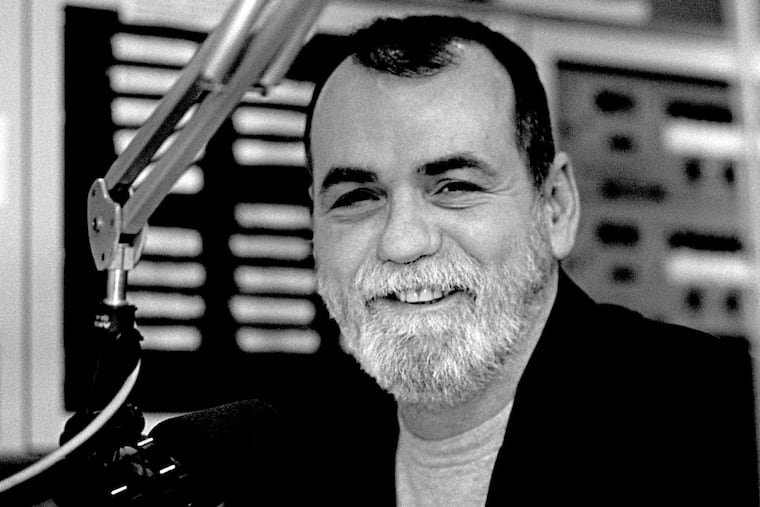
Richard Mellon Scaife, 82, billionaire publisher
Richard Mellon Scaife, 82, a billionaire publisher whose philanthropy helped redefine the American right wing in the 1980s and 1990s and who helped underwrite a range of anti-liberal causes, most famously his political attacks against President Bill Clinton, died Friday.
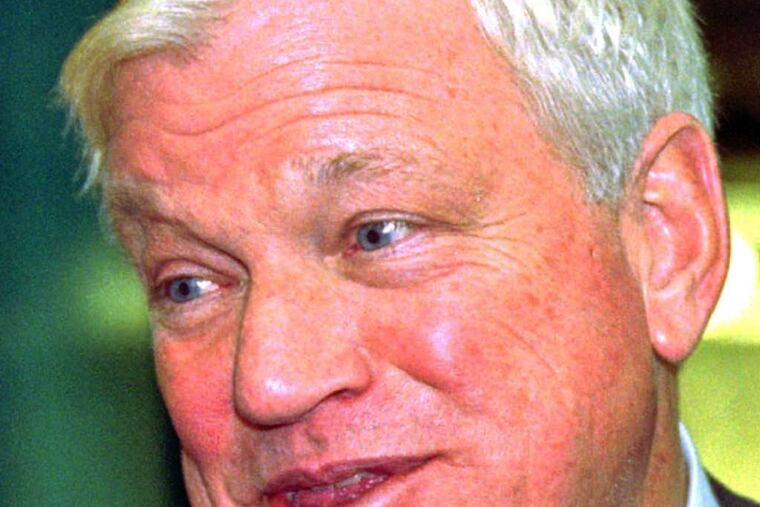
Richard Mellon Scaife, 82, a billionaire publisher whose philanthropy helped redefine the American right wing in the 1980s and 1990s and who helped underwrite a range of anti-liberal causes, most famously his political attacks against President Bill Clinton, died Friday.
His newspaper, the Pittsburgh Tribune-Review, announced the death but did not disclose the cause. In May, Mr. Scaife wrote in the newspaper that he had "an untreatable form of cancer."
An heir to the Mellon banking, oil, and aluminum fortunes, the Pittsburgh-based Mr. Scaife spent hundreds of millions of dollars of his estimated net worth of $1.4 billion to counteract what he called "the liberal slant to American society."
He threw his financial support behind conservative newspapers and magazines, including the American Spectator and the Pittsburgh Tribune-Review. Through those organs, his family-based funding entities, and his presence on the boards of conservative and libertarian citadels such as the Heritage Foundation and the Hoover Institution, he championed small government, fewer regulations on business, low taxes, and a strong national defense.
Mr. Scaife's conservative leanings were shaped during his youth. As a young man, he became friends with a family acquaintance, FBI Director J. Edgar Hoover. And in the 1964 presidential election, Mr. Scaife became a strong supporter of the small-government, anti-Communist candidate Sen. Barry Goldwater of Arizona, who lost to President Lyndon Johnson.
With generous donations to later candidates such as Richard Nixon and Ronald Reagan, Mr. Scaife began building momentum for a conservative Republican resurgence. He also was a guiding force behind the Contract With America initiatives of House Speaker Newt Gingrich (R., Ga.) in the early 1990s, as well as the GOP's tea party progeny in the 21st century.
Throughout a life marked by bouts of alcoholism, two turbulent marriages, and estrangement from many in his family, Mr. Scaife was, at times, an erratic shepherd of his deeply felt political beliefs. Some of his most public causes were rooted in elaborate conspiracy theories.
He was a major underwriter of the American Spectator magazine's "Arkansas Project" to develop financial and personal dirt on the Clintons in the 1990s. The effort included writer David Brock's magazine story containing allegations from four Arkansas state troopers that they helped procure women for then-Gov. Bill Clinton.
Brock said he was suspicious of the troopers' stories but supported their publication anyway, once telling the Washington Post, "I did what was politically useful. [Clinton] was a Democrat, therefore he was a target."
As a strong backer of the legal and political strategies against the Clintons, Mr. Scaife made Time magazine's list of the 25 most influential Americans in 1997. The magazine called him the "horsepower" behind the "resurgent" right wing.