John C. Graham, 92, directed the Wagner Free Institute of Science
He was an artist who exhibited widely, and a World War II veteran.
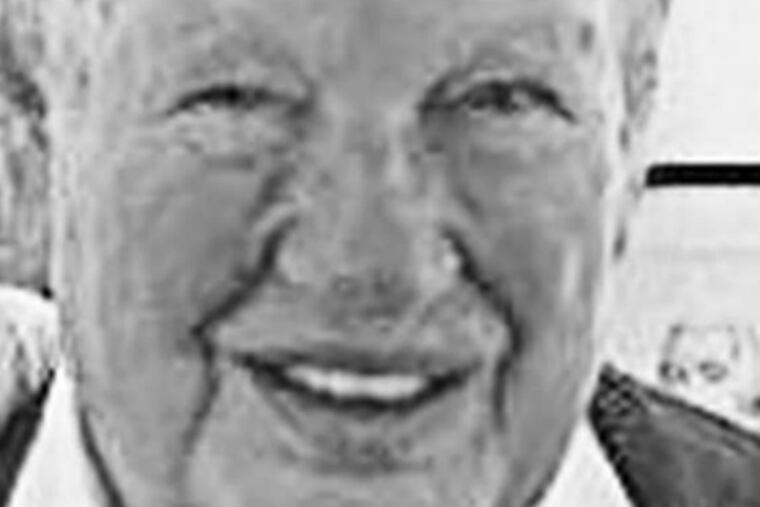
JOHN C. GRAHAM was able to find humor just about anywhere, even amid the horrors of war.
As a soldier in World War II, he participated in the disastrous invasion of Anzio in Italy in 1944, in which American and British troops were trapped by German defenders for five months before they could break out.
John Graham kept a diary, which, being an artist, he illustrated. He wrote about foxhole living, how to make a radio out of a potato, and how it was important to keep your lips in shape if you were a bugler, which he was for a time.
"He could be funny about the war," said his daughter, Virginia Lorenzi. "He was very clever. He said he learned to play poker, and told how the men were forced to listen to German propaganda on the radio because it was the only station they could get."
He told how a mine exploded in the foxhole next to his, but he escaped harm.
John C. Graham, a leading figure in science education in Philadelphia for many years as director of the Wagner Free Institute of Science in the 1970s and '80s, an influential teacher and mentor to thousands of young people, died of congestive heart failure Dec. 23. He was 92 and lived in Mount Airy.
"We've been getting calls from people who tell us how he influenced them in their careers," Virginia said.
John not only introduced students to the wonders of science at the institute, he also operated a traveling Children's Museum during the city's Bicentennial to educate young people about America's history and other subjects.
After retiring from the Wagner Institute in 1988, he became education director of the Awbury Arboretum, and later, education director for the Philadelphia Society for the Preservation of Landmarks.
As an artist, John began by making wood-block prints, then moved on to painting in acrylics, sculpture and mobiles. In later years, he enjoyed creating collages.
He exhibited his work widely, and at one time, was a partner and artisan at the former Craft Store in the Maplewood Mall in Germantown, and owned two art galleries in Germantown and Mount Airy.
Earlier in his career, he made relief maps for what is now Keystone Aerial Surveys, and for several years was an exhibits developer for the Academy of Natural Sciences.
The Wagner Institute, at 1700 W. Montgomery Ave., is one of Philadelphia's best-kept secrets, although founded in 1855. It has been educating young people and adults in the wonders of science ever since. And for free.
In 1981, Inquirer writer Edgar Williams described the reaction of a 9-year-old boy when he confronted dinosaur bones at the institute.
"I'll tell you, man," the boy said, "No way I'd want to pay that feed bill."
A typical reaction by kids when they encountered some of the more dramatic of the contents of the institute's soaring three-story exhibit hall. Besides dinosaur bones, it houses rocks, minerals, shells and the first American saber-toothed tiger, discovered on a museum-sponsored trip to Florida in 1886, among many other items.
John Graham conducted tours of the museum, as well as organizing field trips, including overnight camping, to study the flora and fauna of the city environment.
John was a Depression-era kid who was moved about by a succession of relatives. He attended a variety of schools in Philadelphia, Florida and Pocono Manor.
"He said he moved into classes where there was room for him," his daughter said. "He described the school in Pocono Manor as reminiscent of the mansion in the movie, 'The Shining,' " Virginia said.
Her father remembered as a Depression-era kid handing out peanut-butter sandwiches to the unemployed at his home.
John joined the National Guard at the age of 17, before the war began. When it started, he became part of the Army. Serving at Anzio was probably as frustrating for him as for the generals who botched the mission.
He served five years in the military and after his discharge attended Dobbins High School, and then the Philadelphia College of Art, now the University of the Arts.
He married his wife, Susan, in 1954. They lived in Mount Airy for 57 years. John was an avid gardener, loved music, history, geography, and, obviously, science.
"I was lucky to have had him in my life," his daughter said.
Besides his wife and daughter, he is survived by a son, Donald, and three grandchildren.
Services: A memorial service was held Saturday.