Henry Reddy, 68, longtime civil-rights activist
He worked with Cecil Moore to integrate Girard College
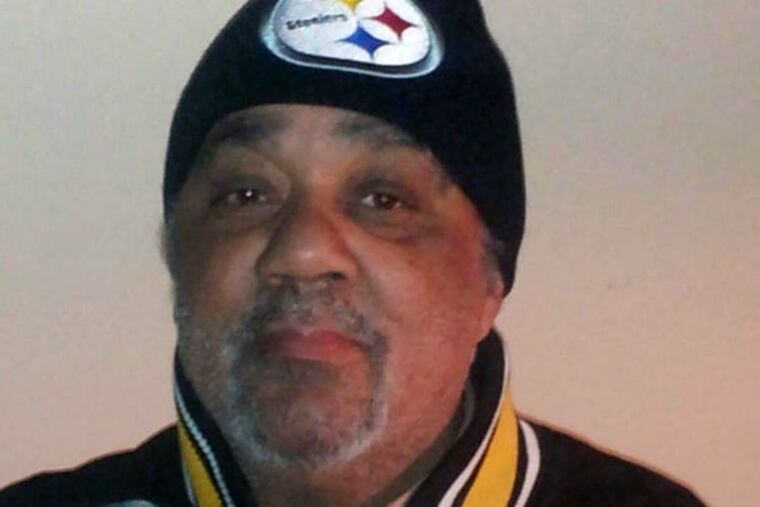
HENRY REDDY knew from personal experience the dangers that lurk on the city's mean streets.
Henry was just 16 when he was shot in the left hand, and it had to be amputated. He ran with the street gangs of North Philadelphia and took his indoctrination into their violence with grim resolve.
In fact, Henry never let his handicap interfere with a life of activism as he joined civil-rights demonstrations and became a strong advocate for black participation in the city's political life.
He summed up his activist's credo in 1993 when he was a panelist at a conference at Temple University on the history of the civil-rights movement.
Describing himself as a "plain old ordinary foot soldier" in dozens of protests, he said, "All we wanted was no roadblocks, no one saying we couldn't do this, we couldn't do that."
He and other panelists saw what was missing in the 1990s. For him, it was "moral commitment."
"That's what we need," he said. "When you succeed, you have a moral commitment to go back and help the people who are still there, help show them the way."
Henry Reddy lived by that philosophy in a life of moral commitment, attacking injustice wherever he saw it rearing its ugly head.
He died Saturday of lung disease. He would have turned 69 the next day. He lived all his life in the Francisville section of North Philadelphia.
Henry was a longtime friend and aide to the late Cecil B. Moore, lawyer, civil-rights firebrand and city councilman.
It started when Henry was a teenager who went to Moore when a friend got in trouble with the law. He had heard that Moore was a criminal-defense lawyer who worked with black defendants, even when they didn't have the money for his fees.
Moore took a liking to young Henry Reddy and put him to work as his investigator and general factotum. Henry was with the aggressive Moore in many civil-rights battles, notably the demonstrations at Girard College in the mid-'60s to protest the school's all-white policy. The school was desegregated in 1968.
Henry remained with Moore through many more civil-rights adventures and Moore's four years as a City Council member until Moore's death in 1979.
Henry, a 48-year Democratic committeeman in the 11th Division of the 15th Ward, had strong views in the '90s about the direction in which the national Democratic Party was heading as it sought to broaden its base to attract middle-class voters.
"That's just a catchphrase for 'white folks,' " he said just before he and some supporters confronted Bill Clinton, then governor of Arkansas, presidential candidate and chairman of the Democratic Leadership Council, at a meeting of the council in Cleveland in 1992.
Reddy demanded of Clinton, "Y'all hung up about racial quotas. Why?"
"We've got to expand the party, and the quota issue is running the middle class away from the party," Clinton said.
"Yeah, but then you're running the party's black base away," Henry countered.
The confrontation gained heat and Clinton's aides finally had to rescue him from Henry Reddy's anger.
Henry was a firm supporter of the presidential candidacy of the Rev. Jesse Jackson at both the 1984 and 1988 Democratic National Conventions, to which Henry was a delegate.
But he was bitter about the party's platforms that he felt strayed too far from Jackson's positions. In fact, he stormed out of San Francisco's Moscone Center in protest at the 1984 convention that nominated former Vice President Walter Mondale for president and U.S. Rep. Geraldine Ferraro for vice president.
Henry was also a Jackson delegate at the 1988 Democratic National Convention in Atlanta, along with W. Wilson Goode, the first black mayor of Philadelphia.
"Reddy's approach to political problems is more often confrontational," Inquirer columnist Acel Moore wrote on July 21, 1988. "Both he and the mayor voted for Jackson when his name was placed in nomination at the Omni Center. Unlike the mayor, who is committed to supporting the party ticket, Reddy is not."
Over the years, Henry acted as campaign manager for a number of candidates for various offices.
In the 1980s, he was chairman of the Committee to Elect More Minority Judges. One of the men the committee endorsed was Willis W. Berry Jr., who was elected to the Common Pleas Court in 1995 and served until his retirement in 2012.
Henry was a close friend of Berry and served as his judicial aide. Last year, Berry was accused of using his staff, including Henry, to work in his real-estate business.
Berry was convicted in July of conflict-of-interest charges. Henry was not involved in the criminal case.
Henry was born in Philadelphia one of the 13 children of Bessie and Lucius Reddy. He attended Benjamin Franklin High School.
Despite missing a hand, Henry was a skilled handyman, who could build and repair anything, and handled tools with a dexterity that a two-handed man might have envied.
Henry was a devoted family man. His daughter, Latricia Hale, called him "the best person who ever lived."
"He never turned anybody away who needed help," she said. People in trouble knew who to contact. He was just an all-around good guy."
Besides his daughter, he is survived by another daughter, Leslie Hale; two sons, Shawn Scott and Lorne Cooke; two brothers, Lucius Reddy Jr. and Stuart Reddy; two sisters, Audrey Hood and Paulette Byrd; five grandchildren; and his fiancee, Barbara Bradley.
Services: 11 a.m. Saturday at Greater Exodus Baptist Church, Broad Street and Fairmount Avenue.