George Abouna, inventor of liver device
George M. Abouna, 83, of Radnor, an internationally known transplant surgeon and the inventor of a liver perfusion device, died Wednesday, Sept. 28, of pneumonia at Bryn Mawr Hospital.
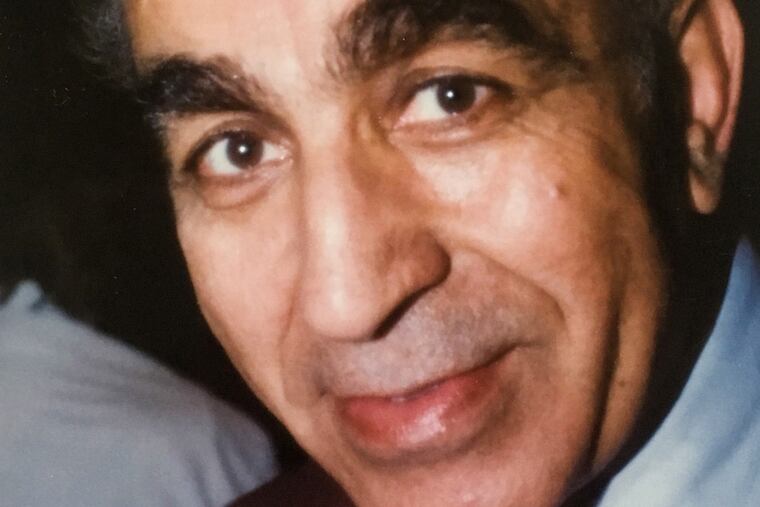
George M. Abouna, 83, of Radnor, an internationally known transplant surgeon and the inventor of a liver perfusion device, died Wednesday, Sept. 28, of pneumonia at Bryn Mawr Hospital.
Dr. Abouna developed an artificial liver-support system for patients with liver failure, helping them stay alive until transplant organs could be found.
The machine was called the Abouna Liver Support Apparatus. The device could "cleanse the organ, just like a dialysis machine for kidneys," he told Media Town Talk on Nov. 27, 2012.
Dr. Abouna was born in Mosul, Iraq, to Mansour and Rachel Abouna. A precocious youth, he knew at 16 he wanted to become a doctor. He won a scholarship from the Iraqi government in 1951 to study at Britain's University of Durham, but the scholarship was for engineering, not medicine.
By 1956, he had completed degrees in mechanical and electrical engineering. "But I never gave up my dream of becoming a doctor," he said in the Town Talk interview.
He persuaded the dean of the university's medical faculty to let him study medicine. By working four jobs, he was able to finance his studies and complete a medical degree in 1961.
In 1968, drawing on his engineering and medical training, Dr. Abouna developed the liver machine. The device helped in the treatment of hepatic (liver) coma, keeping the patient's failing liver viable until transplantation.
As word of the invention spread, he was invited in 1969 to join the faculty at the University of Colorado Denver, and there he began training in clinical transplantation.
He held academic and clinical appointments in Richmond, Va., and Augusta, Ga. After a year as a researcher in Edinburgh, Scotland, he accepted a post as transplant surgeon with the University of Calgary's Faculty of Medicine.
While there, Dr. Abouna clashed with fellow nephrologists who alleged that he disrupted the function of the transplant team and wanted tight control of postoperative care.
"It is clear that Dr. Abouna was determined to develop and maintain a rigorously high standard of care in the transplant unit. His angry responses to perceived shortcomings inevitably trod upon sensitive toes," reported a faculty committee that investigated the situation in 1977. As a result, Dr. Abouna's contract was not renewed.
In 1978, he accepted the chair of surgery at Kuwait University, where he established the country's first transplant program and initiated a living organ donor program.
After the Iraqi invasion of Kuwait, in August 1990 Dr. Abouna joined the transplant program at Hahnemann University Hospital. He then became assistant director of transplantation research at Einstein Medical Center, both in Philadelphia.
In 2000, while at Einstein, Dr. Abouna was awarded the Albert Schweitzer Golden Grand Medal, given annually by the Polish Academy of Medicine.
"I was deeply grateful to receive the [medal] that was given to me for great merits in medicine and humanism," he told Media Town Talk.
Dr. Abouna accepted one more overseas appointment, as dean of the College of Medicine and Medical Sciences, Arabian Gulf University, in Manama, Bahrain. He never really retired, continuing to volunteer in his field.
He was the author of 139 articles in medical journals and was author or editor of three medical books.
Outside the operating room, he enjoyed travel, keeping a perfect weed-free garden, and raising chickens.
He is survived by his wife, Cathy Wade Abouna; former wife Jennifer Abouna, from whom he was divorced; children Linda Toews, Judy Klincker, Andrew, Ben, Sarah and Adam; two stepchildren, Wade and Carla Stewart; seven grandchildren; and nine great-grandchildren.
A visitation starting at 10 a.m. Tuesday, Oct. 4, will be followed by an 11 a.m. Mass at St. Katharine of Siena Church, 104 S. Aberdeen Ave., Wayne. Burial is private.
Donations may be made to the National Kidney Foundation, 111 S. Independence Mall East, Suite 411, Philadelphia 19106.
610-313-8102