Let the 'whining' begin State budget cuts should have public input
SOUNDING LIKE a crabby dad, Gov. Rendell warned citizens of the commonwealth yesterday that despite the pain that pending state budget cuts are going to bring, he doesn't want "to hear whining."
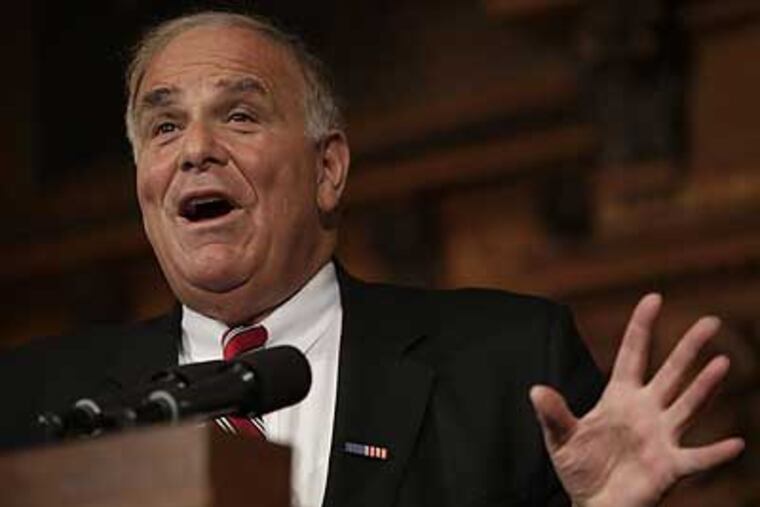
SOUNDING LIKE a crabby dad, Gov. Rendell warned citizens of the commonwealth yesterday that despite the pain that pending state budget cuts are going to bring, he doesn't want "to hear whining."
He might have been referring to Philadelphia, where Mayor Nutter has heard nothing but whining and teeth-gnashing since announcing that his budget plans include the closing of 11 libraries. Nutter responded to the outcry with a series of public town-hall meetings, and another set of citizen meetings begin soon.
We somehow have a hard time picturing Gov. Ed sitting patiently though town-hall meetings to get citizen input on budgets. For one thing, Rendell is too much the alpha dog, and state budget-making usually consists of four guys in a room where no one can hear you scream when your arm gets twisted.
Granted, the state budget is massive - $28.3 billion, with a $2.3 billion hole to fill by June 30 - and more complicated than the city budget. And the state budget is more removed from direct services than the city budget, with money going to fund programs that get passed through other agencies, like education and social services. So unless it's a rallying issue like legislator pay hikes, the public doesn't engage. And many state programs - like LHEAP, Medicaid, and food stamps - are aimed at poor people, often marginalized from the political process.
That said, Rendell's quick dismissal of public reaction to the budget process is telling, but not so smart. He should know that many of the things he's planning to do might be more easily done with public pressure. (Also, didn't he learn anything from the Great Philadelphia Casino Disaster?)
Governors in other states, such as Arizona, Illinois and Washington, are facing similar budget meltdowns and still manage to gather input from citizens.
Rendell's failure to see this is more than bad politics. It means state officials will not have information that could help them make better decisions about where to find savings.
For example, Rendell has said that broad-based tax increases are off the table. But if they become necessary, how can state officials know which streams of revenue will cause the least amount of pain without public input?
Also, part of the governor's plan involves the Legislature returning $175 million of its surplus funds to the state. If Rendell refuses to engage the public, how does he expect to make lawmakers do their part? By sidelining citizens, Rendell could lose a powerful weapon in his arsenal.
And since the federal government is expected to release large wads of stimulus money to the states, the process of making spending decisions should be transparent - especially since much of the stimulus money could be used to make long-term investments in Pennsylvia's future.
This is hardly the time for Rendell to channel Louis XIV and get all "l'etat c'est moi." President Obama has challenged all Americans to take more responsibility for their government, and getting involved in state budget decisions would be a great start.
Rendell may scoff at "whining" at the decisions he's about to make but, crisis or not, he has a responsibility to adequately explain and defend his choices.
If he needs tips on how, he should call Mayor Nutter. *